Background:
Viral dynamics of non-lesion mpox specimens is uncertain, with possible community implications regarding mpox transmission. The aim was to investigate the delayed positivization of non-lesion specimens among individuals diagnosed with mpox.
Methods:
We included individuals diagnosed with mpox at San Raffaele Scientific Institute, Milan; all individuals had mpox positive lesions at time of mpox diagnosis. Delayed positivization was defined as mpox detection at virological re-evaluation in a non-lesion specimen which was previously negative at time of mpox diagnosis; plasma (Pl), urines (Ur), seminal fluids (Sf), oropharyngeal (Op) and anal (An) swabs were collected among all people. Individuals were virologically re-assessed until mpox clearance.
Results:
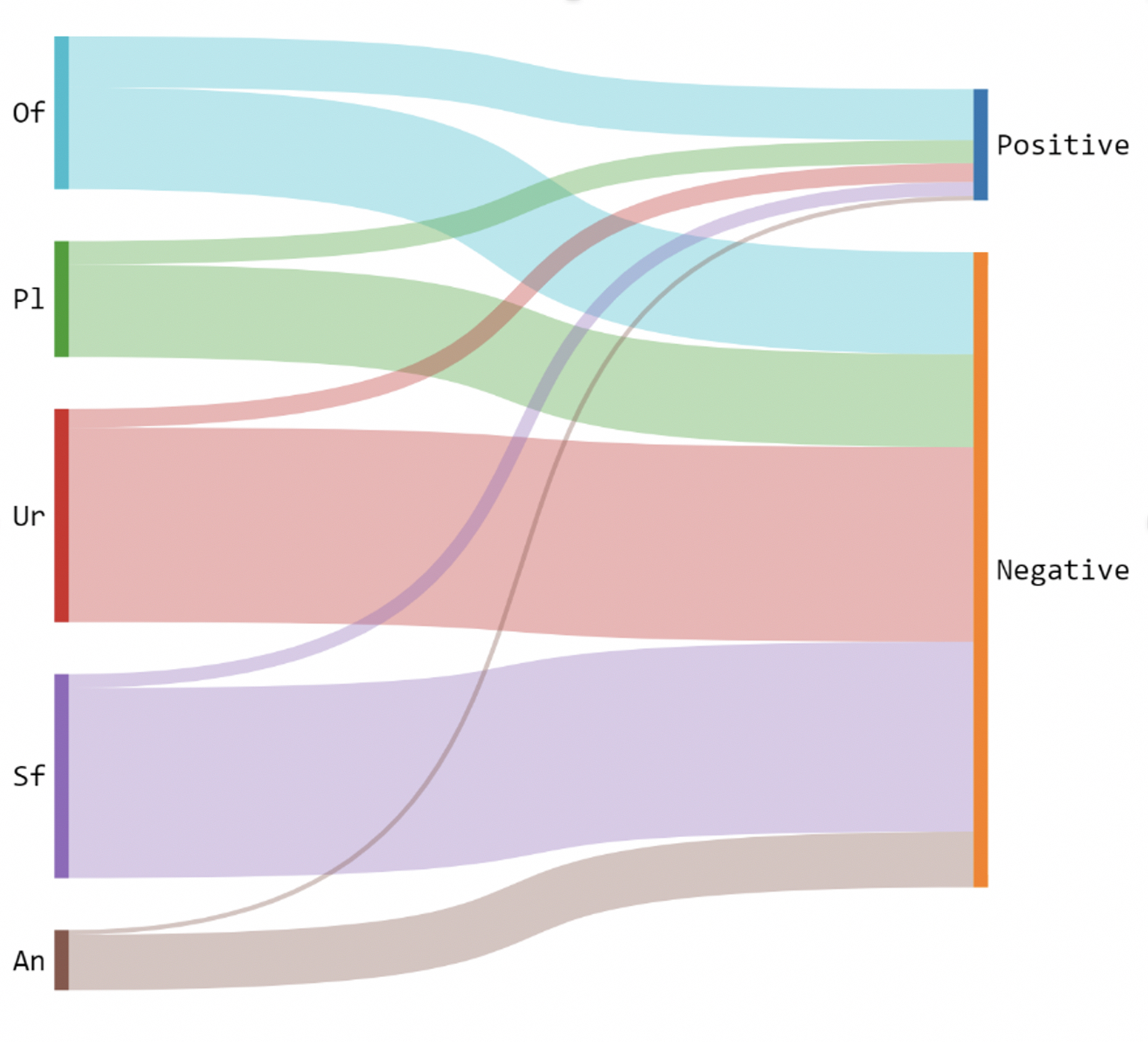
Overall, 1836 total samples (1246 non-lesion specimens, 478 positive and 768 negative) from 140 MSM diagnosed with mpox were considered. Viral dynamics of non-lesion specimens negative at time of mpox diagnosis are illustrated in Figure 1. Observed delayed positivizations were 24 (11 Op, 5 Pl, 4 Ur, 3 Sf, 1 An) among 10% of included individuals. Among them, the median time to mpox diagnosis from symptoms onset was 2 days (interquartile, IQR 1-3, range 1-5): all were already in care at our center for HIV/PrEP and half were sexual contacts of mpox cases. Median cycle thresholds (Ct) of samples at time of delayed positivazion were: Op 31 (IQR 26-33), Pl 34 (IQR 33-36.5), Ur 33 (IQR 32-35), Sf 36 (IQR 35-37), and An 36. Median days to positivization from mpox diagnosis were: Op 7 (IQR 7-9), Pl 7 (IQR 3.5-10), Ur 7 (IQR 6.5-8), Sf 9 (IQR 8-10), and An 7. In Of, Ur, Sf, and An samples with delayed positivization, plasma was already positive at time of mpox diagnosis (median Ct 34, IQR 33-35). The median Ct of mpox lesions at time of mpox diagnosis was 24 (IQR 19-28), at time of delayed positivization 20.5 (IQR 17-25); among all individuals appearance of new mpox lesions was documented following mpox diagnosis.
Conclusions:
Delayed positivization can occur in non-lesion specimens among individuals diagnosed with mpox; high Ct values, positivization at first virological re-evaluation and more often at the oropharyngeal site were observed. We hypothesize that individuals received a prompt mpox testing and that the delayed positivization followed bloodstream viral dissemination. Given the community implications on transmission, these data reinforce the need of repeated mpox testing of non-lesion specimens.
Figure 1. Mpox testing dynamics at virological re-evaluation of non-lesion specimens which tested negative at mpox diagnosis; all individuals had positive mpox lesions at time of mpox diagnosis. Left: Non-lesion specimens which tested negative at mpox diagnosis (Negative). Right: Viral dynamics at virological re-evaluation (Positive or Negative).