Background:
Appropriate therapeutic management of mpox in people with advanced HIV remains challenging given an absence of clinical trial evidence. This case series aims to provide our experience during the 2022 outbreak for patients with severe mpox treated aggressively with a combination of extended tecovirimat and cidofovir with antiretrovirals (ART).
Methods:
This is a retrospective review of cases at the University of Pennsylania during the 2022 mpox outbreak collecting clinical data and evaluating effectiveness and safety of combination antivirals in people with advanced HIV and disseminated mpox.
Results:
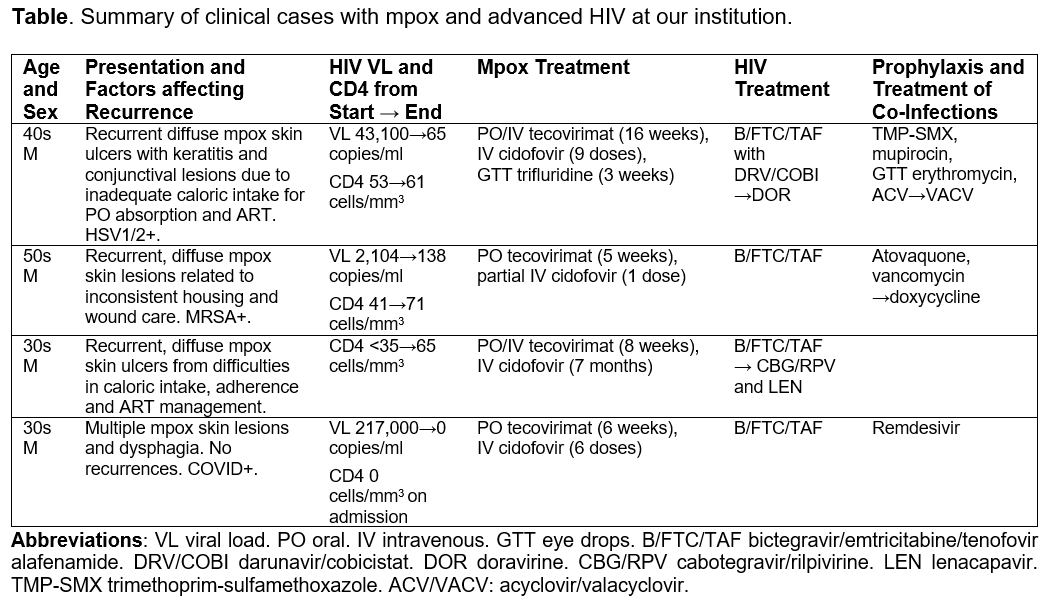
We identified four male patients with mpox and advanced HIV (CD4 count 0-53 cells/mm3, viral load 2,104-217,000 copies/ml, age range 30s-50s). They exhibited necrotic skin lesions across the face, trunk, groin and extremities, with one developing keratitis and conjunctival ulcers. Three cases were associated with super- and co-infections: HSV1/2, severe COVID-19 and MRSA. All patients started/resumed ART and began daily oral tecovirimat and cidofovir infusions with probenecid/fluids every 2 weeks. While one patient exhibited full recovery after a single 6-week course of tecovirimat, 6 doses of cidofovir and ART, the other three had a more complicated course including two with insufficient daily nutrition affecting oral tecovirimat absorption and another lacking consistent housing and wound care that led to recurrent presentations that required extended tecovirimat (5-16 weeks) and cidofovir (1-12 doses). We stopped cidofovir after 7 months on one patient based on IgG+/IgM– orthopoxvirus serology. Ocular lesions were treated with trifluridine (3 weeks). Two patients required adjustments of ART. After ART, all cases had markedly lower HIV load (0-138 copies/ml). All patients had improved mpox lesions at follow-up and renal function remained stable.
Conclusions:
This report illustrates that prolonged cidofovir with tecovirimat can be safely administered to manage severe mpox infections in people with advanced HIV. Our case series underscores the multifaceted challenges this population faces, extending beyond clinical manifestations, to include social determinants such as housing stability, nutritional intake essential for effective tecovirimat absorption and presence of concurrent infections. Our findings advocate for a comprehensive approach integrating ART with multiple antivirals, while simultaneously addressing contextual and socio-environmental factors.