Background:
Methamphetamine (MA) use is a predictor of poor HIV outcomes as well as forward transmission. Despite this, objective assessment of MA use is suboptimal; self-report can be skewed and short-term markers of MA use (e.g., urine tests) have limited sensitivity. We hypothesize that cumulative assessment of hair MA in people at risk of or living with HIV (PWH) who report at least weekly MA use but have negative urine MA tests will increase detection of MA use.
Methods:
Leveraging the UCSF Hair Analytical Laboratory’s expertise in the use of hair samples to monitor long-term antiretroviral adherence, we developed a hair analytical method to measure past-month MA use. We then examined stored samples from The mSTUDY, a well-established cohort of MSM that collected self-reported substance use data using validated tool (ASSIST), urine and hair specimens. We analyzed hair from participants who reported daily or weekly MA use but were MA urine test negative at the time of hair collection. Per Society of Hair Testing guidelines, hair was considered MA-positive if concentration was >200 picograms/mg. We defined sensitivity as proportion of positive hair samples from MSM who reported at least weekly use, despite negative urine tests. To determine specificity, we randomly selected n=22 hair samples from controls who reported no MA use and where urine testing was negative for substances, including MA.
Results:
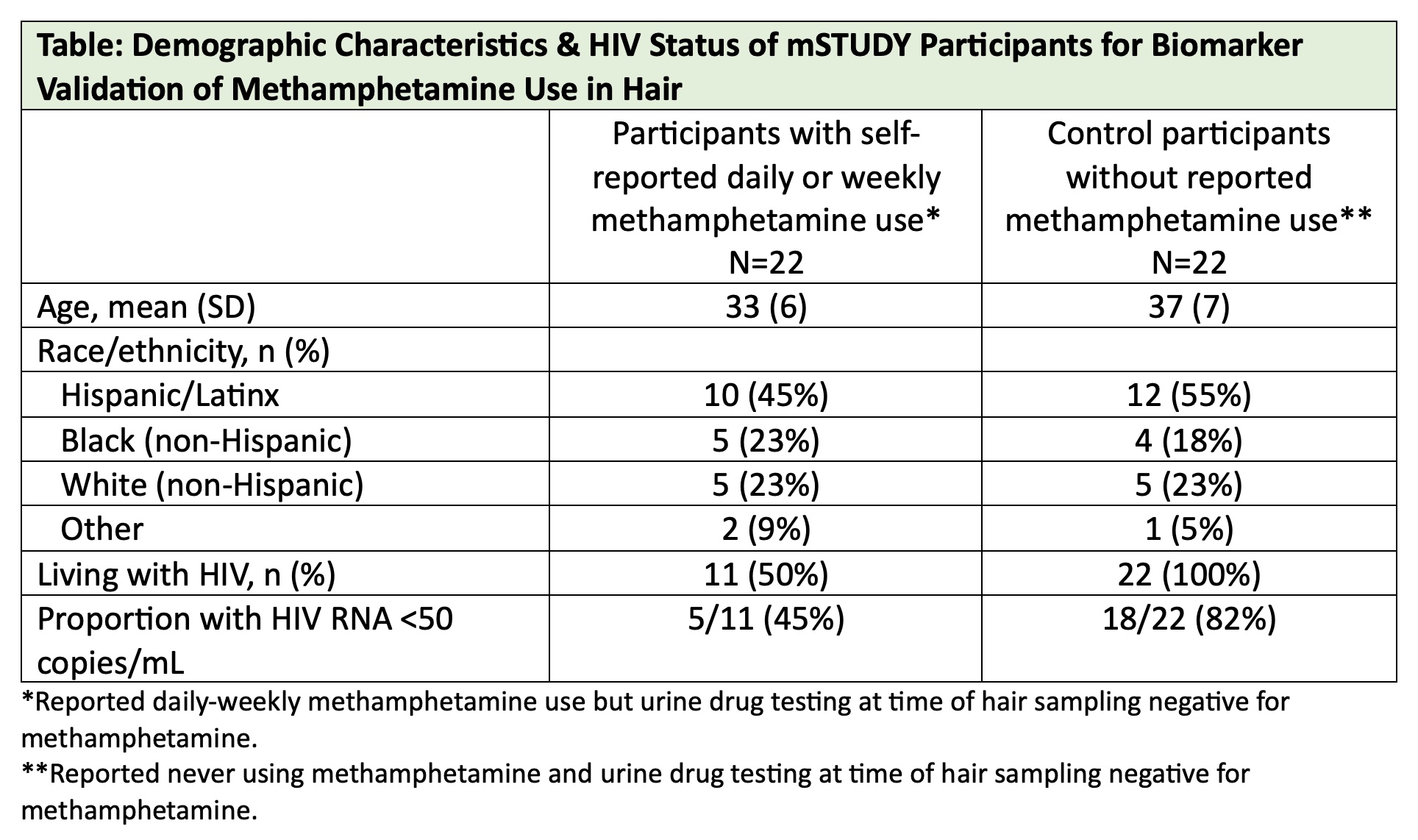
Demographics and HIV status of the 44 MSM included in the analysis are presented in the Table. Of the 22 MSM who reported daily or weekly MA use but had negative urine tests, 3 (14%) reported daily use and 19 (86%) reported weekly use. Hair analysis detected MA use above the established threshold in 17 additional individuals, yielding a sensitivity of 77% (95% CI 60-95%). Among the 22 control subjects with no reported MA use and negative urine tests for all substances, 3 were found to have MA-positive hair samples, with a specificity of 85% (95% CI 72-100%).
Conclusions:
This novel hair-based biomarker identified twice as many individuals with past-month MA use than the urine MA test captured (20 additional individuals of 44 tested) in a cohort of MSM. The calculated sensitivity/specificity of hair tests are likely an underestimate, given inaccuracies in self-reported substance use. Our analysis underscores the potential advantage of hair-based assays in capturing cumulative MA exposure, offering a promising tool for objective assessment of MA use among people at risk for or living with HIV.