Young women in sub-Saharan Africa are at particularly high risk of HIV acquisition. Recent shifts toward ‘test and treat’ strategies have potential to reduce transmission in this age group, but have not been widely studied outside of clinical trials. Using data from nationwide surveillance among pregnant women in Botswana, where a ‘test and treat’ strategy began in May 2016, we describe trends in HIV prevalence over time and highlight the opportunity for targeted prevention.
The Tsepamo study abstracted data from obstetric records of all women delivering at eight government hospitals in Botswana between 2015–2019, approximately 45% of all births in the country. Maternal HIV status was documented in >99% of records along with other demographic data. We used descriptive stratified analyses to identify prevalence trends by age group and year. We evaluated decreases in HIV prevalence over time using Cochran–Armitage test for linear trend and performed an adjusted analysis using multivariable logistic regression to identify factors associated with decline in HIV prevalence.
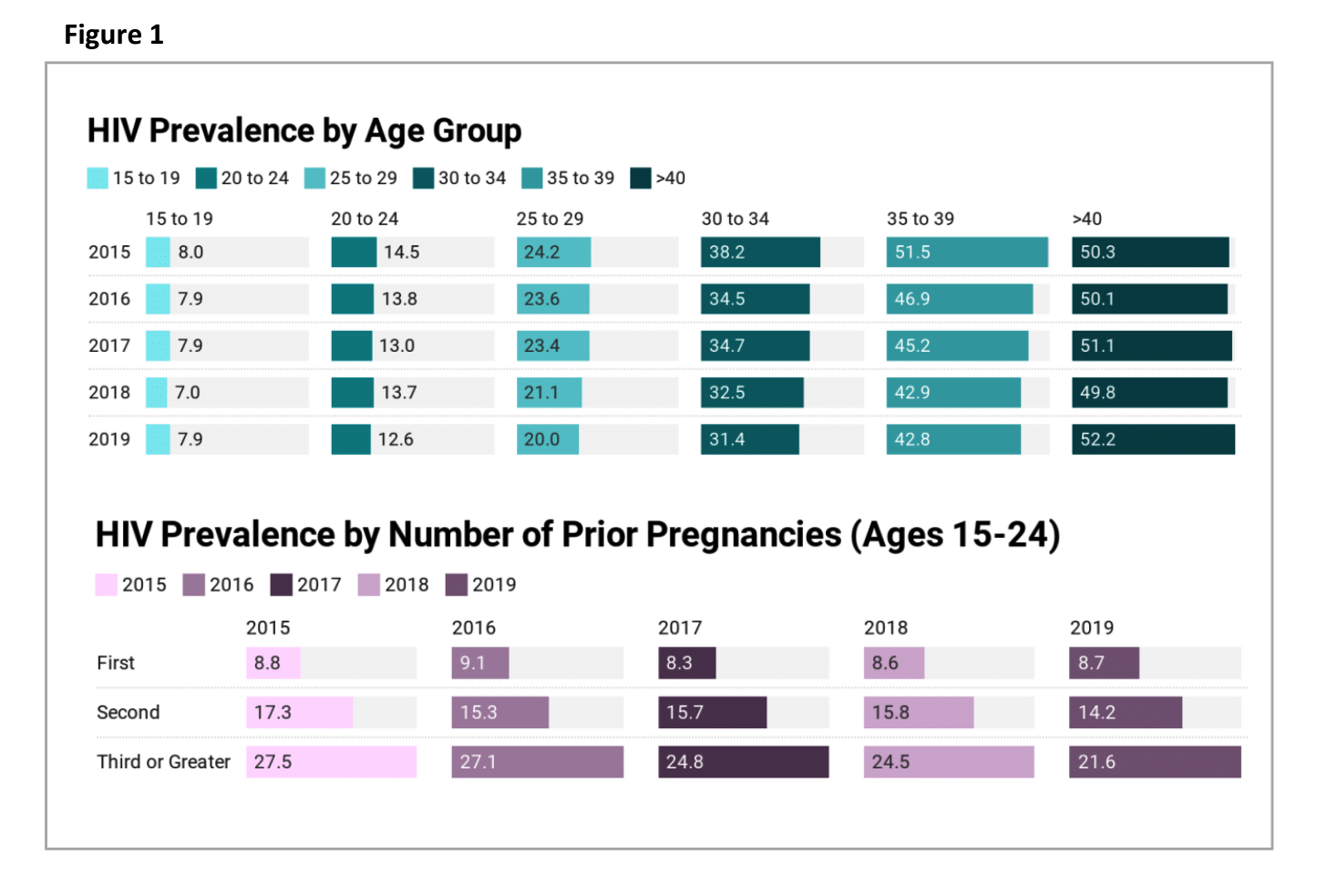
Among the 120,755 antenatal records reviewed during the study period, the overall prevalence of HIV infection was 24.1%. Prevalence differed by site of delivery, ranging from 16.1%-28.2% and increased markedly with age (Figure 1). Lower educational attainment (OR=3.28 95% CI 3.07-3.50) and being unmarried (OR=1.98 95% CI 1.88 – 2.08) were associated with HIV infection. Prior pregnancy was a strong risk factor for HIV (OR=2.22 95%CI 2.10-2.29): prevalence was 10.0% with a first pregnancy, 21.0% with a second, and 39.2% with a third or greater. The same age adjusted trends were seen in women aged 15-24, with 2-3-fold increase between a first and third pregnancy (Figure 1). Prevalence decreased linearly during the 5-year study period from 25.8% to 22.7% (p <0.001). Among age specific strata, the greatest absolute decline over the 5-year study period was seen in those ages 25-39, who showed a 5.4% absolute decrease from 2015 to 2019 (Figure 1). Minimal declines were seen in those 15-24, with a decrease of only 1.0% over the same period.
While overall trends in Botswana show HIV prevalence declining among pregnant women, prevalence among the youngest age group has remained stagnant. Preventative intervention utilizing pre-exposure prophylaxis (PrEP) should be prioritized during and immediately after the first pregnancy.