Several prospective cohort studies have demonstrated that HIV-associated Kaposi sarcoma (KS) is declining and suggest that its incidence is likely to diminish further. However, these trends may not be present throughout the United States and in all races or age groups over time. Moreover, little is known about individuals with HIV infection and KS receiving care with Medicare. Here, we study changes in demographics and causes of mortality over time among patients with HIV-associated KS enrolled in the Medicare cohort.
We queried the US Medicare dataset between 1999-2017 provided by the Virtual Research Data Center’s Chronic Conditions Warehouse. Individuals with an HIV diagnosis (B20, Z21 from ICD10-CM or 042 from ICD9-CM) on any claim in any study year were included. Within this cohort, a subcohort for these analyses included individuals who required care for a KS diagnosis (using 21 diagnostic codes from ICD9-CM and ICD10-CM) within a year group were reported as a distinct individual regardless of the number of times a claim featured a KS diagnosis. Mortality was classified from death certificates and primary cause was described as either ICD Chapters B (Infectious Diseases, including HIV), C (Cancer) and I (Heart Disease). Analyses were divided into 3 eras (1999-2005, 2006-2010, 2011-2017). Statistical analyses of demographic differences by time period were evaluated using Chi square analyses and 2×2 contingency for 1999-2005 compared with 2011-2017.
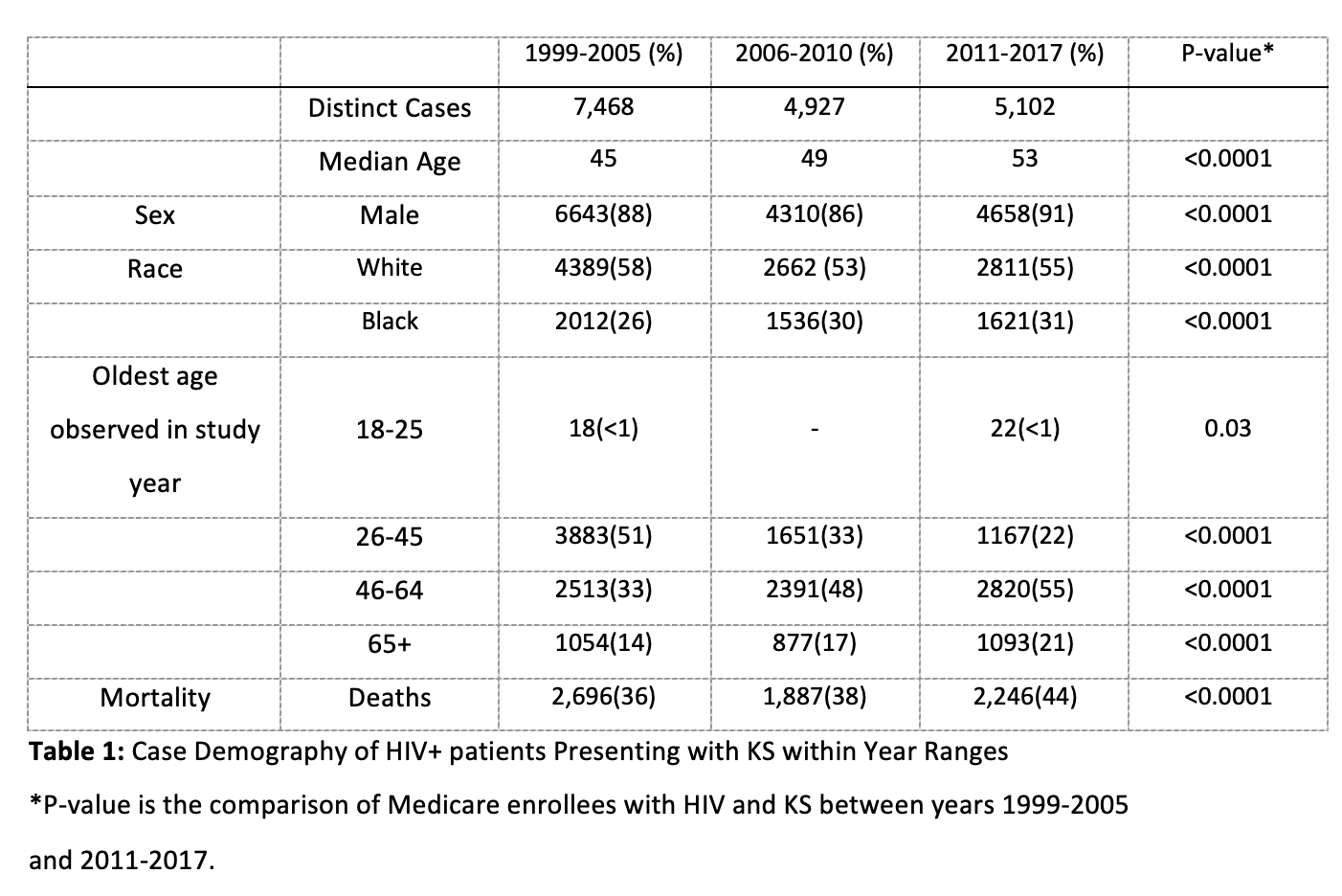
Between 1999-2017, there were 426,352 individuals within HIV Medicare cohort, including 14,046 distinct beneficiaries billing Medicare for KS over all 3 time periods. Patients with HIV-associated KS were predominantly male, but we noted an increase in the proportion of Black patients over time (26% in 1999-2005 to 31% in 2011-2017, P <0.0001, Table 1) and of those between 46-64 years of age (33% in 1999-2005 to 55% in 2011-2017, P <0.0001); impacting an older population over time. The overall proportion of deaths reported of patients with KS during an era increased over time from 36% in 1999-2017 to 44% in 2011-2017 (P<0.0001). Death from KS decreased over time but primary causes of death from cardiovascular diseases and other cancers (lung cancer, hepatocellular cancer and anal cancer) increased.
HIV-associated KS remains an important and persistent malignancy with changing demographics and primary causes of death over time within the HIV Medicare cohort.