Background:
Among people with HIV (PWH) with co-morbid opioid use disorder (OUD), initiation and retention in OUD treatment (e.g., buprenorphine, methadone) substantially reduces overdose deaths and improves HIV viral suppression. We sought to characterize the OUD care cascade for viremic PWH experiencing homelessness enrolled in a low-barrier HIV primary care model with embedded addiction support services.
Methods:
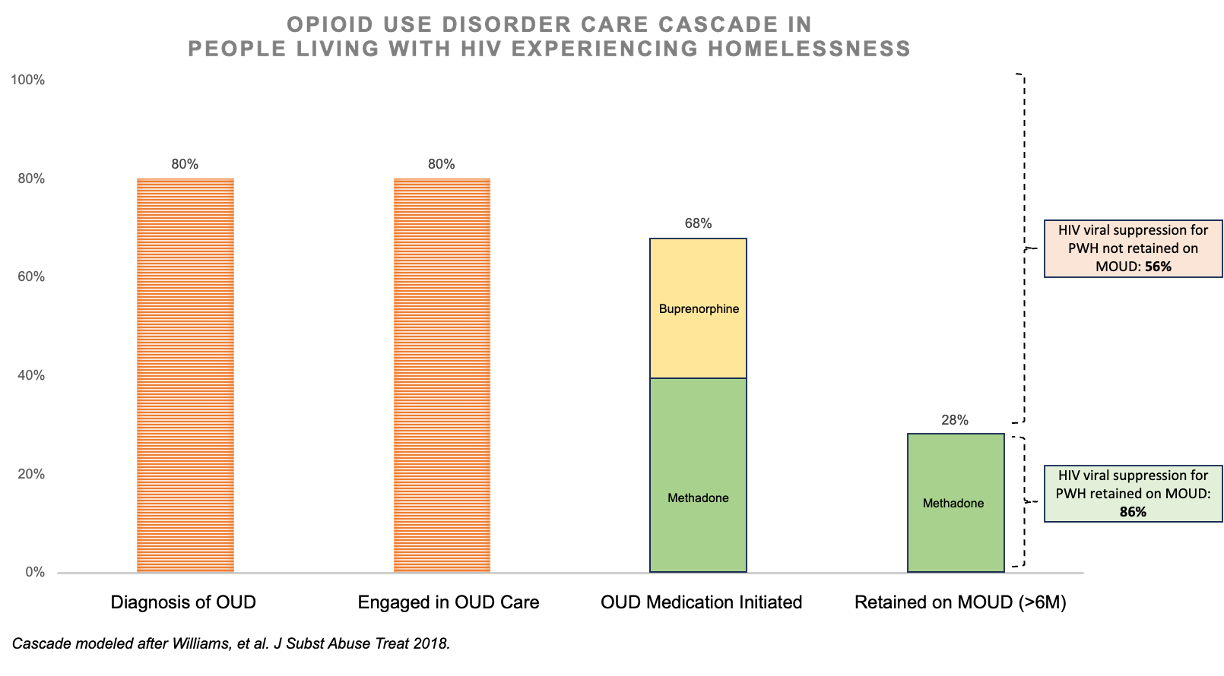
The POP-UP clinic at Ward 86 provides comprehensive primary care for viremic PWH with housing instability using a drop-in model with interdisciplinary services including counseling, same-day buprenorphine initiation, methadone clinic in an adjacent building, and on-demand Addiction Medicine consultation. We conducted a retrospective chart review of enrolled patients from February 2019 to July 2023. We identified those with opioid use upon enrollment and tracked their progression through a previously published care cascade for OUD (Figure).
Results:
Among 145 PWH experiencing homelessness enrolled in low-barrier primary care, 138 (94%) used substances (78% methamphetamine, 17% opioids, 10% cocaine). Of the 17% who used opioids (25/145), 84% identified as cisgender men, 58% identified as White, 20% Latine, and 16% Black. Almost all opioid use was fentanyl (24/25 fentanyl, 1/25 heroin). All 25 patients reported concomitant use of methamphetamine. Median follow up time was 28 months (interquartile range 12 – 39). Of n=25, 80% (20) were diagnosed with OUD and offered methadone or buprenorphine (i.e., engaged in OUD-specific care); 68% (17) initiated MOUD, but only 28% were retained on MOUD in the subsequent 6 months (Figure). Of n=5 not diagnosed with OUD, n=3 had remote history of OUD, n=2 reported unintentional exposure to fentanyl (with clinical opioid overdose). Of PWH retained on MOUD, 100% were on methadone. HIV viral suppression in PWH retained on MOUD was 86% (6/7) vs. 56% (10/18) HIV viral suppression in PWH with opioid use not initiated or retained on MOUD.
Conclusions:
For PWH with a high degree of structural vulnerability, retention in MOUD was low (<30%) despite the availability of low-barrier addiction services in a program serving PWH with homelessness. As all patients retained on MOUD were on methadone, it is crucial to investigate barriers to buprenorphine retention and to enhance methadone clinic referrals from primary care. Finally, addressing the widespread stimulant use observed in this sample of PWH experiencing homelessness is a top priority.