Background:
The WHO guidelines recommend dolutegravir (DTG) as the preferred anchor drug for first-line ART, as for second-line ART after a NNRTI failure. DTG has a higher resistance barrier and efficacy, fewer side effects, and a safer profile than other options. The transition to DTG increases viral suppression and ART durability. The Strategic Fund (SF) of the Pan American Health Organization (PAHO) is a technical cooperation mechanism for pooled procurement of essential medicines and health supplies that meet international standards. PAHO provides technical assistance to countries on rational selection and use of medicines and health technologies, demand planning, and strengthening of supply management systems. Here we describe our experience supporting countries to access DTG for adults and children
Methods:
Quantitative, descriptive analysis of purchase orders from Latin American and Caribbean countries between January 2018 to September 2023. All products containing DTG were included in the analysis. For comparison, we included all NNRTIs, PIs, and other integrase inhibitors, but excluded NRTI drugs to avoid duplication. We calculated the average annual cost of treatment per unit procured, weighted by the number of units procured. Correlations were calculated using the Pearson coefficient (r).
Results:
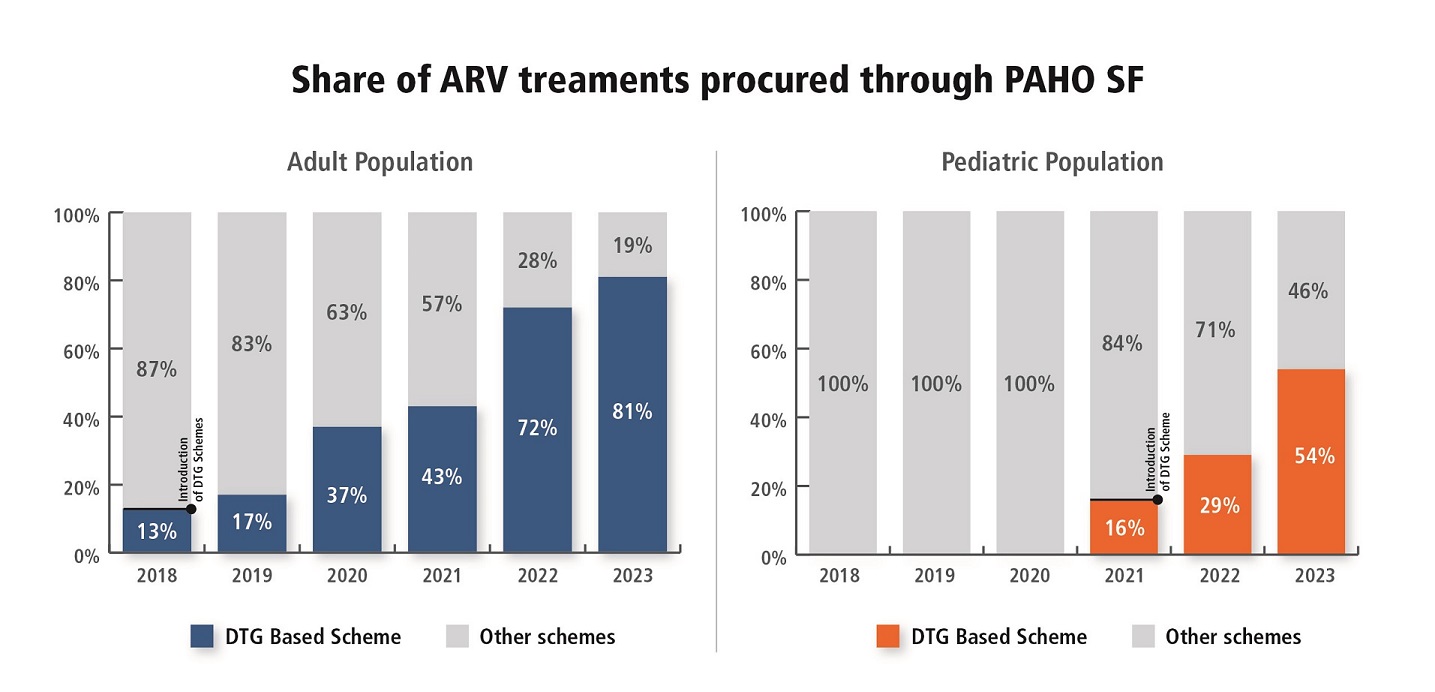
Adult DTG-based treatments procurement increased from 13% in 2018 (58,135 annual treatments) to 81% in 2023 (240,282 annual treatments procured up to September). Non-DTG treatments decreased from over 390,000 treatments in 2018 to 97,000 in 2022 and 57,880 by September 2023. In addition, the annual unit prices of DTG-based treatments decreased by 40% since 2018 (from 69 USD to 37.45 USD a year), while non-DTG regimens increased by 15% in the same period (from 75.72 USD to 86.76 USD a year). The acquisition of treatment was inversely associated with the cost (r 0.925). For pediatrics, dispersable pDTG 10mg was introduced in 2021 and continued to increase from 16% to 54% by September 2023. The use of pDTG represented a 90% price reduction compared to other regimens (53 USD a year compared to 549 USD a year).
Conclusions:
SF and PAHO technical cooperation increased the access to generic DTG-based ART for adults and children in Latin America and the Caribbean. The transition to DTG represented significant savings due to the lower price of DTG compared to non-DTG regimens, in particular for children, which was a strong incentive for transitioning to more effective and safer treatments in the Region.