Background:
Although our understanding of immunopathology in the risk and severity of COVID-19 disease is evolving, a detail of immune response in long-term consequences of COVID-19 infection remains unclear. Recently, few studies have detailed the immune and cytokine profiles associated with PASC. However, dysregulation of immune system driving pulmonary PASC is still largely unknown.
Methods:
To characterize the immunological features of PPASC, we performed droplet-based scRNA-sequencing using 10X genomics to study the transcriptomic profiles of peripheral blood mononuclear cells (PBMCs) from participants naïve to SARS-CoV-2 (NP, n=2) and infected with SARS-CoV-2 with chronic pulmonary symptoms (PPASC, n=2).
Results:
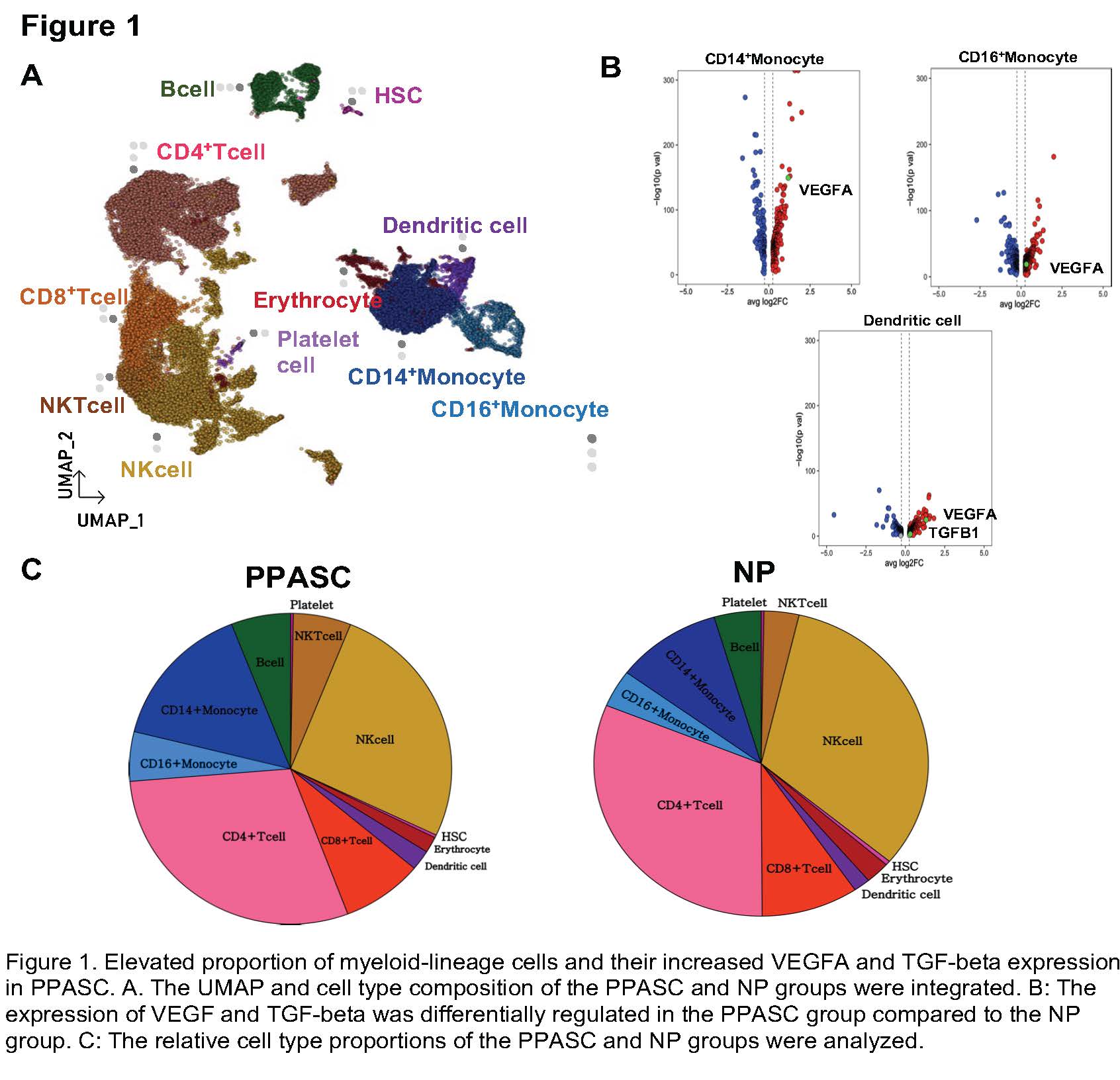
Analysis of more than 34,000 PBMCs by integrating our dataset with previously reported control datasets generated cell distribution and identified 11 immune cell types based on canonical gene expression. The proportion of myeloid-lineage cells (CD14+monocyte, CD16+monocyte, and dendritic cells) and platelets were increased in PPASC compared with those of NP. Specifically, PPASC displayed up-regulation of VEGFA and transcription factors, such as ATF2, ELK, and SMAD in myeloid-lineage cells. Also,TGF-β and WNT signaling pathways were up-regulated in these cell population. Cell-cell interaction analysis identified that myeloid-lineage cells in PPASC participated in regulation of fibrosis and immune response, such as VEGFA (increased) and MIF (decreased) interactions.
Conclusions:
Together, this study provides high-resolution insights into immune landscape in PPASC. Our results emphasize differences in myeloid lineage-mediated fibrosis and immunity between PPASC and NP, suggesting they could act as potential pathological drivers of PPASC.