Background:
The COVID-19 pandemic has been striking for three years and, despite the regular arise of new variants, populations are now widely immune and protected from severe symptoms. However, immunocompromised patients still have worse clinical outcomes, higher mortality and rarely develop effective immunity through vaccination or infection. Here, we studied the temporal distribution of infections, viral loads (VL) as well as the viral genetic diversity among an immunocompromised patient cohort, between January 2021 and September 2022.
Methods:
Overall, 478 immunocompromised patients (solid organ transplant, HIV positive, cancer, autoimmune disease) and 234 controls (healthcare workers) from Pitié-Salpêtrière and Bichat Claude-Bernard University hospitals (Paris, FRANCE) were diagnosed with SARS-CoV-2 infection by RT-qPCR. Whole genome sequencing was performed according to ARTIC protocol on Oxford Nanopore platform. All 712 full viral genomes were used to determine lineages and mapped to Wuhan-Hu-1 reference to produce a maximum likelihood phylogenetic tree (IQTree, 1000 bootstraps). Differences in temporal distributions of infections and VL were assessed using nonparametric statistical tests.
Results:
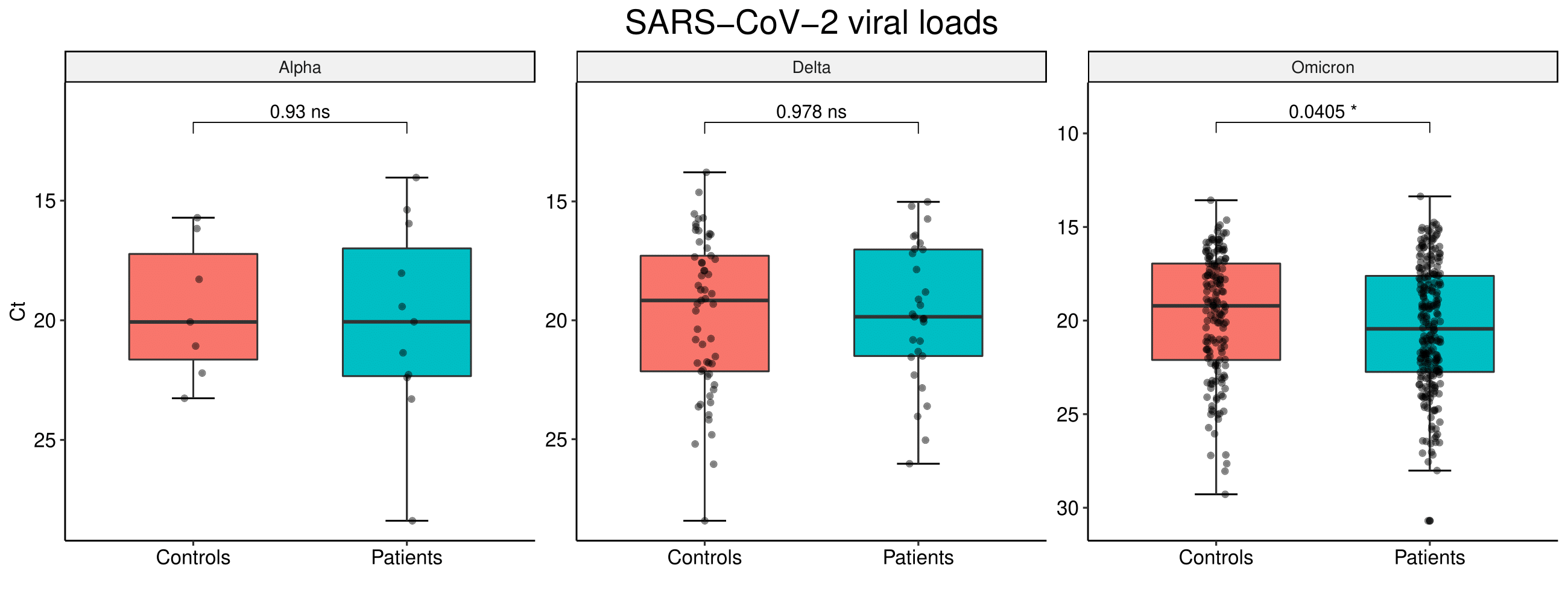
According to phylogenetic analysis, genomes from SARS-CoV-2 infecting immunocompromised patients and those infecting healthy individuals are distributed in a similar way. No significant genetic differences can be observed between viral genomes from patients and controls within the different lineages. Temporal distribution of COVID-19 infections were also similar between immunocompromised patients and controls, with the exception of BA.2 variant for which controls were infected earlier (p < 0.001). VL were significantly lower in immunocompromised patients infected with Omicron variants (p=0.04). No differences in VL were observed for Alpha and Delta variants.
Conclusions:
At diagnosis, no intrinsic genetic divergence was observed in virus infecting immunocompromised patients compared to those circulating in the general population. Similarities in temporal distribution of infections between controls and patients suggest that these different groups become infected concomitantly. VL appeared to be lower for Omicron variants in immunocompromised patients. An earlier VL peak of Omicron and a testing of immunocompromised patients hospitalized once severe symptoms have appeared could indicate a delayed testing in these patients, once the replicative phase over.
SAR-CoV-2 viral loads in immunocompromised patients vs controls