Multidrug-resistant tuberculosis (MDR-TB) requires extensive chemotherapy, with up to 2 years of treatment with toxic drugs. Using pooled individual patient data, we aimed to identify patient phenotypes who require shorter or longer treatment durations to optimize their chances of cure.
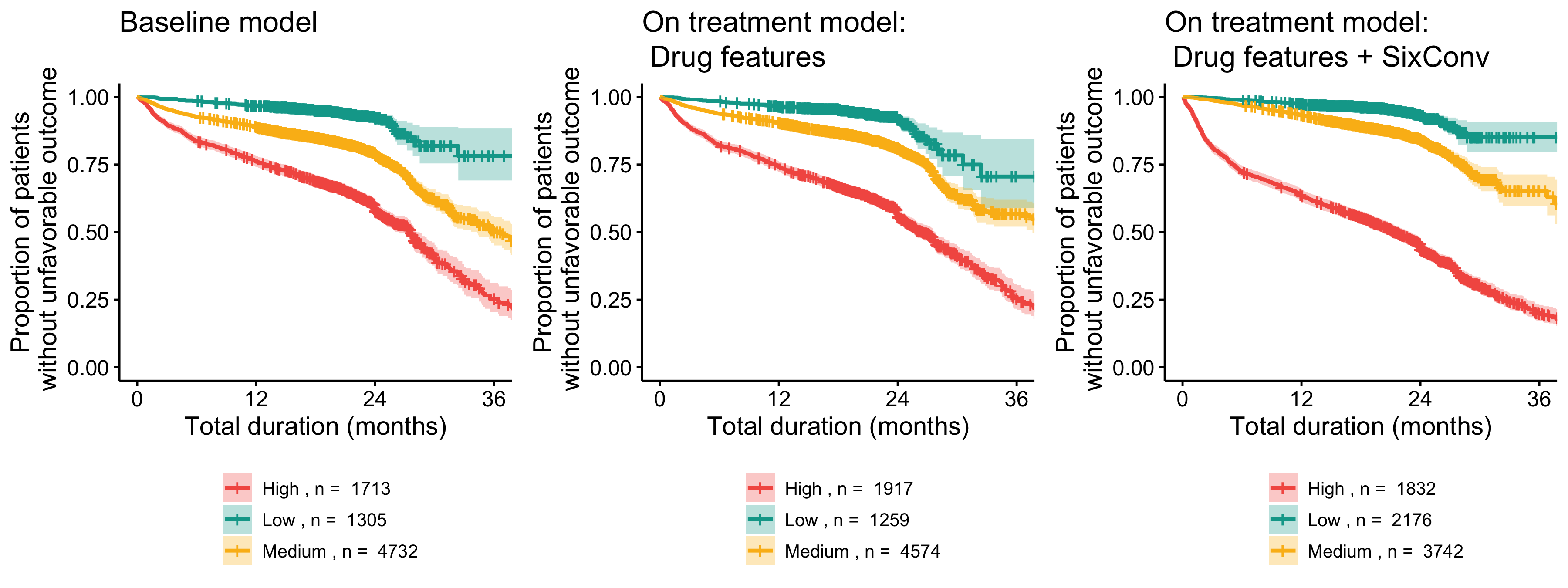
Published observational and experimental studies of MDR-TB treatment (12938 patients) were considered for analysis. Baseline clinical and treatment features, including drug given, duration and six-month culture conversion, were available. Patients who defaulted or were lost to follow up were excluded. Missing data were imputed using multivariate imputation via chained equations. Risk of unfavorable outcome, which included treatment failure and death, was analyzed through multivariate logistic regression models. We developed a baseline model, using baseline clinical predictors, and on treatment models, including additional treatment features predictors. Based on these models, the individual risk scores were computed, and patients were categorized in high (p_unfavorable>50%), medium (15% The final dataset included 5869 patients with treatment success, 628 patients with treatment failure, and 1253 patients who died. In the baseline model, HIV status was the most important predictor of TB unfavorable outcome (aOR 2.3; 95%CI [1.7, 3]; p<0.001). Previous treatment with second line drugs, older age, low BMI, smoking, AFB positivity, extrapulmonary involvement, cavitary disease and resistance to pyrazinamide, fluoroquinolones and injectable drugs were all associated with TB unfavorable outcome (p<0.05). In the on treatment models the use of linezolid, levofloxacin and bedaquiline were associated with lower odds of unfavorable outcome, while the use of kanamycin or capreomycin and PAS were associated with higher odds of unfavorable outcome (p<0.05). Six months culture conversion was the most significant predictor of treatment success. The proportion of patients without unfavorable outcome over treatment duration was significantly different between low, medium and high risk phenotypes (Figure 1). We developed a risk stratification algorithm for patients with MDR-TB based on individual participant meta-analysis of a large dataset. Stratified medicine approaches where treatment duration is selected with greater precision for low, medium and high risk patient phenotypes will maximize chances for cure of all MDR-TB patients.