Background:
Previous research has established the effectiveness of remdesivir (RDV) in reducing mortality among immunocompromised patients hospitalized for COVID-19. In this study, we present data from the Omicron predominant era (Dec’21-Apr’23) by examining in-hospital all-cause mortality for early RDV initiation vs. not initiating RDV among immunocompromised hospitalized COVID-19 patients.
Methods:
Using the PINC AI Healthcare database, adults with immunocompromised conditions (cancer, transplant, hematologic malignancies, immunosuppressive medications, toxic effects of antineoplastics, primary immunodeficiencies, severe combined immunodeficiencies, asplenia, bone marrow failure/aplastic anaemia, or HIV) hospitalized with a primary discharge diagnosis of COVID-19 flagged as ‘present-on-admission’ from Dec’21 to Apr’23 were identified. Analyses were stratified by no supplemental oxygen charges (NSOc) and any supplemental oxygen requirements upon admission. Patients initiating RDV in the first 2 days of admission vs. those not initiating RDV during the hospitalization were matched using 1:1 preferential within-hospital propensity matching with replacement. Time to 14- and 28-day in-hospital mortality or discharge to hospice was examined using Cox Proportional Hazards Model.
Results:
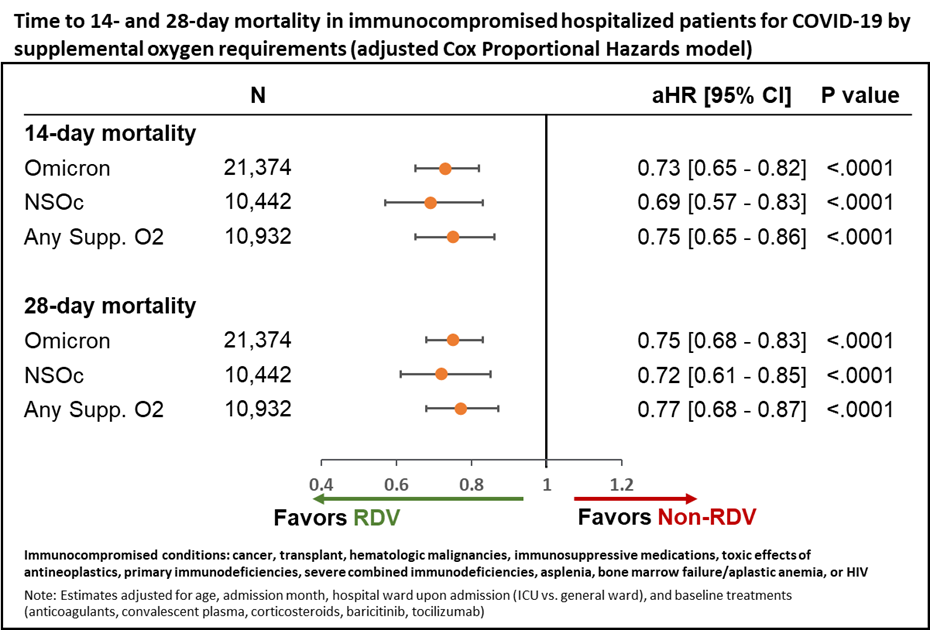
In the study period, 10,687 RDV-treated patients were matched to 4,989 unique non-RDV patients. Post-matching balance was achieved with 74% being 65+ years, 49% with NSOc, and 51% with any supplemental oxygen charges. Unadjusted mortality rate for RDV patients vs. non-RDV patients was 10.3% vs. 13.7% at 14 days and 15.0% vs. 19.2% at 28 days, respectively. After adjusting for baseline and clinical covariates, RDV showed significantly lower mortality risk compared to non-RDV overall (adjusted hazard ratio [95% CI]: 0.75 [0.68-0.83]) in patients with NSOc (0.72 [0.61-0.85]) and in patients with any supplemental oxygen requirement (0.77[0.68-0.87]) at 28 days. A similar benefit for RDV vs. non-RDV was observed for 14-day mortality overall (0.73 [0.65-0.82]) in patients with NSOc (0.69 [0.57-0.83]) and in patients with any supplemental oxygen requirement (0.75 [0.65-0.86]) (Figure).
Conclusions:
RDV continues demonstrating significant mortality reduction among immunocompromised patients hospitalized with a primary diagnosis of COVID-19 in the more recent Omicron period, irrespective of the supplemental oxygen requirements.