Background:
Remdesivir (RDV) was the first FDA-approved medication for COVID-19, with discordant data on efficacy in reducing mortality risk and disease progression. In the context of a dynamic and rapidly changing pandemic landscape, the utilization of real-world evidence is of utmost importance. The objective of this study is to evaluate the impact of RDV on patients who have been admitted to two university referral hospitals in Italy due to COVID-19.
Methods:
All patients older than 18 years and hospitalized at two different universities (Bari and Palermo) were enrolled in this study. To minimize the effect of potential confounders, we used propensity score matching with one case (remdesivir) and one control that never experienced this kind of intervention during hospitalization. Mortality was the primary outcome of our investigation, and it was recorded using death certificates and/or medical records. Severe COVID-19 was defined as admission to the intensive care unit or a qSOFAscore ≥2 or CURB65scores≥3.
Results:
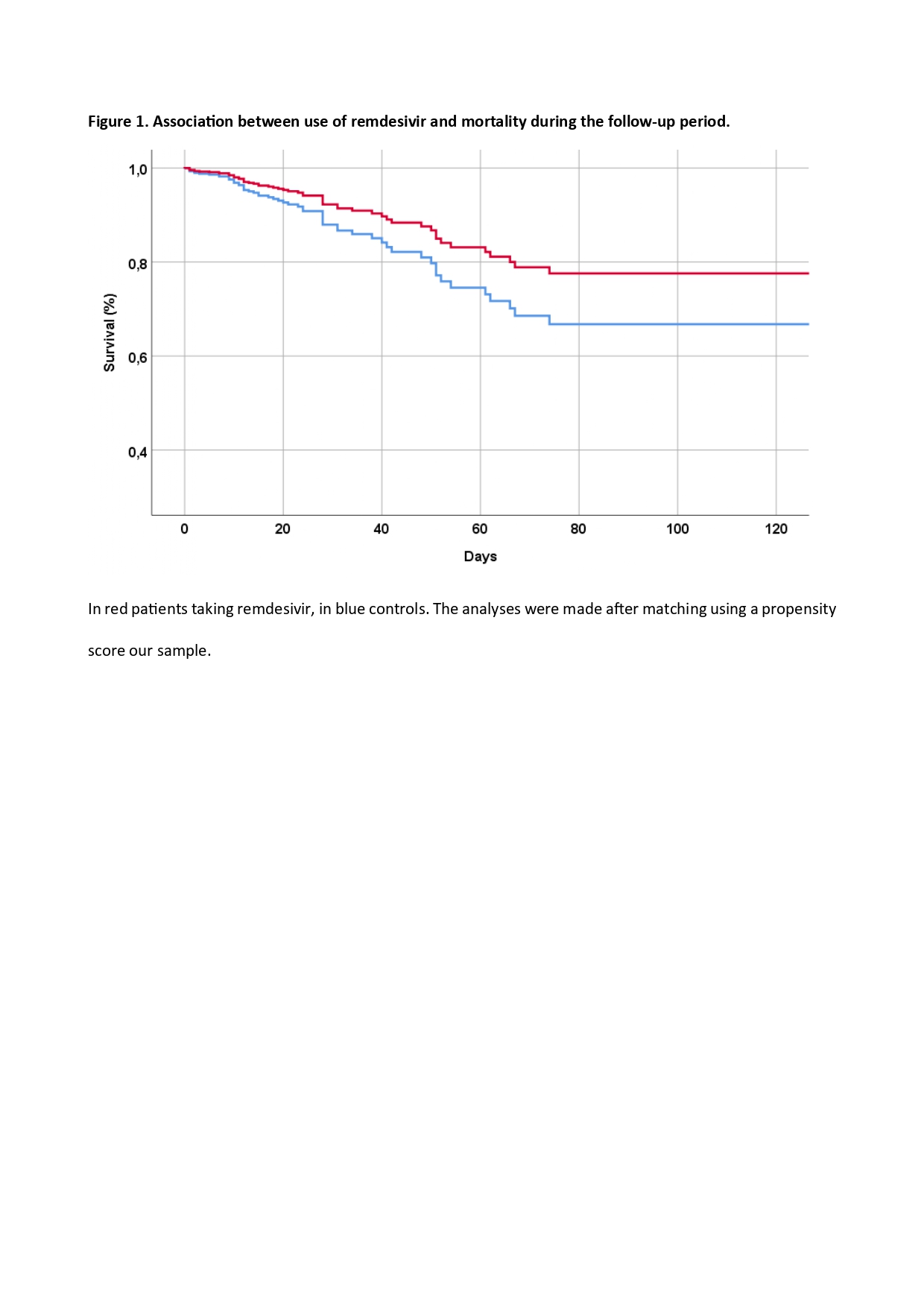
The initial cohort included a total of 1,883 patients hospitalized for COVID-19.The participants taking remdesivir differed for several clinical characteristics compared to the controls. Therefore, a propensity score matching was proposed for better accounting of these baseline differences. After using propensity score matching, 365 patients taking remdesivir and 365 controls were included.All the other clinical, radiological, and pharmacological parameters were balanced between the two groups. The use of remdesivir in our cohort was associated with a significantly lower risk of mortality during the follow-up period (HR = 0.63; 95% CI: 0.35-0.92; p = 0.01). Moreover, RDV was associated with a significantly lower incidence of non-invasive ventilation (OR = 0.25; 95% CI: 0.18–0.35) and severe COVID (OR = 0.42; 95% CI: 0.29–0.60). Furthermore, in the 365 patients taking Remdesivir, we observed two cases of mild renal failure and two cases in which the physicians decided to interrupt Remdesivir for QT elongation.
Conclusions:
Our study suggests that the use of Remdesivir in hospitalized COVID-19 patients is a safe therapy associated with improved clinical outcomes, including halvy mortality and severe COVID, and with a reduction of around 75% of the risk of invasive ventilation. In a constantly changing COVID-19 scenario, ongoing research is necessary to tailor treatment decisions based on the latest scientific evidence and optimize patient outcomes.