Background:
Persons with HIV (PWH) with high mobility face multiple obstacles to HIV care engagement and viral suppression due to planned and unplanned travel away from their clinics’ catchment areas.
Methods:
In an individual randomized trial, we evaluated the effect of a mobile PWH-centered HIV care intervention on viral suppression vs. Ministry of Health standard care (control) among mobile adults (≥15 years old; and ≥2 weeks out of community in prior 12 months) with either viral non-suppression or recent missed visits in Kenya and Uganda (SEARCH NCT04810650). The intervention included dynamic choice of a “travel pack” (emergency 14-day ART supply, discrete ART packaging and travel checklist), multi-month (up to 6-month) and offsite medication refills, facilitated transfer to out-of-community clinics, and routine screening for travel and hotline access to a mobility coordinator who oversaw intervention delivery. The primary outcome was HIV viral suppression (viral load < 400 c/mL) at 48-weeks. Secondary outcomes included retention in care (proportion of time in care; “out of care” time starting 14-days after missed scheduled visit) and ART possession over 48 weeks. Outcomes were compared by arm with targeted minimum loss-based estimation.
Results:
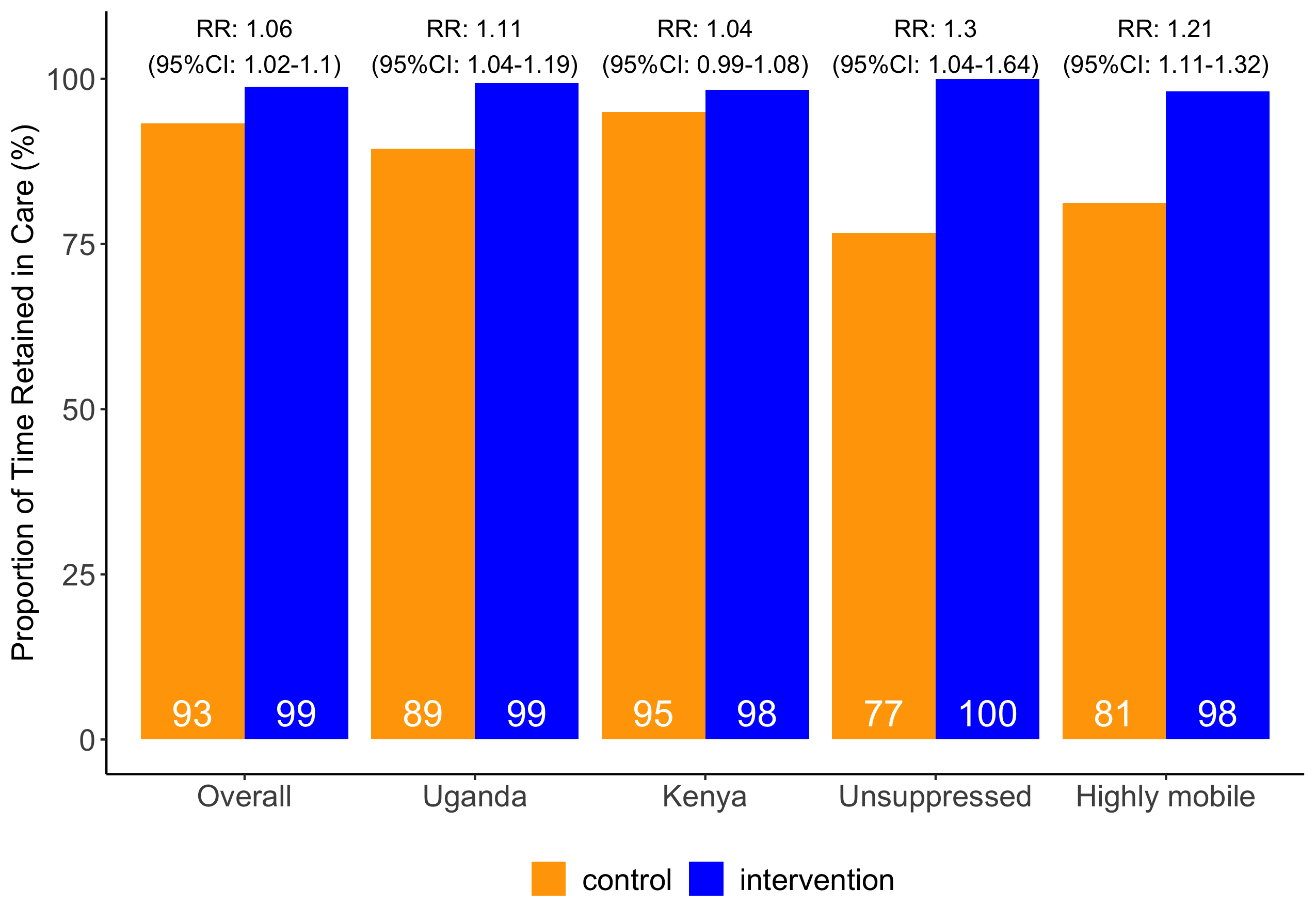
From April-July 2021, 201 participants (102 intervention, 99 control) were enrolled: 109 (54%) were female, 101 (50%) from Kenya, median age was 37 (IQR: 29-43), and 91 (45%) of participants (46% intervention, 44% control) had a VL >400 c/mL in the year prior to enrolment. At enrolment, viral suppression was 80% in intervention and 85% in control. Of 196 (98%) participants analysed at 48 weeks, there was no significant difference in viral suppression between the intervention (85%) vs. control (86%) arms. Viral suppression by arm did not differ significantly in subgroup analyses by sex, country or age ( < 30 vs ≥30). Retention in care was higher in intervention vs control (98.8% vs. 93.2%, aRR: 1.06 (1.02-1.1); p < 0.001; most notably in the unsuppressed and highly mobile populations [Figure]), as was ART possession (97.5% vs. 91.4%, aRR: 1.07 (1.03-1.11); p < 0.001) over 48-weeks.
Conclusions:
A person-centered intervention designed to overcome barriers to HIV care and viral suppression among mobile PWH did not result in significant improvements in viral suppression vs. standard care, but significantly improved retention in care and ART possession, which may confer long term benefit.
&