Background:
Cancer is a leading cause of morbidity and mortality among people with HIV (PWH). Earlier HIV diagnosis and timely access to antiretroviral treatment (ART) have led to longer life expectancies among PWH, resulting in an increase in aging-related comorbidities, including non-AIDS-defining cancers (NADC). While the epidemiology of NADC in PWH has been described in high resource settings, less is known in low- and middle-income settings. We evaluated the prevalence and incidence of NADC and AIDS-defining cancers (ADC) within the Caribbean, Central and South America network for HIV epidemiology (CCASAnet) and factors associated with these malignancies.
Methods:
PWH ≥18 years old enrolled at CCASAnet sites in Argentina, Brazil, Chile, Honduras, Mexico and Peru from 2000-2020 were included. Prevalent (diagnosed any time before or <90 days after clinic entry) and incident (diagnosed ≥90 days after clinic entry) NADC and ADC were collected. Clinical and demographic factors associated with prevalent and incident ADC and NADC were evaluated using multivariable logistic regression and multi-state Cox proportional hazards models, respectively. Models included age, sex, HIV acquisition risk, site, year of cohort entry, and time-updated ART, CD4 cell count, and history of other respective cancer.
Results:
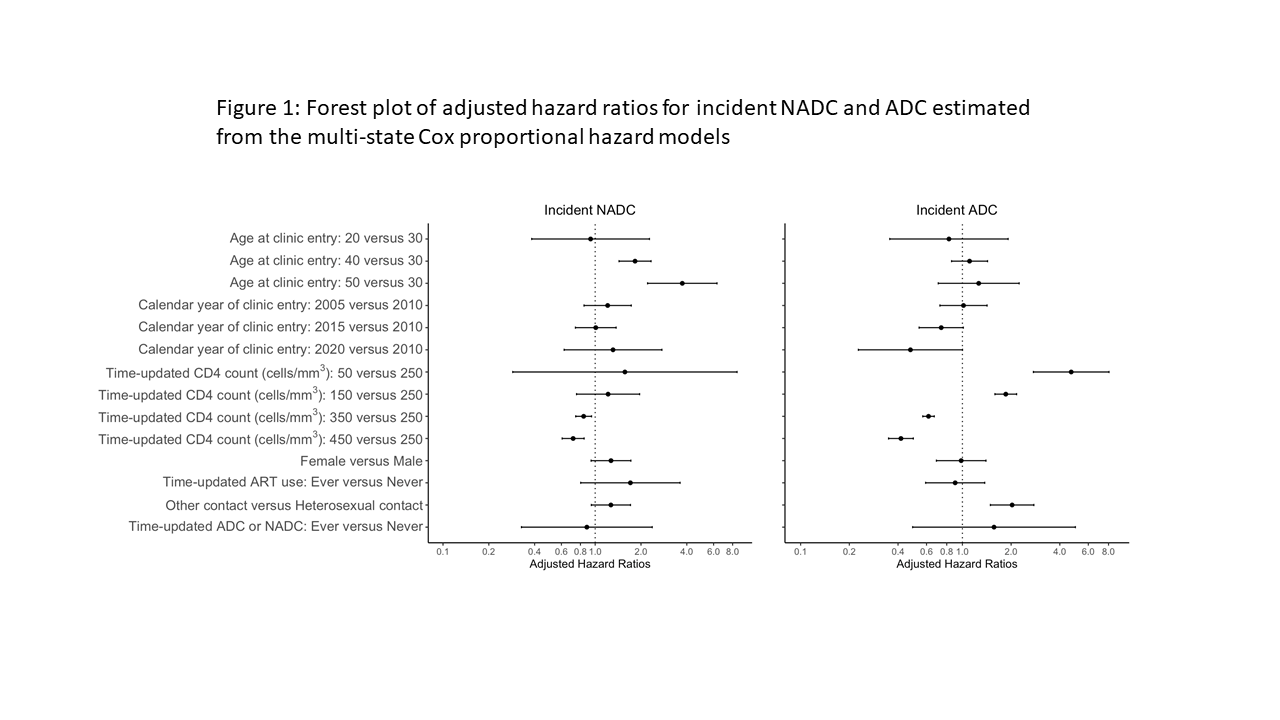
In total, 27706 PWH were included. At clinic entry, median age was 33 years (IQR: 27-41), 78% were male, 37% had previous ART, and median CD4 cell count was 257 cells/ ml (IQR: 96- 457). Prevalent ADC was present in 795 PWH, 101 had NADC and 7 had both ADC and NADC. Risk of prevalent ADC and NADC varied by site. Older PWH, those with lower CD4 count (<250 cells/ml), and HIV acquisition risk factors other than heterosexual contact were more likely to present with prevalent ADC and NADC (p<0.05 for all). Those with male sex, earlier year of entry and prior ART were also more likely to present with ADC (p<0.05 for all). During a median of 3.9 (IQR: 1.0-9.4) years of follow up, there were 300 incident ADC and 264 NADC. Risk factors for incident ADC and NADC are shown in Figure 1.
Conclusions:
Prevalent and incident ADC were more frequent than NADC among PWH in CCASAnet. Older age and lower CD4 were associated with prevalent and incident NADC and prevalent ADC. Recent years of cohort entry and higher CD4 count were associated with decreased risk of prevalent and incident ADC. These findings continue to underscore the importance of early HIV diagnosis and treatment.