Background:
People with HIV (PWH) have a higher risk of COVID-19 morbidity and mortality. SARS-CoV-2 vaccination is highly effective in preventing severe COVID-19, although medical mistrust may contribute to vaccine hesitancy among PWH.
Methods:
PWH from 8 sites in the Centers for AIDS Research Network of Integrated Clinical Systems (CNICS) completed the clinical assessment of patient-reported outcomes including a vaccine hesitancy instrument as part of routine care from 2/21-4/22. Participants were defined as vaccine hesitant if they had not yet received the SARS-CoV-2 vaccine and would probably or definitely not receive it. We assessed factors associated with SARS-CoV-2 vaccine hesitancy using logistic regression, and adjusted for demographics, unsuppressed viral load >200 copies/mL, calendar month and time on ART.
Results:
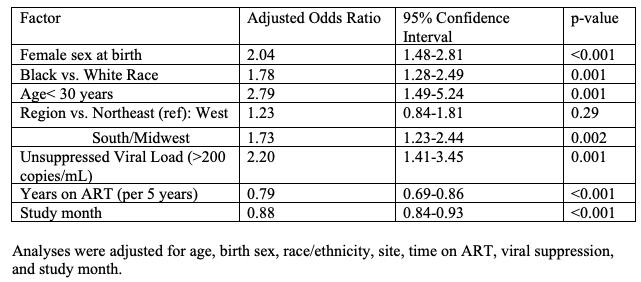
Overall, 3,278 PWH with a median age of 55 responded; 19% were female sex at birth; 93% were virally suppressed. At the time of survey, 27% reported they had not received the SARS-CoV-2 vaccine, of whom 27% (n=242; 7% overall) reported vaccine hesitancy. Of these 242, 82% expressed concerns about vaccine efficacy; 86% about side effects; 38% reported distrust of healthcare, 53% reported concerns about vaccine contents (i.e. trackers, live virus); and 24% did not perceive risk from COVID-19. Factors associated with vaccine hesitancy included female sex (Adjusted Odds Ratio [AOR] 2.0; 95% Confidence Interval (CI): 1.5-2.8; Table), Black vs. White race (AOR 1.8; 95% CI: 1.3-2.5), age< 30 years (AOR 2.8; 95% CI: 1.5-5.2), South/Midwest vs. Northeast region (AOR 1.7; 95% CI: 1.2-2.4), years on ART (0.8; 0.7-0.9) and unsuppressed viral load (AOR 2.2; 95% CI: 1.4-3.5). Hesitancy decreased over time (AOR 0.9 per month; 95% CI: 0.8-0.9). Vaccine side effects were the primary concern for women; vaccine contents for Black PWH and those who were unsuppressed; and lack of perceived COVID-19 risk for youth.
Conclusions:
Vaccine hesitancy was reported by approximately 7% of a U.S. multi-site cohort of PWH, and it was more prevalent among Black PWH, women, youth, those with unsuppressed viral loads, and residents of the South/Midwest. The association between virologic non-suppression and vaccine hesitancy highlights the intertwined challenge of medical mistrust for both HIV and COVID-19. Although vaccine hesitancy decreased over time, renewed efforts will be needed to address concerns of PWH about the COVID-19 vaccine, given the ongoing need for revaccination with the evolution of the pandemic.
Factors Associated with SARS-CoV-2 Vaccine Hesitancy in U.S. HIV Clinics