Background:
Black/African American (Black) and Hispanic or Latino (Hispanic) populations have high HIV incidence but low coverage of preexposure prophylaxis (PrEP) prescriptions among those with PrEP indications. Pharmacy data are used to monitor the effectiveness of programmatic activities to decrease racial/ethnic disparities in PrEP use. These data are missing race/ethnicity variables for about 70% of persons so race/ethnicity at the national level must be imputed. Medicaid data includes the most complete race/ethnicity information among health services databases and can be useful to understand national trends in PrEP use by race/ethnicity.
Methods:
We analyzed Centers for Medicare and Medicaid Services data for all 50 U.S. states and the District of Columbia to estimate the number of Medicaid enrollees prescribed PrEP from 2015–2020 by sex, age group, and race/ethnicity. We used a validated algorithm that excluded persons prescribed antiretroviral drugs for HIV treatment, hepatitis B treatment, or HIV postexposure prophylaxis. We calculated estimated annual percentage changes (EAPCs) and 95% confidence intervals (CIs) in the number of persons prescribed PrEP from 2015–2020. We also estimated the trend in PrEP prescriptions among men and women by race/ethnicity from 2015–2020.
Results:
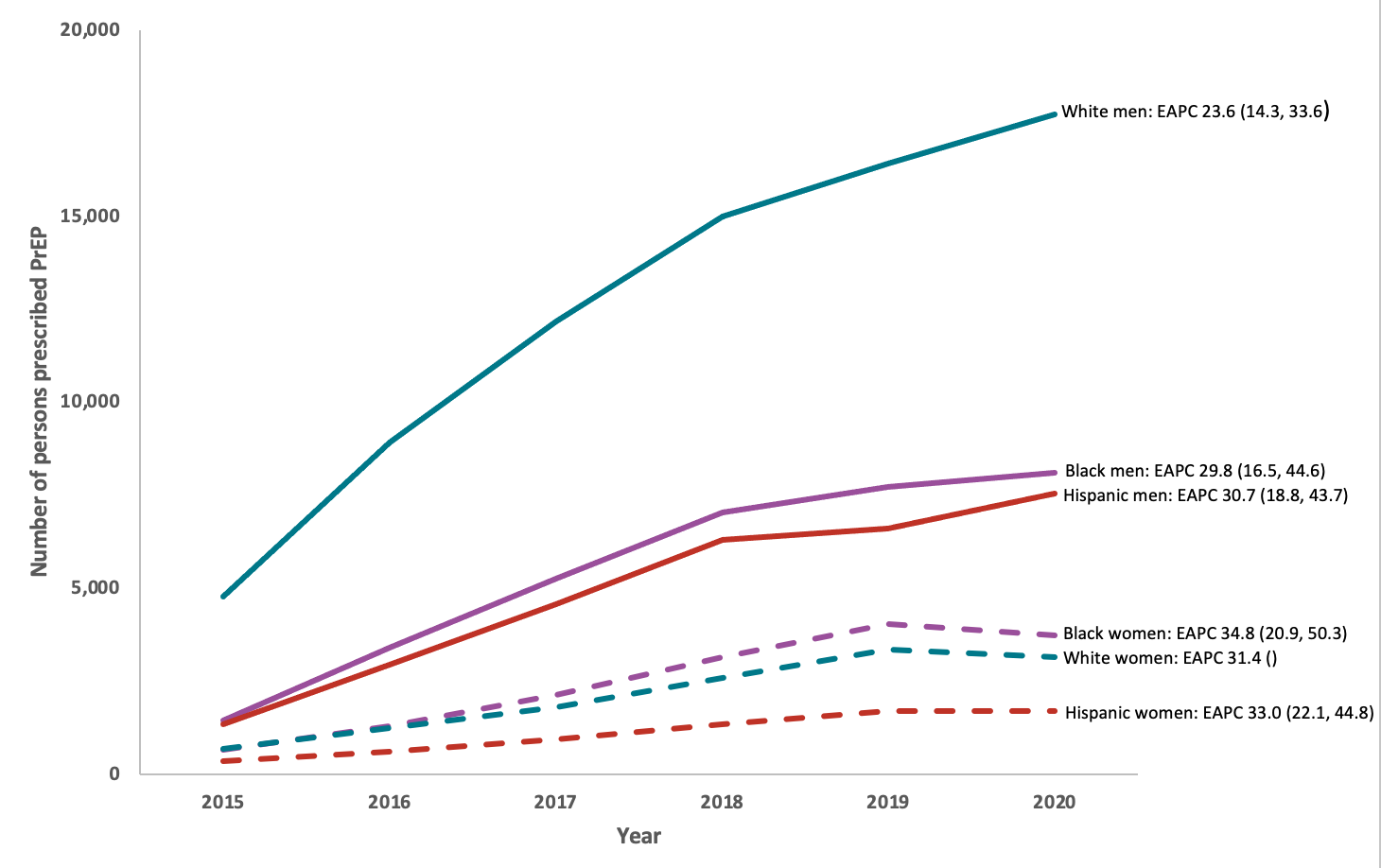
The number of Medicaid enrollees prescribed PrEP increased from 11,396 in 2015 to 52,907 in 2020 (EAPC 28.4%, 95% CI 18.0, 39.8). In 2020, 37,467 (71.9%) of enrollees prescribed PrEP were aged 16-39 years, 10,021 (18.9%) women, 11,825 (22.3%) Black, 9,235 (17.5%) Hispanic, and 20,854 (39.4%) White. The rate of increase in PrEP prescriptions was similar among White (EAPC 23.6% (14.3, 33.6)), Black (EAPC 29.8% (16.5, 44.6)), and Hispanic men (EAPC 30.7% (18.8, 43.7)) but the disparity in the number of White men prescribed PrEP compared with Black or Hispanic men increased from 2015–2020 (Figure). Only 3,735 Black women were prescribed PrEP in 2020.
Conclusions:
The number of persons prescribed PrEP increased in all populations but continuing racial/ethnic disparities were observed and worsened among men. Black women had a similar trend compared with White women despite disproportionately higher rates of HIV diagnosed among Black women. Interventions designed to support PrEP implementation for Black and Hispanic gay, bisexual, and other men who have sex with men and Black women can support reducing HIV disparities and reaching goals of the Ending the HIV Epidemic in the U.S. initiative.
Figure. Trend in PrEP prescriptions among male and female Medicaid beneficiaries by race/ethnicity, United States, 2015-2020