Background:
Dolutegravir (DTG) is the preferred second-line antiretroviral backbone agent for people living with HIV (PLWH) failing a first-line efavirenz (EFV)-based regimen. EFV induces genes associated with the metabolism and transport of DTG. The resulting drug-drug interaction between EFV and DTG significantly reduces DTG’s exposure for up to 14 days when switching from an EFV-based regimen. Exposure to sub-therapeutic DTG concentrations in PLWH failing EFV-based first-line ART could select for DTG resistance mutations. We conducted a pharmacokinetic study to evaluate DTG trough concentrations after switching from a failing first-line EFV-based regimen to assess the need for a lead-in supplemental dose of DTG.
Methods:
We conducted a pharmacokinetic sub-study nested within a phase 2b trial (the ARTIST study) that randomised participants failing a first-line EFV-based regimen to supplemental DTG 50mg or placebo for 14 days post-switch to tenofovir/lamivudine/DTG (TLD). We obtained EFV (baseline and days 3, 7, and 14) and DTG trough plasma concentrations (days 3, 7, 14, and 28). Dose-to-sampling time was assessed using electronic medication dispensing devices. CYP2B6 metaboliser genotype was determined as this affects the extent of induction by EFV.
Results:
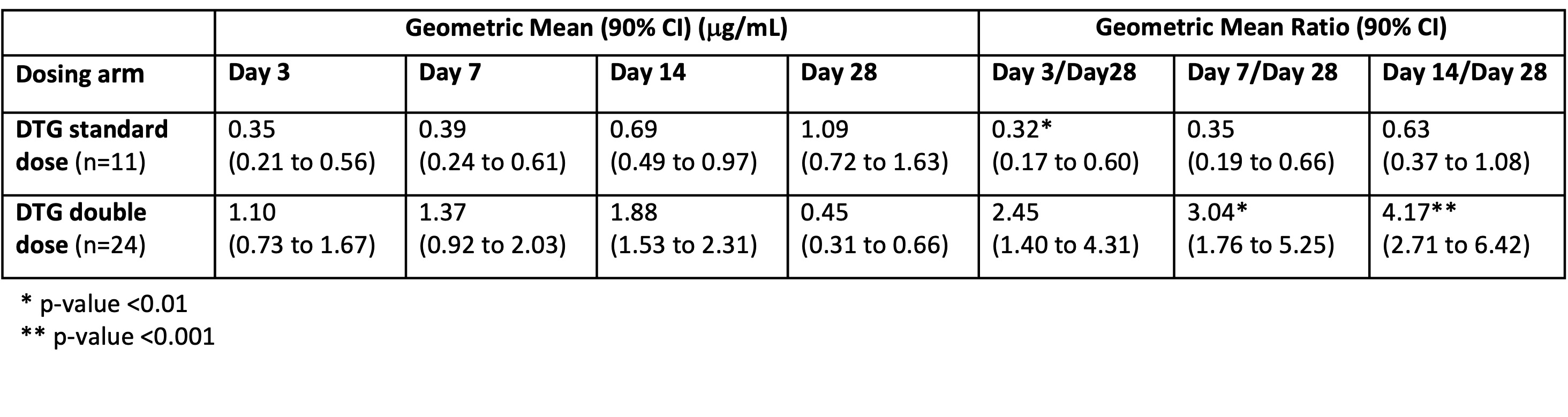
We enrolled 36 participants: 11 in the placebo arm and 25 in the supplemental arm. One participant in the supplemental arm had undetectable baseline EFV and was excluded. The median age was 36 years (IQR 30–42), 77% female, baseline CD4 254 cells/mm3 (IQR 158–441), and HIV-RNA log 4.0 copies/mL (IQR 3.3–4.4). One participant in the supplemental DTG arm and none in the placebo arm had a DTG trough concentration below the PA-IC90 (0.064 μg/mL) at day 3. DTG trough concentrations per arm are presented in Table 1. The difference in day 28 trough concentrations between the supplemental and placebo DTG arms was explained by CYP2B6 metaboliser genotypes: there were no slow metabolisers in the placebo arm and 5 in the supplemental arm, and DTG concentrations in normal and intermediate CYP2B6 metabolisers were similar between arms (P-values = 0.088 and 0.223, respectively).
Conclusions:
No participants in the placebo arm had DTG trough concentrations below the PA-IC90. Prolonged EFV induction effect in CYP2B6 slow metabolisers contributed to lower DTG trough concentrations at day 28 in the supplemental arm. Our findings do not support the need for a supplemental DTG dose when switching from a failing first-line EFV-based regimen.
Table 1: Geometric mean and geometric mean ratios of DTG trough concentration exposure when administered as standard vs double dose (Nf35)