Pharmacogenomics is the area of individualized medicine focused on genetic polymorphisms in drug-metabolizing enzymes, transporters, receptors, and drug targets that explain inter-individual variation in drug efficacy and toxicity. Single gene assessment of HLA-B*57:01 prior to abacavir use is well-established in the care of PLWHIV. However, pharmacogenomic panel testing (assessing multiple genes rather than a single gene of interest) has become economically feasible and scalable to larger populations, providing more detailed information to enhance safe and effective medication therapy for PLWHIV. Clinical data on the utility of pharmacogenomic panels in PLWHIV is not available. Our study aimed to assess the impact of pharmacogenomic panel testing in PLWHIV.
One hundred PLWHIV were provided a comprehensive pharmacogenomic panel during routine care visits within the HIV specialty clinic of a large academic medical center. The panel determined the presence of specific genetic variants that could predict response or toxicity to commonly prescribed antiretroviral therapy (ART) and non-ART medications. An HIV specialty pharmacist reviewed the results with patients and the care team. The pharmacist: (1) recommended clinically actionable interventions based on the patients current drug therapy, (2) assessed for genetic explanations for prior medication failures, adverse effects, or intolerances, and (3) advised on potential future clinically actionable care interventions based on individual genetic phenotypes.
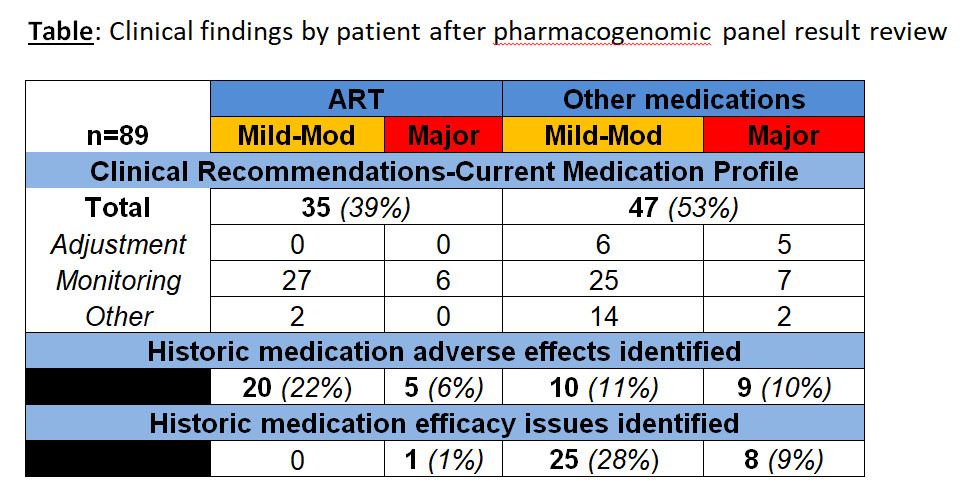
Ninety-six patients completed panel testing with 656 clinically relevant pharmacogenomic results (109 major, 547 mild-moderate). Eighty-nine patients completed follow-up visits with the HIV pharmacist, and 47 (53%) were provided new clinical recommendations based on their current medication profile, the majority related to monitoring for efficacy or toxicity. Clinical recommendations were associated with a major genetic finding or determined to be of significant clinical importance in twenty patients (22%). Panel results offered potential explanations of prior ART intolerance in 28% of patients and explanation for ART inefficacy in 1 patient. Genetic explanation for non-ART toxicity was seen in 20% of patients, with genetic contributors to inefficacy of non-ART therapy identified in 37% of patients.
Preliminary data in a small cohort of PLWHIV demonstrates benefit of routine pharmacogenomic panel testing.