Placing all clients with a positive diagnosis for HIV on antiretroviral therapy (ART) has cost implications both for patients and health systems, which could in turn affect feasibility, sustainability, and uptake of new services. Patient-incurred costs are recognized barriers to healthcare access. Differentiated service delivery (DSD) models in general and community-based care in particular, show promise for reducing these costs. We aimed to assess patient-incurred costs of a community-based DSD intervention (clubs) compared to clinic-based care in the Shinyanga region, Tanzania.
Cross-sectional survey among stable ART patients (n=390, clinic-based; n=251, club-based care). For each group, we collected socio-demographic, income, and expenditure data. We estimated patient-incurred costs – direct and indirect costs. Direct costs included out-of-pocket expenditures. Indirect costs included income loss due to time spent during transport, accessing services, and off work during illness. Cost drivers were assessed in multivariate regression models.
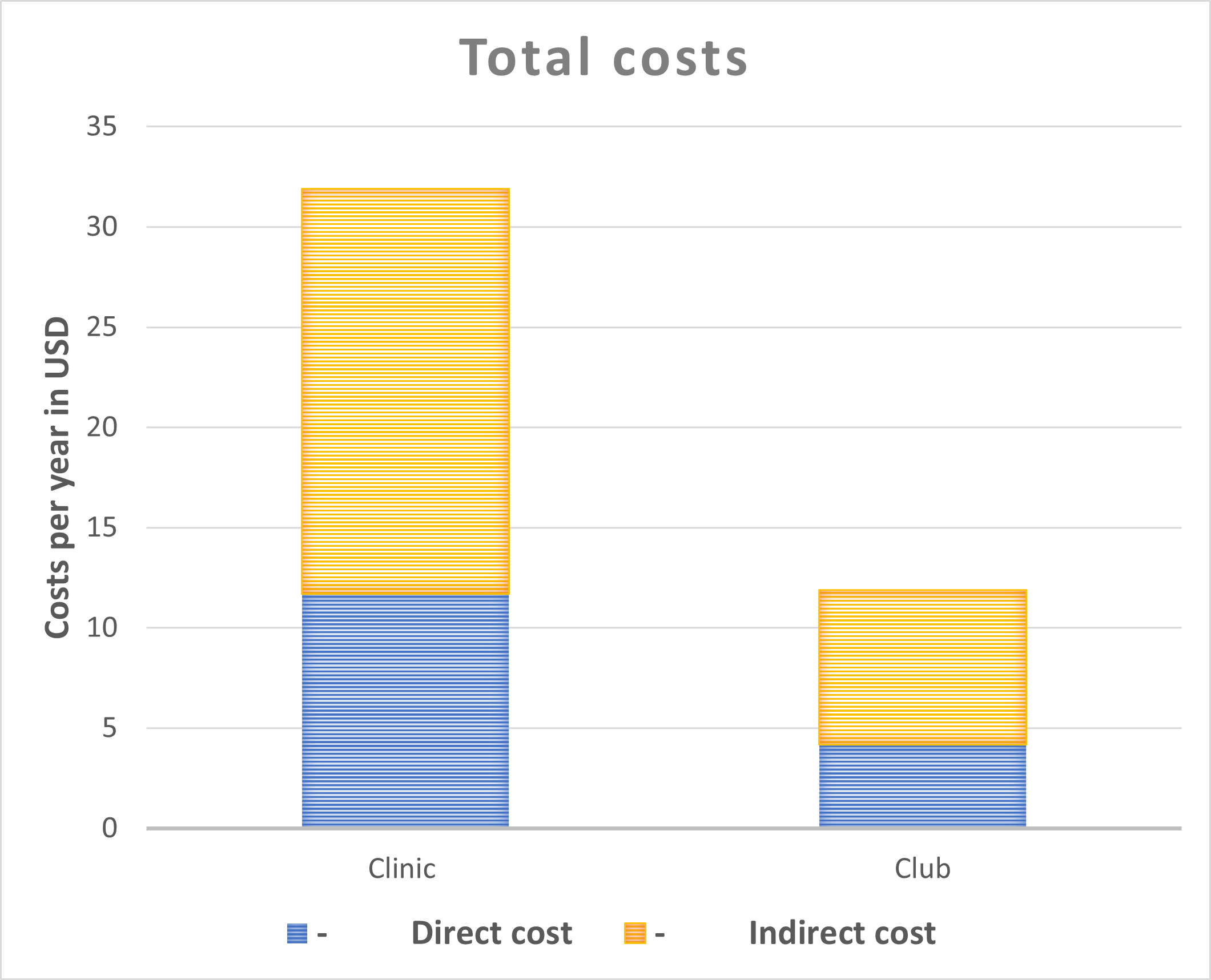
Overall, costs were significantly higher among clinic participants. Costs (USD) per year for clinic vs club were: 11.7 vs 4.17 (p<0.001) for direct costs, 20.2 vs 7.71 (p<0.001) for indirect costs and 31.8 vs 11.9 (p<0.001) for total costs. Time spent accessing care and time spent in illness (hours/year) were 38.3 vs 13.8 (p<0.001) and 16.0 vs 6.69 (p<0.001), respectively. The main cost drivers included transportation (clinic vs club: 67.7% vs 44.1%) for direct costs, and income loss due to time spent accessing care (clinic vs club: 60.4% vs 56.7%) for indirect costs. Factors associated with higher total costs among patients attending clinic services were higher education level (coefficient [95% confidence interval]) 13.0 [0.8, 25.3]), formal employment (30.9 [11.4, 50.5]) and higher income (43.8 [35.4, 52.2]); among those attending the clubs only higher income (9.02 [4.12, 13.9]) was significant. The percentage of households classified as having had catastrophic expenditures in the last year was low but significantly higher among clinic participants (10.8% vs 5.18%, p=0.014).
Costs incurred by patients accessing DSD in the community are significantly lower compared to those accessing standard clinic-based care. DSD models provide promising benefits which could improve access and could potentially catalyze the attainment of global targets especially in resource limited settings.