Background:
Surveys are an important source of population-based indicators in tracking the HIV epidemic, including self-reported HIV status, testing history, and treatment adherence. Whether self-reported indicators are accurate has implications for epidemic monitoring but can be challenging to assess, particularly when collected without confirmatory biomarkers. We assess the accuracy of survey indicators by comparing self-reported testing, HIV status, and treatment responses in a population-based survey with clinical records in Bushbuckridge sub-district, South Africa.
Methods:
We conducted a household-based survey of adults 18 – 49 years old in August – December 2018 with measures of HIV testing, test results, ART history, and source of health care. We drew from Agincourt Health and Demographic Surveillance System census records to link respondents to longitudinal clinical data from the 10 government facilities providing primary care in this area. We calculated indicators based on self-report and triangulated findings with data from clinic records. We adjusted testing estimates for known gaps in HIV test documentation and assessed individual and health system variables as predictors of reporting accuracy.
Results:
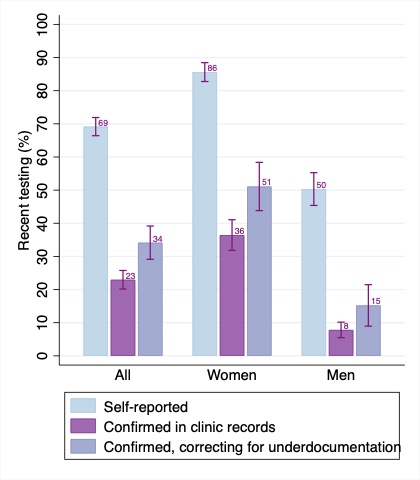
Of 2089 survey participants, 1657 used a study facility and were eligible for analysis. Half of men and 84% of women reported an HIV test in the past year; 33% of reported tests could be confirmed in clinic data within 1 year and another 13% within 2 years. Confirmed tests were more common among women and younger adults. Accounting for documentation gaps, we estimated that 15% of men and 51% of women tested for HIV within the past year (Figure 1). Nearly half of those living with HIV did not report positive status: HIV prevalence was 16.2% based on self-report vs. 27.6% including clinic documentation. 238 of 250 (95.2%) of those self-reporting HIV diagnosis indicated current ART use; incorporating clinic documentation, current ART use would be 68% overall or 87.6% limited to those with a documented clinic record.
Conclusions:
Prevalence of recent HIV testing was substantially higher on self-report while reported prevalence of HIV was 10 percentage points lower than estimates including clinical records. Self-report overestimated current ART by at least 7 percentage points. Discrepancies were higher for men. While clinical records are imperfect, survey-based measures should be interpreted with abundant caution in this rural South African setting.
Figure: Prevalence of HIV testing within 12 months based on self-report and with clinic record confirmation