Non-invasive biomarkers that predict HIV remission after antiretroviral therapy (ART) interruption are urgently needed. Such biomarkers can improve the safety of analytic treatment interruption (ATI) and provide mechanistic insights into the pathways involved in post-ART HIV control.
We examined two ATI cohorts: 1) Philadelphia cohort: a cohort of 24 HIV+ ART-suppressed individuals; 2) ACTG cohort: 74 participants of six ATI studies, including 47 non-controllers (NCs) and 27 post-treatment controllers (PTCs), a rare population sustains virologic suppression after ART-cessation. Pre-ATI plasma metabolome was measured by mass spectrometry. Pre-ATI plasma and IgG glycomes were profiled using capillary electrophoresis and lectin microarray. The J-Lat and THP-1 cell lines were used to examine latent HIV reactivation and myeloid inflammation, respectively. Cox and Logistic regression models with or without adjusting for confounders (age, gender, ethnicity, ART initiation, ART duration, and pre-ATI CD4 count) were used for statistical analyses. False discovery rate (FDR) was calculated to account for multiple comparisons.
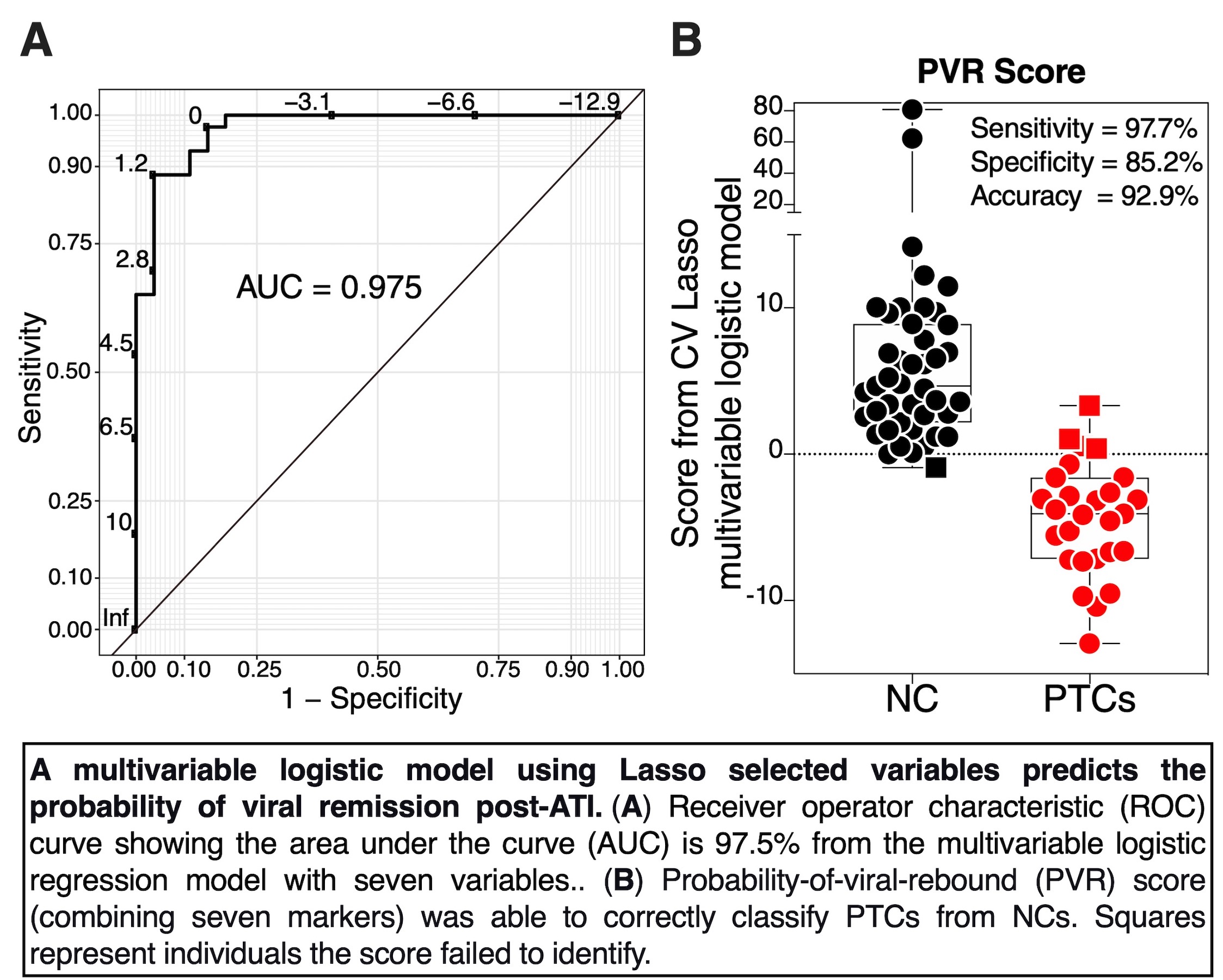
We identified 13 plasma glycans and metabolites that their pre-ATI levels associate with either faster (n=5; mostly pro-inflammatory molecules) or delayed (n=8; mostly anti-inflammatory molecules) viral rebound post-ART in both discovery and validation cohorts (hazard ratios ?2 or ?0.5; FDR<10%; P<0.05 after adjusting for confounders mentioned above). The pre-ATI levels of 10 of these markers were significantly different between PTCs and NC (FDR<0.05). Among the top markers, pre-ATI levels of L-glutamic acid predicted delayed rebound (P=0.005) and were higher in PTCs compared to NCs (P=0.0096). In vitro, L-glutamic acid significantly inhibited PMA or ?CD3/?CD28 mediated latent HIV transcription in the J-Lat HIV latency model (P<0.0001). L-glutamic acid also prevented THP-1 inflammation upon LPS stimulation (P<0.02). Finally, using the machine learning algorithm, lasso (least absolute shrinkage and selection operator), we combined this set of biomarkers into two multivariate models: Cox model that predicts time-to-viral-rebound with 74-76% capacity; and logistic model that predicts probability-of-viral-rebound (PVR score) with 97.5% capacity.
We fill a major gap in HIV cure research by identifying non-invasive biomarkers, with potential functional significance, that predict duration and probability of viral remission after treatment interruption.