Background:
Achieving viral suppression among pregnant and breastfeeding women is essential to eliminate vertical transmission of HIV in Sub-Saharan Africa. We hypothesized that an enhanced viral load counseling and standardized peer-mother support (ENHANCED-SPS) intervention would increase viral suppression among pregnant and breastfeeding women in rural Uganda.
Methods:
This was a cluster randomized trial evaluating the effect of the ENHANCED-SPS intervention among pregnant and post-partum women receiving HIV care at 14 facilities in rural Southwestern Uganda (NCT04122144). Intervention participants received point-of-care viral load testing and enhanced viral load counseling during clinic visits along with bi- weekly phone counseling from a trained peer-mother over a period of 12 months. Within the intervention arm, we compared the proportion with viral suppression (HIV RNA< 1000 c/mL) at baseline and 12 months, accounting for clustering and missing measures. Endpoint data were not available in the control arm, preventing a by-arm comparison.
Results:
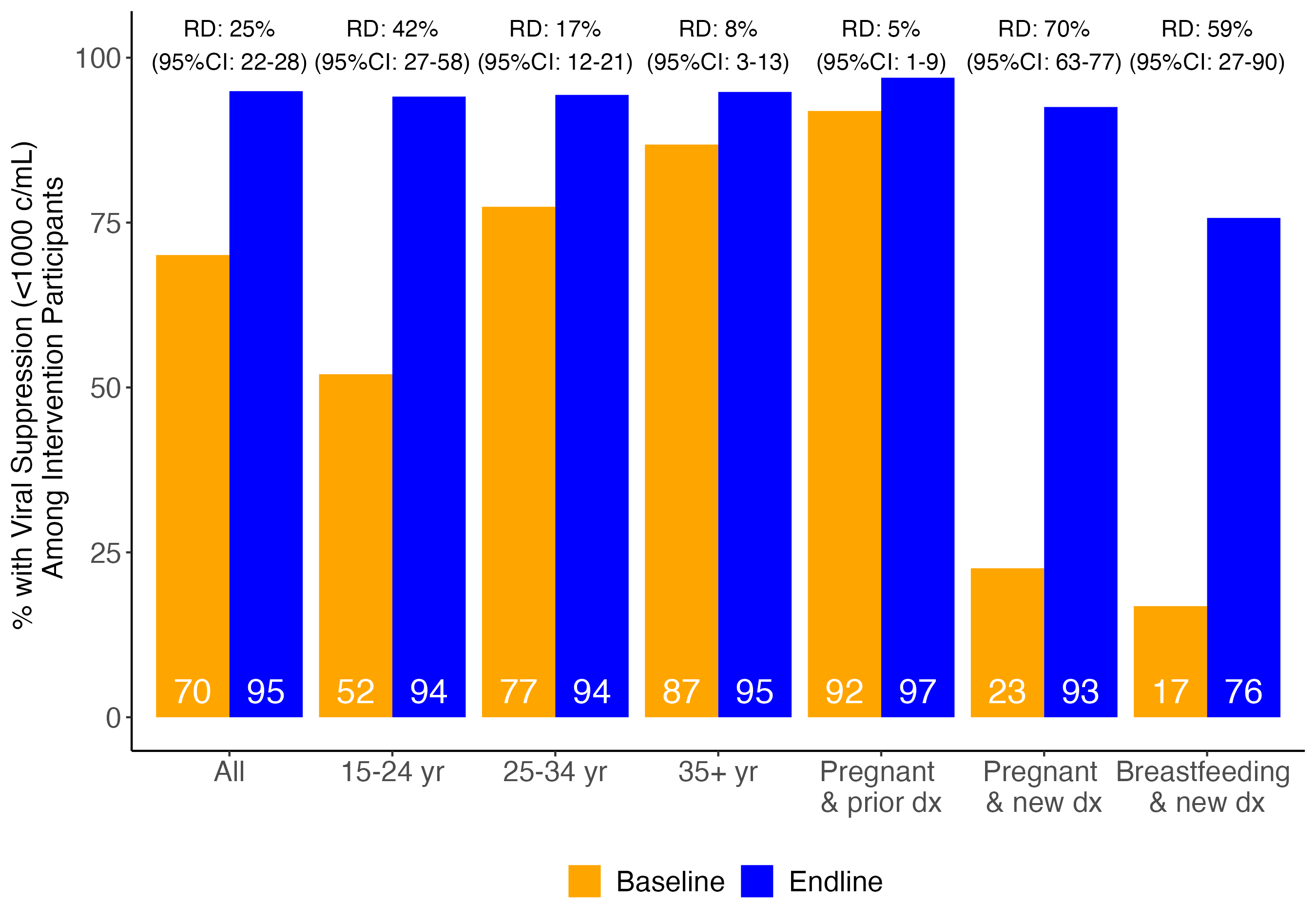
We enrolled 505 pregnant and post-partum women at the 7 intervention clinics from September 2019 to October 2020. Participants’ median age was 28 years, 157/505 (31%) were newly diagnosed with HIV, 77% (388/505) were on an EFV-based regimen and 70% [95%CI: 66-74%)] were virally suppressed. After 12 months of the ENHANCED-SPS intervention, viral suppression was 95% (95%CI:93%,97%), corresponding to a 25% (95%CI:22-28%; p< 0.001) absolute increase from the baseline measurement. The intervention increased suppression within subgroups of age, ART regimens, and enrollment group, with the greatest increase among those newly diagnosed: 70% increase (95%CI:63-77%) among pregnant women and 59% increase (95%CI:27-90%) among breastfeeding women.
Conclusions:
The multi-component, peer-led intervention significantly increased virologic suppression within 1 year of implementation. Despite the observed increase following the intervention, viral suppression among breastfeeding women remains far below the target rates, highlighting the need for additional interventions during the postpartum period.
Viral suppression ( < 1000 c/mL) among the intervention particpants