Background:
The majority of mpox cases in the United States have occurred among males, with a sizeable proportion reporting male-to-male sexual contact. In an effort to inform mpox testing and vaccination efforts, this study quantified the association of mpox infection in the first 100 days of the outbreak with a recent history of a nationally reportable sexually transmitted infection (STI), current use of pre-exposure prophylaxis for HIV (PrEP), and HIV diagnosis among gay, bisexual, and other men who have sex with men (GBMSM).
Methods:
A case-control study was conducted among 229 GBMSM aged 18 years or older tested for mpox in a large, diverse safety-net health system in Denver, Colorado between May 25, 2022 and September 1, 2022. Dates of syphilis treatment and laboratory confirmed gonorrhea and chlamydia were used to determine whether an STI occurred in the preceding year, 6 months, or concurrently with (±30 days) the mpox test. Patients with current PrEP use were identified through electronic health records, medication dispense dates, and negative HIV serostatus.
Results:
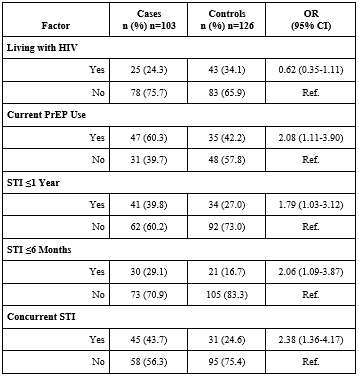
A larger proportion of cases than controls were over the age of 35, non-White, used PrEP, and were not living with HIV. Mpox infection was not associated with HIV diagnosis (odds ratio 0.62, 95% CI 0.35-1.11). After adjusting for age group and race/ethnicity, an STI in the preceding year increased the odds of mpox infection by 82% (adjusted odds ratio [aOR] 1.82, 95% CI 1.02-3.24) and an STI in the preceding 6 months increased the odds by 100% (aOR 2.00, 95% CI 1.04-3.84). Patients with mpox infection were 2.4 times more likely to have a concurrent STI compared to those without mpox (aOR 2.40, 95% CI 1.34-4.30). Among those without a HIV diagnosis, current PrEP use increased the odds of mpox infection by 130% (aOR 2.30, 95% CI 1.13-4.70).
Conclusions:
This analysis demonstrated that there is a temporal relationship between mpox positivity among GBMSM and a recent history of STI as well as current PrEP use. These results offer several actionable implications. For healthcare providers, it is crucial that routine STI testing be offered when testing for mpox given the association between mpox infection and a concurrent STI. For public health agencies, this analysis suggests that mpox vaccine eligibility be universally expanded to include GBMSM with current PrEP for HIV use. Finally, health systems positioned to do so should consider proactively identifying GBMSM with a recent history of STI and current PrEP use for vaccine outreach.
CRUDE ASSOCIATIONS BETWEEN MPOX INFECTION AND SEXUALLY TRANSMITTED INFECTION, PRE-EXPOSURE PROPHYLAXIS USE, AND HIV DIAGNOSIS