Background:
Expanded access to antiretroviral therapy (ART) has significantly reduced HIV-related mortality in adults and children worldwide including a 77% decline in India between 2010 to 2021. Even with this reduction, from January 2019 to March 2020, 79,755 deaths among PLHIV were reported across all government ART centers in the country. While mortality patterns among PLHIV show a shift toward noncommunicable diseases (NCDs) in high income settings, mortality data among PLHIV in low-and-middle-income countries (LMICs) is limited.
Methods:
Between January 2019 and March 2020, we collaborated with India’s National AIDS Control Program to perform verbal autopsy assessments, a method to determine the most probable cause of death by interviewing caregivers of deceased PLHIV when official medical certification is not available. We conducted the exercise in 28 selected ART centers across 18 Indian states. Interviewers employed the WHO-VA-2016 tool, and two independent physicians utilized ICD classifications to determine the cause of death.
Results:
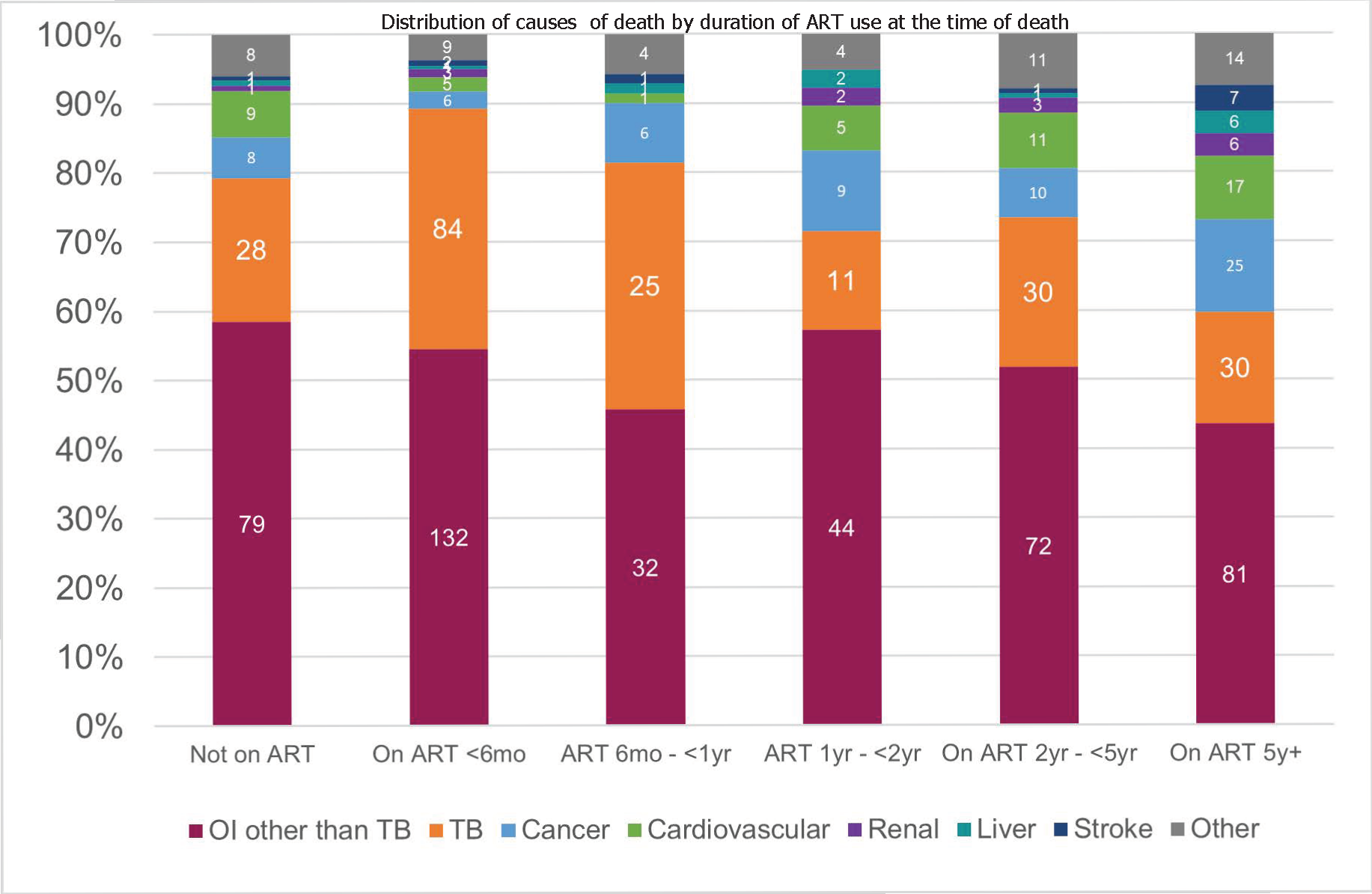
Among the 1,001 deaths investigated, the median age was 42 years (IQR: 35-50), 68% were men and most deaths occurred in Northern India (32%). The primary cause of death was HIV-related opportunistic infections (76%) with tuberculosis ccounting for 31% of these, followed by cancer (7%), heart disease (6%), renal disease (2%), and liver disease (1%). However, for those who on ART for longer durations, the relative contribution of NCDs was higher – NCDs accounted for only 8% of mortality among those on ART for <1 year compared to 33% among those on ART for more than 5 years (p<0.001). People who died of NCDs were significantly older compared to those who died from OIs (p<0.05). The most common form of malignancy in men was head and neck cancer (24%), while cervical cancer (27%) was the most common in women.
Conclusions:
Mortality attributable to AIDS-related OIs, particularly TB, remains high in this setting, particularly among individuals who are newly initiating ART. This reflects a continued need to detect and engage PLHIV early after infection and support high levels of adherence. As people living with HIV age, it is likely that the relative contribution of NCDs, including cancer, continues to increase highlighting the importance of screening and managing these conditions within ART programs in LMICs.