Background:
Mpox (formerly known as monkeypox) is a syndrome of fever, rash, and lymphadenopathy caused by the mpox virus (MPXV), a zoonotic double-stranded DNA orthopoxvirus. The virus was first isolated in monkeys from Singapore in 1959 and is now known to have several animal reservoirs. Since its emergence in humans in the 1970’s, MPXV has become endemic in central and western Africa. In 2022, an outbreak of Mpox consisting of over 88 thousand cases across 113 countries prompted the World Health Organization to declare a public health emergency of international concern. High-risk populations for transmission were prioritized for vaccination with the JYNNEOS MPXV/smallpox vaccine. Global case counts peaked in early September of 2022 before tapering off in January 2023. In April 2023, a small resurgence of cases was noted in Chicago, including several vaccinated individuals, raising concerns of immune escape.
Methods:
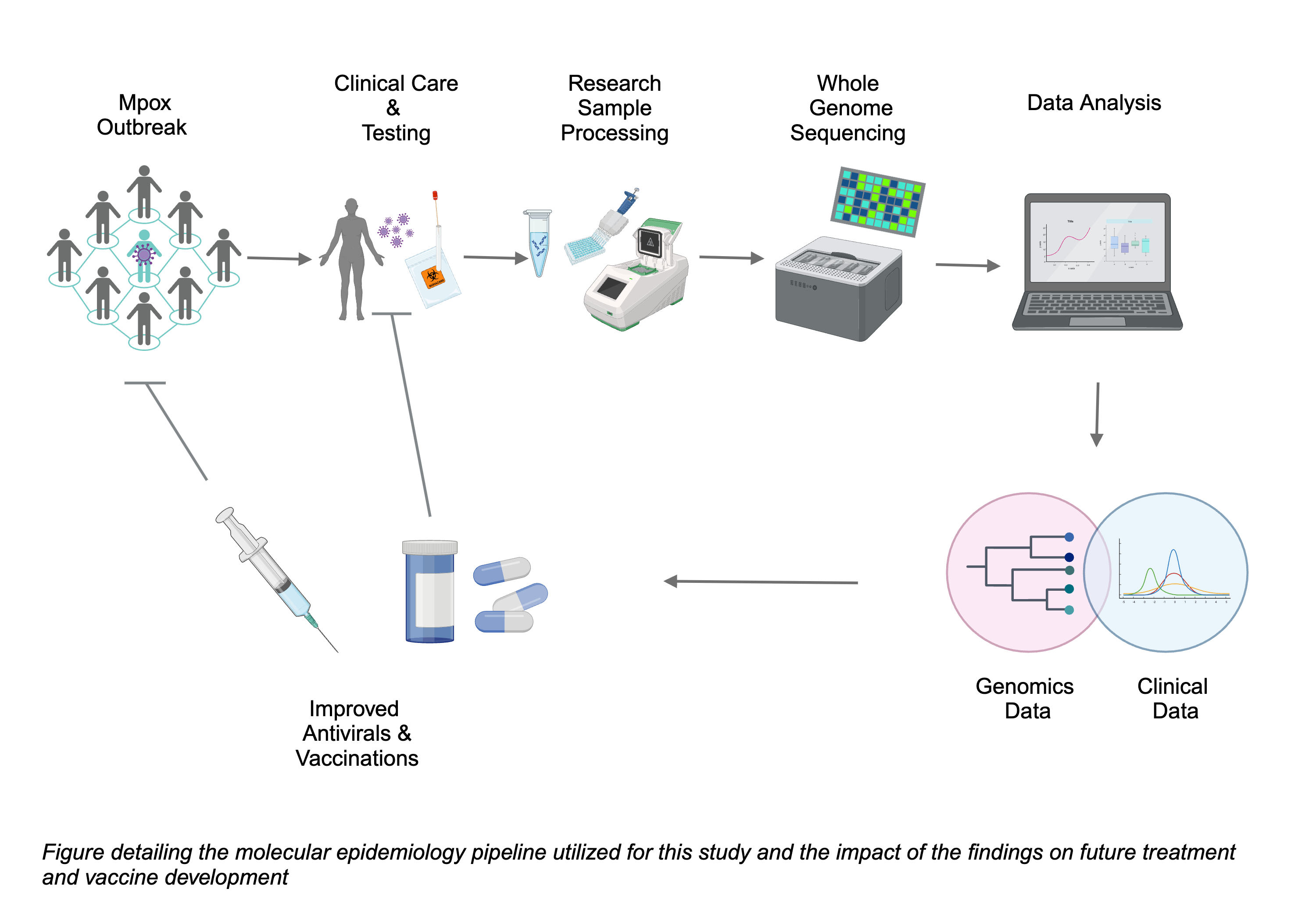
In this study, we investigated the genetic variation and evolution of the virus throughout the 2022-2023 outbreaks in Chicago. Between July 1, 2022 and September 1, 2023 residual diagnostic specimens were collected from Northwestern Memorial Hospital and affiliated clinics for DNA extraction and whole genome sequencing. In total, 139 specimens from 98 patients were collected, and 101 specimens from 77 patients were of sufficient viral load for whole genome sequencing.
Results:
We observed a rapid increase in viral population size and diversity peaking in August 2022, comprised of eleven lineages, indicative of a high degree of viral circulation. On the contrary, all of the 2023 cases belonged to the same lineage, B.1.20, defined by three synonymous mutations. These most likely arose from a single transmission cluster, which was supported by traditional epidemiological follow up.
Conclusions:
The circumstances underlying the unprecedented, international outbreak of Mpox in 2022 remain to be fully elucidated. The reemergence of MPVX in 2023 suggests continued circulation in the human population, which is supported by the virus’ continued evolution. Ongoing and robust epidemiological and genomic surveillance is required to determine if MPVX has become endemic in populations outside of West Africa. Continued monitoring of the genetic variation of the virus will allow for development of new antivirals and vaccinations with increased efficacy.