Background:
Integrase strand transfer inhibitors (INSTI) are associated with weight gain, in contrast to the also commonly used non-nucleoside reverse transcriptase inhibitors (NNRTI). Plasma metabolomic and lipoprotein profile of INSTI and NNRTI users was therefore compared.
Methods:
The present study has a two-phase design and includes a discovery and validation cohort of INSTI and NNRTI users from the 2000HIV study (clinicaltrials NTC03994835) consisting of 1895 virally suppressed participants on long-term antiretroviral therapy (ART). The discovery and validation cohort comprised of 601 INSTI and 469 NNRTI users, and 327 INSTI and 232 NNRTI users, respectively. Untargeted plasma metabolomics profiling was performed using liquid chromatography-mass spectrometry (General Metabolics). Plasma lipoproteins composition was measured using nuclear magnetic resonance spectroscopy (Nightingale). Data on comorbidities and comedication were available for all participants.
Results:
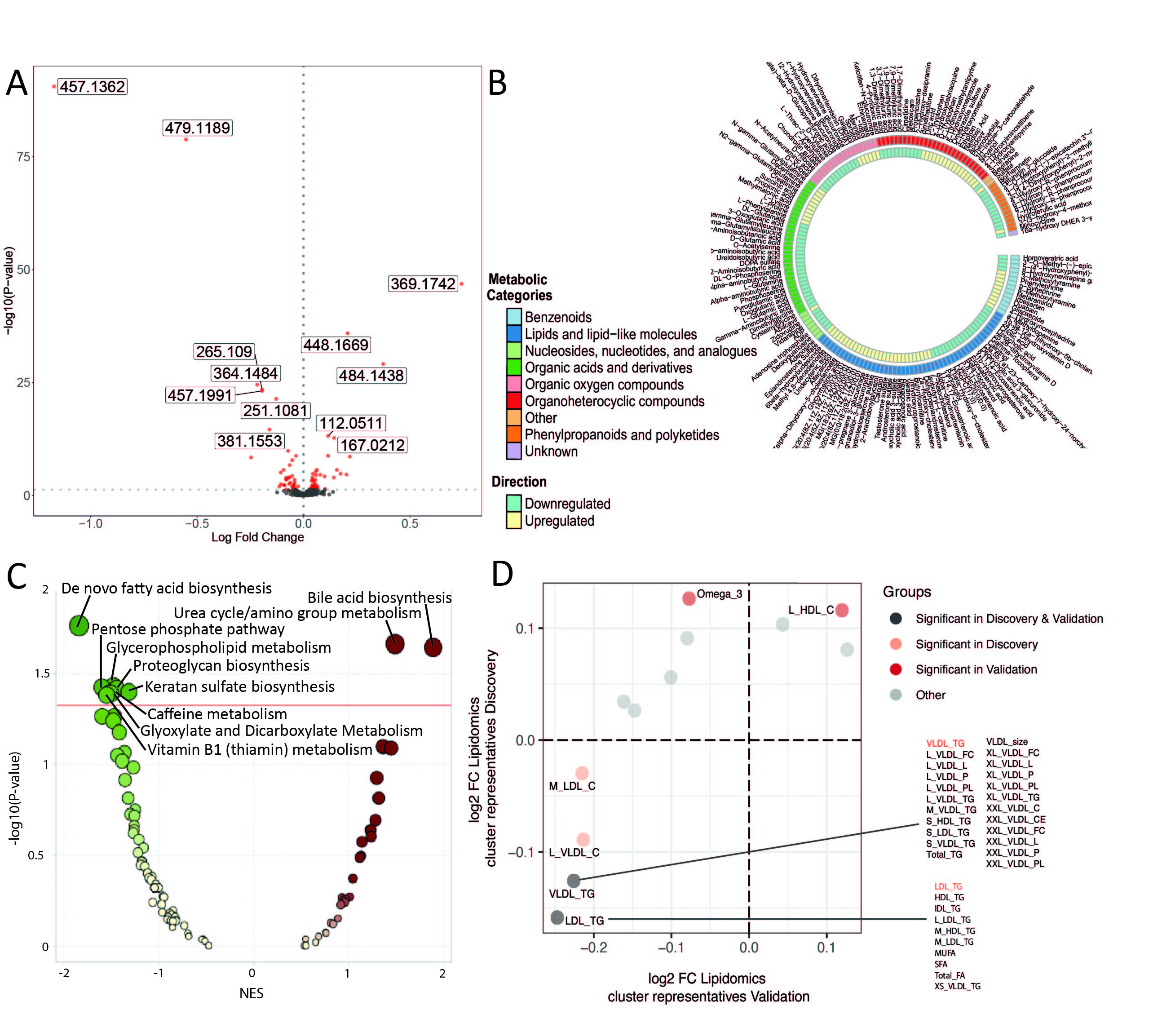
INSTI users were a bit younger (51 vs 53 years, P< 0.001), had a slightly higher BMI (25.2 vs 24.8, P=0.016) and shorter duration of ART (8 vs 11 years, P< 0.001). Most recent CD4+ T-cell count, history of cardiovascular disease and frequency of lipid lowering drugs use was not different. Untargeted metabolomics yielded 1,720 metabolites, of which 500 were identified as serum metabolites based on Human Metabolic Database library. Overall, we identified 81/500 (16.2%) significantly different metabolites with modest fold change (-1.2 to 0.7 log10FC) between INSTI and NNRTI users in the two cohorts (figure 1A). The majority (30.9%) of these belong to the class of lipids or lipid like molecules (figure 1B). Pathway analysis showed two upregulated and eight downregulated pathways in INSTI users (figure 1C), with de novo fatty acid biosynthesis being the most downregulated. Furthermore, assessment of 132 lipoprotein related biomarkers showed decreased triglycerides and very low-density lipoproteins in INSTI users (figure 1D).
Conclusions:
Compared to NNRTI users, INSTI users showed lower fatty acid biosynthesis and lower levels of atherogenic lipids. Despite observed weight gain in INSTI users in previous studies, our results support more favorable lipid profiles in INSTI users than in NNRTI users.
Figure 1A: Differential expression metabolites of INSTI users compared to NNRTI users. Fold change direction indicates change in INSTI users compared to NNRTI users. B: Significant up- and downregulated serum metabolites of INSTI users compared to NNRTI users with compound names and metabolic categories. C: Up- (brown) and downregulated (green) metabolic pathways in INSTI users compared to NNRTI users. D: Differentially expressed group representative lipoproteins in INSTI users compared to NNRTI users. All lipoproteins intercorrelated with representative lipoproteins displayed on the right.