Background:
Preeclampsia (PEC) – an important cause of maternal and fetal morbidity – may be caused by an abnormal maternal immune response to the fetal allograft. We examined the association between HIV infection and PEC in a well-characterized urban population of pregnant women in Zambia.
Methods:
We combined three contemporaneous studies conducted at two facilities in Lusaka between 2015-2022: the IPOP trial (n=800), VP trial (n=140), and ZAPPS cohort (n=3,239). Each study drew from the same population and shared most protocol elements, including antenatal assessments, visit timing, and a standardized procedure for phenotyping adverse birth outcomes. We defined PEC as new-onset (≥20wks) hypertension (≥140 systolic or ≥90 diastolic) with concurrent proteinuria (≥1+). We defined severe PEC as (a) new-onset severe-range BP (≥160 systolic or ≥110 diastolic, (b) eclamptic seizure, or (c) provider-initiated preterm delivery (<37wks) for PEC. Using marginal probabilities from logistic regression, we estimated the crude and adjusted risk of PEC associated with HIV infection.
Results:
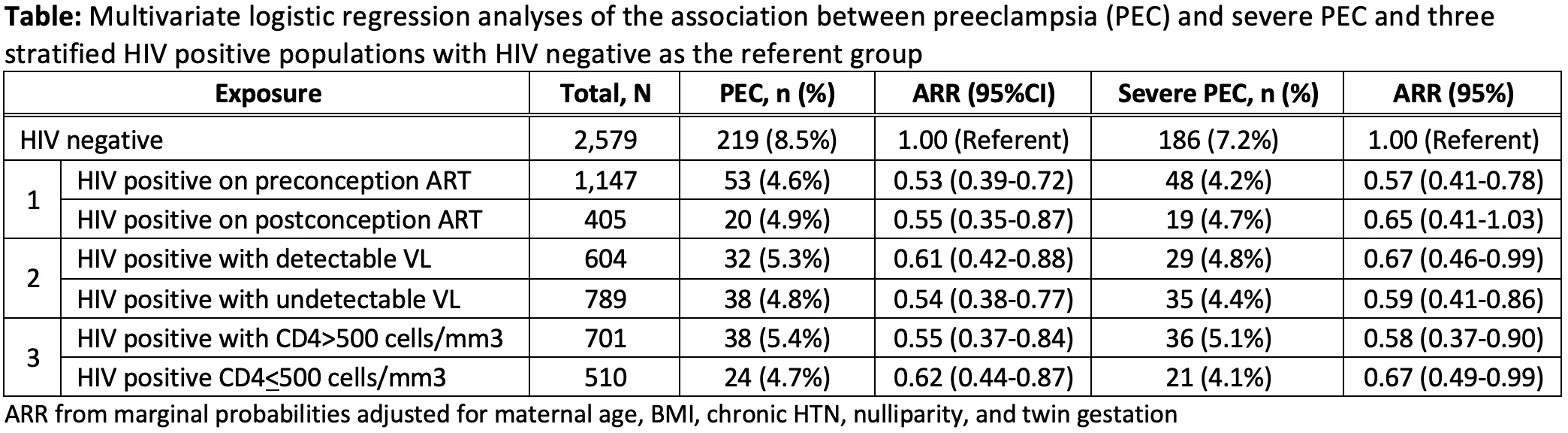
The 4,176 women included in the combined cohort had an average age of 28yr (±6) and average BMI of 26kg/m2 (±5), with 46% completing ≥12yrs of education and 82% living with a partner or husband. In the cohort, 293 (7.0%) were diagnosed with PEC, including 74 (4.6%) of 1,597 women with HIV and 219 (8.5%) of 2,579 women without HIV. Of women with HIV, 74% were on preconception antiretroviral therapy (ART) and 57% had an undetectable viral load (VL) at study enrollment. In both univariate (RR 0.55; 95%CI 0.42-0.70) and multivariate analyses adjusting for maternal age, BMI, chronic hypertension, nulliparity, and twin gestation (ARR 0.53; 95%CI 0.41-0.69), HIV infection was associated with decreased risk of preeclampsia. This reduced risk persisted when the cohort was stratified by preconception ART exposure, detectable VL at study enrollment, and CD4 count at enrollment. Findings were similar when the more stringent definition of severe PEC was applied (Table).
Conclusions:
In this large, well-phenotyped pregnancy cohort from Zambia, women with HIV are less likely to have preeclampsia compared to those without infection. Although the association does not appear to be mitigated by maternal disease status, further investigation into whether the relative immune suppression of maternal HIV is protective against preeclampsia is warranted.