Background:
While multiple indicators like viral suppression (VS) and viral rebound (VR) exist for monitoring HIV viral load (VL), research on continuous VL clustering is limited. By characterizing people with HIV (PWH) into distinct groups, stratified long-term risks of virological failure can be assessed. Therefore, this study aims to use functional data clustering to identify continuous VL patterns and characterize each cluster by demographics, comorbidities, social behaviors, CD4 count, and antiretroviral therapy (ART) history.
Methods:
We analyzed adult PWH diagnosed from 2005 to 2020 in South Carolina with a 5-year minimum follow-up from the first VS to the last VL test. Functional principal component analysis (FPCA) was used to categorize PWH to clusters based on sparse VL test. ANOVA were used to test the difference in VL characteristics, demographics, comorbidities, social behaviors, and longitudinal CD4 count during the follow-up period of each cluster. Subgroup analyses were conducted among PWH with ART, examining the ART patterns within each cluster, including initial, most recent, most frequently used ART, and any regimen switches.
Results:
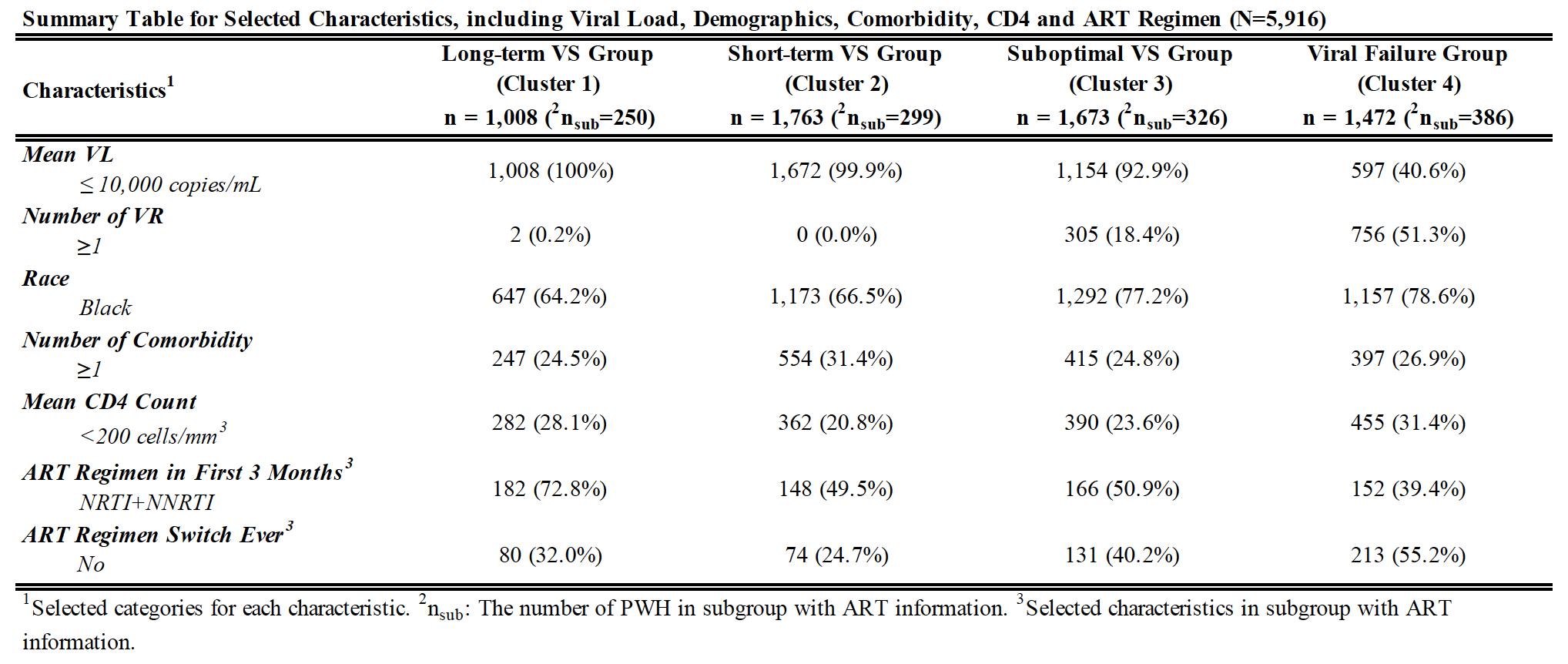
A total of 5,916 PWH were grouped into four clusters: long-term VS group (Cluster 1, 17.3%), short-term VS group (Cluster 2, 29.8%), suboptimal VS group (Cluster 3, 28.3%), and viral failure group (Cluster 4, 24.9%). In Cluster 1 with an average of 11-year follow-up, PWH displayed sustained VS (95.3%), lower mean CD4 count (28.1%), most NRTI+NNRTI in first and last 3 months (72.8% and 64.0%), and less regimen switches (32.0%). Results for Cluster 2 were similar except for shorter follow-up (6 years), more comorbidities (31.4%), and higher max CD4 count (48.4%). In Cluster 3, PWH were mostly under 30 years old (44.8%) and Black (77.2%), with relatively lower mean VL (92.9%), lower number of VR (18.4%), higher maximum CD4 count (47.6%), and were mostly prescribed with NRTI+NNRTI in first 3 months (50.9%). In Cluster 4, demographics were similar to Cluster 3, while PWH had higher mean VL (40.6%), lower mean CD4 count (31.4%), received most PI+NRTI (32.4%) in the first 3 months, and switched the regimen more frequently (55.2%).
Conclusions:
The findings highlight the value of continuous clustering in understanding the distinct viral profiles of PWH. By identifying distinct clusters varied in VL patterns, demographics, substance use, comorbidities, CD4 count, and ART, we emphasize the importance of tailored treatment and insights for targeted interventions.