Background:
Diagnoses of HIV in the US decreased by 17% in 2020 due to COVID-related disruptions. The extent to which this decrease is attributable to changes in HIV testing versus HIV transmission is unclear. We seek to better understand this issue by analyzing the discrepancy in expected versus observed HIV diagnoses in 2020 among persons who acquired HIV between 2010-2019, as changes in diagnosis patterns in this cohort cannot be attributed to changes in transmission.
Methods:
We developed three methods based on the CD4-depletion model to estimate excess missed diagnoses in 2020 among PWH infected from 2010-2019. We stratified the results by transmission group, sex assigned at birth, race/ethnicity, and region to examine differences by group and confirm the reliability of our estimates. We performed similar analyses projecting new diagnoses in 2019 among PWH infected from 2010-2018 to evaluate the accuracy of our methods against surveillance data.
Results:
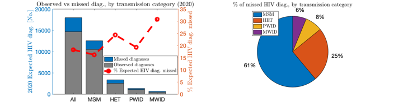
There were approximately 3100-3300 fewer diagnoses than expected in 2020 among persons who acquired HIV from 2010-2019. Females (at birth), heterosexuals, persons who inject drugs, and Hispanic/Latino PWH missed diagnoses at higher levels than the overall population. By transmission category, MSM accounted for the highest percentage (61%) of missed diagnoses. Validation and stratification analyses confirmed the accuracy and reliability of our estimates.
Conclusions:
PWH infected from 2010-2019 showed a significant drop in diagnosis rate during 2020, suggesting that changes in testing played a substantial role in the observed decrease in new HIV diagnoses. Levels of missed diagnoses differed substantially across population subgroups. These analyses may be used to inform future estimates of HIV transmission during the COVID-19 pandemic and prioritize populations with increased testing needs.