Background:
It is known that survivors of acute SARS-CoV-2 infection can experience a complex disease known as post-acute sequelae of COVID-19 (PASC). The clinical manifestations of acute COVID-19 have been well characterized however less is known about the risk of new onset diabetes mellitus (DM) in the post-acute phase of COVID-19.
Methods:
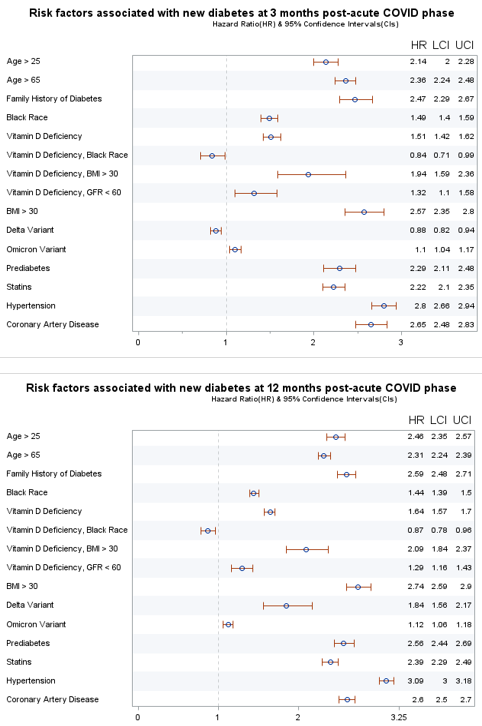
An adult cohort with confirmed COVID-19 (by diagnosis or positive test) and without COVID-19 was sampled from a large national health research network between January 1st, 2020 and July 8th, 2022. We investigated the outcomes of a new diagnosis of DM (type I or II) occurring after COVID-19 through 12 months after infection. Risk estimates [incidence, relative risk (RR), attributable risk] were used to describe the probability of incident post-COVID diabetes. Hazard ratios and 95% confidence intervals were used to describe risk factors associated with new diabetes.
Results:
The 3-month probability of new diabetes was 2.48/1,000 among COVID+ and the relative risk (RR) of new diabetes was highest at 12 months [8.94 (8.54, 9.36)]. Vitamin D deficiency [HR: 1.52 (95% CI: 1.42, 1.63)] was associated with increased risk of T2DM and having vitamin D deficiency with either obesity (BMI > 30 kg/m2) or kidney dysfunction (GFR < 60) was associated with more than five times increased risk of T1DM.
Conclusions:
We observed a large proportion of excess diabetes starting at 3 months post COVID infection. Traditional risk factors for diabetes, omicron variant, and vitamin D deficiency are associated with increased risk of new diabetes outcome. PASC care should involve identification and management of diabetes.