Background:
People living with HIV (PLwH) were disproportionately impacted by the 2022 Mpox outbreak, with 40-60% of Mpox cases in PLwH. Due to this and substantial rates of sexually transmitted infection (STI) in patients diagnosed with Mpox we implemented a protocol for coinfection testing which included HIV testing at time of Mpox testing in 17 emergency departments (EDs) and 44 urgent cares (UC) across our large integrated healthcare system. As this HIV testing initiative overlayed an existing ED HIV testing program and EDs and UCs were the highest volume site for STI testing in our healthcare system, we examined the impact of the Mpox outbreak on HIV testing and diagnosis.
Methods:
This is a retrospective observational study of HIV testing and diagnosis before and during the 2022 Mpox outbreak. We examined rates of HIV testing standardized by ED and UC visits during the Mpox outbreak from July 1,2022 through October 31,2022 compared to the prior 12 months: July 1, 2021 through June 30, 2022. We also compared total numbers of new HIV diagnosis during those time frames. T-tests were utilized to compare means of the tests and diagnoses before and during the outbreak. All analyses were conducted using SAS 9.4.
Results:
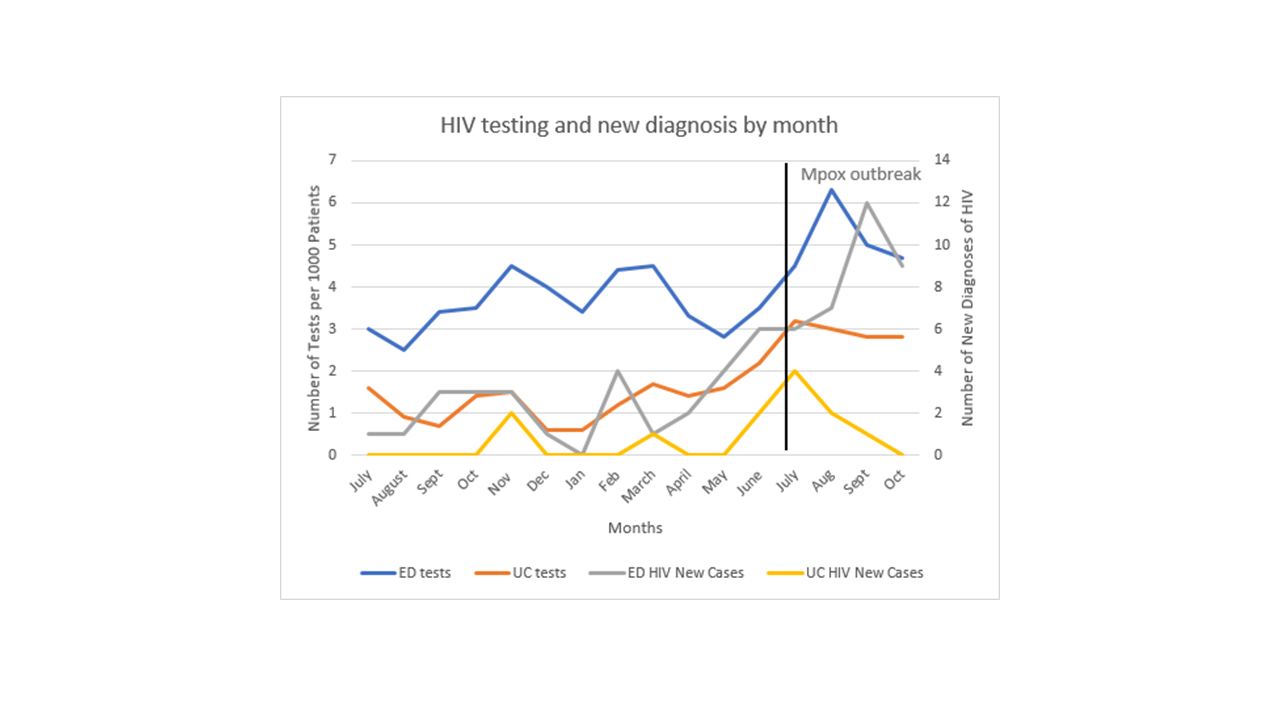
The average number of HIV tests sent per month increased from 2.3 tests per 1000 patient visits per month prior to the Mpox outbreak to 3.8 tests per 1000 patient visits per month on average during the outbreak (p=.01). There was an average of 1.4 new cases of HIV diagnosed per month in our healthcare system’s EDs and UCs prior to the Mpox outbreak and an average of 3.9 new HIV diagnosis per month for the 4 months of the outbreak (p=.02). A higher number of tests per patient encounters occurred and more new HIV diagnosis were made in EDs compared to UCs both before and during the Mpox outbreak but testing and new diagnosis increased at both locations (see Figure). Of the 41 new cases of HIV diagnosed during the Mpox outbreak, 16 had testing sent concomitant with Mpox testing.
Conclusions:
Significantly increased rates of HIV testing and new HIV diagnosis were observed during the Mpox outbreak in our healthcare system. This may have been the result of increased awareness of need for testing with increased provider education provided as part of the Mpox outbreak response. Further opportunities exist for strengthening coinfection testing for HIV and Mpox and identifying undiagnosed cases of both viruses.
Figure: Number of HIV tests per 1000 patient encounters and new HIV diagnosis by site and month