The impact of previous selection of M184V on virological response to 3TC/DTG in real life is still unclear. The aim of this study was to assess the efficacy of 3TC/DTG in a large set of virologically suppressed patients with or without past M184V.
In this European retrospective study, individuals with plasma HIV-RNA ?50 cps/mL who switched to 3TC/DTG and with at least 1 previous HIV-RNA or HIV-DNA genotype before switch were included. Survival analysis was used to evaluate the role of past M184V on experiencing a virological failure (VF: HIV-RNA >50 cps/mL in 2 consecutive determinations or ?200 cps/mL in a single determination) or a blip (a single HIV-RNA in the range 51-199 cps/mL preceded and followed by ?50 cps/mL measurements) after 3TC/DTG switch. Resistance at VF was also evaluated.
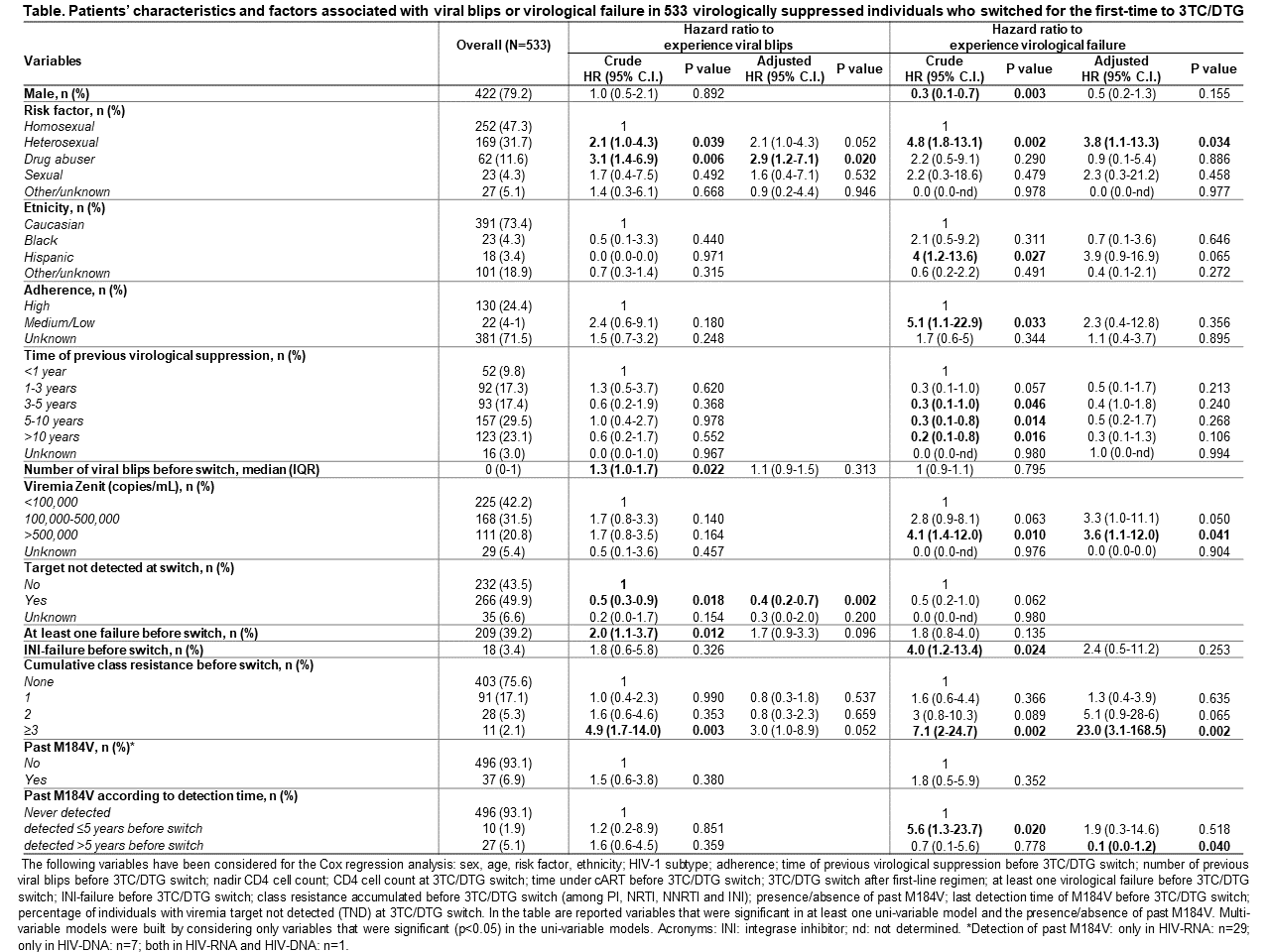
Results: 533 individuals followed in several clinical centers in France, Italy and Spain were analyzed: 79.2% were male, with a median (IQR) age of 51 (43-58) yrs; median (IQR) time of virological suppression was 5.4 (2.7-9.5) yrs; median (IQR) number of previous VFs was 0 (0-1); median time under 3TC/DTG was 22 (17-39) months. Past M184V was present in 37 (6.9%) individuals. Median (IQR) time of last detection of M184V before 3TC/DTG switch was 11 (5-15) yrs. By stratifying for the presence/absence of M184V, no significant difference in the probability of VF was found (5.4% vs 2.6% at 1 yr and 9.2% vs 4.4% at 2 yr; p=0.345). However, a significant higher probability of VF was found in individuals with M184V detected ?5 yrs before 3TC/DTG switch compared to those in whom M184V was detected >5 yrs and those without M184V, at both 1 yr (20% vs 0% vs 2.6%) and 2 yrs (20% vs 5% vs 4.4%; p=0.007) after switch. This finding was confirmed by multivariable Cox regression (Table). Other factors associated with VF were risk factor, zenith viremia and previous resistance to at least 3 classes. The probability of experiencing blips was 3.6% and 7.3% at 1 and 2 yrs, without any statistical significance in the 2 groups considered (p=0.321), neither after considering the time of last M184V detection (p=0.596). Genotypic resistance test was available for 4/22 individuals who failed 3TC/DTG; no resistance to INIs and NRTIs was found.
In this real life study, the probability of VF in patients switching to 3TC/DTG is very low after 2 yrs of treatment. Past M184V influenced VF only in the context of a more ‘recent’ (<5 years) detection. Larger data are necessary to support this result.