Background:
No studies have examined the effects of the COVID-19 pandemic on HIV testing across substantial observation time among a large sample of gay, bisexual and other men who have sex with men (GBMSM), a priority population disproportionately impacted by HIV. We describe the extent to which COVID-19 pandemic-related disruptions to health clinic services impacted the level of HIV testing among sexual minority men in Los Angeles.
Methods:
Data comes from the Los Angeles LGBT Center’s health services program, one of the nation’s largest Federally Qualified Health Centers providing health services to LGBTQ+ individuals. We include GBMSM who are 15 years or older. The primary outcome measure is the average number of HIV tests per week. Interrupted time series analyses were used to model and test changes in HIV testing across three phases of the pandemic: a pre-pandemic phase from March 1, 2018 to March 15, 2020, a pandemic phase from March 16, 2020 to February 28, 2022, and an endemic phase, from March 1, 2022 to August 31, 2023, which signifies the full return of Center services. Weekly HIV testing is estimated overall and by race/ethnicity.
Results:
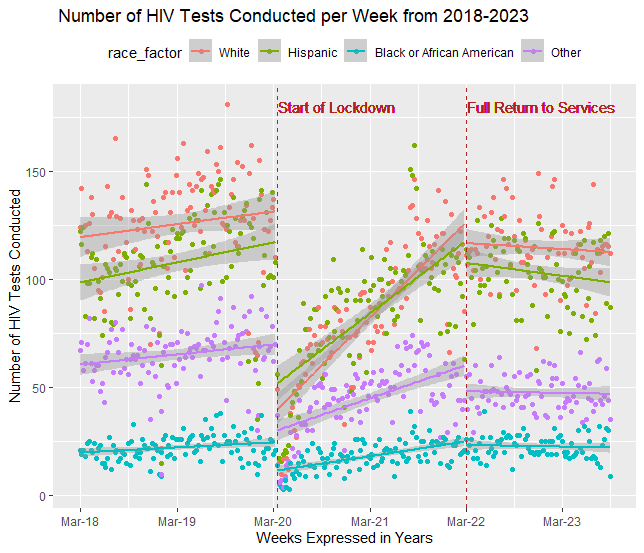
The sample included 25,844 unique participants (n=95,328 visits); 8% were Black/African American, 34% Hispanic/Latinx, 39% white, 8% Asian/Pacific Islander, and 11% some other race/ethnicity. Most participants were between 25-39 years old (48%). The average number of tests conducted weekly across the pre-pandemic, pandemic, and endemic phases are 321, 231, and 288, respectively. There was nearly a 50% reduction in the level of HIV testing conducted weekly after the transition from the pre-pandemic to pandemic phase (Incident Rate Ratio (IRR): 0.53, 95%CI: 0.47, 0.60). The number of HIV tests decreased slightly going from the pandemic to endemic phase (IRR = 0.80, 95%CI: 0.7, 0.92) and HIV testing did not return to pre-pandemic levels (IRR = 0.77, 95%CI: 0.64, 0.93). Similar trends were observed when stratified by race/ethnicity, however greater decreases in number of tests during the pandemic phase were greater for White and Hispanic/Latinx participants compared to Black/African American and Asian/Pacific Islander participants (Figure).
Conclusions:
The overall reduction of HIV testing levels compared to pre-pandemic suggests a new strategy needs to be developed to understand which participants are not returning for testing and why as well as what additional efforts are needed to increase the reach of these necessary preventive services.