Background:
Obesity impairs immune functioning so concerns exist that elevated body mass index (BMI) in HIV+ pregnant women could lead to immune dysregulation. This disruption of pregnancy associated immune processes could increase risk of pregnancy complications. We investigated temporal trends of inflammatory biomarkers and impact of maternal BMI.
Methods:
We recruited a cohort of ART-eligible HIV+ pregnant women (n=521) making their first antenatal visit at a primary care facility in Cape Town, South Africa (April 2015-October 2016). Women were followed from their first antenatal visit through delivery with levels of inflammatory biomarkers (C-reactive protein, CRP; interferon gamma-induced protein 10, IP10; serum amyloid A, SAA) and maternal BMI measured at three visits (< 22 weeks, ~ 28 weeks and ~34 weeks) in pregnancy with an additional visit (2 weeks post-ART initiation) for women initiating antiretroviral therapy (ART) in pregnancy. Analyses compared levels of biomarkers by timing of ART initiation (before vs during pregnancy) and by BMI status (normal < 24.9 kg/m2, overweight 25-29.9 kg/m2, obese ≥ 30 kg/m2).
Results:
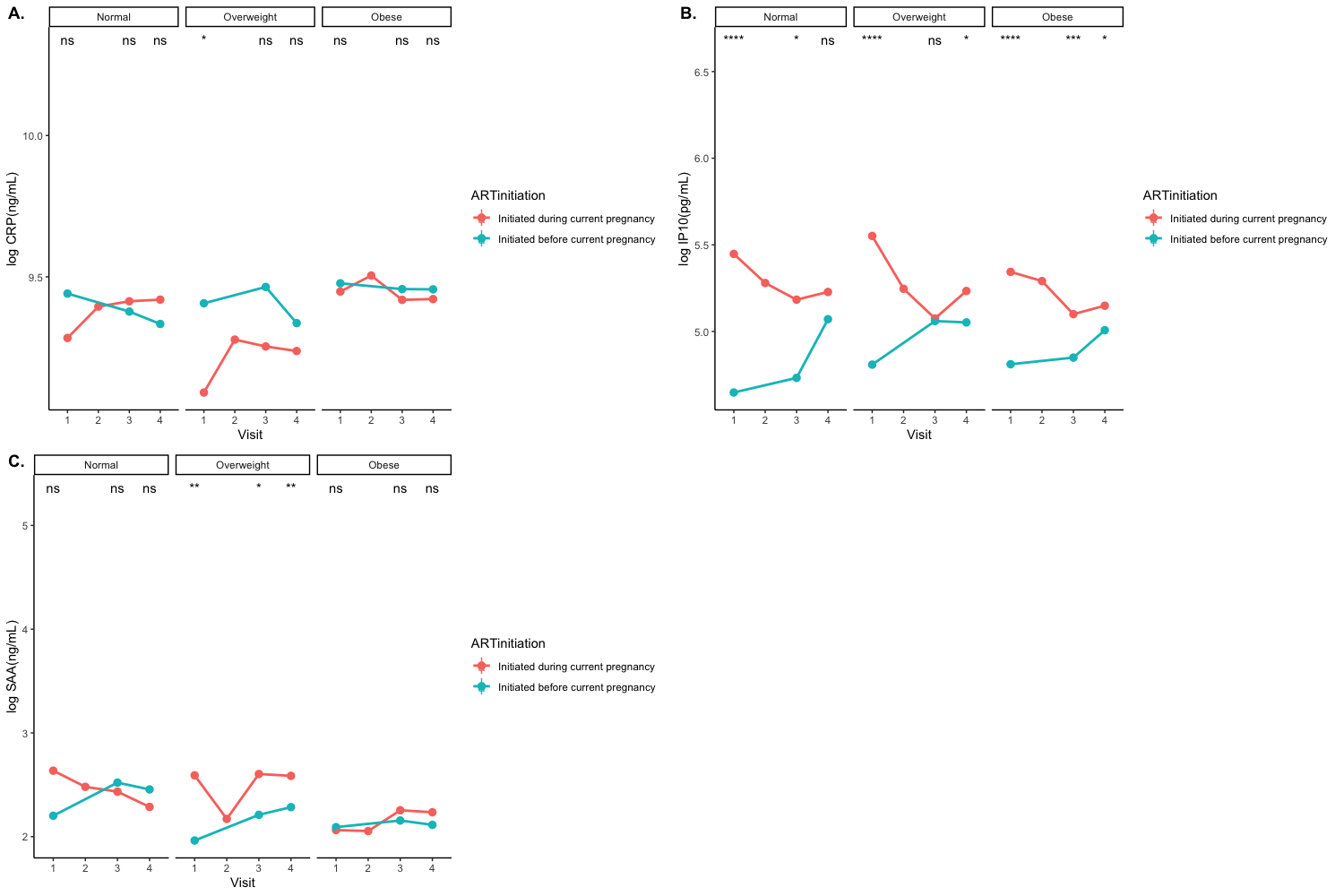
In the cohort (median age, 30y; 24% nulliparous); 47% (n=247) were on preconception ART (pre-ART) (84% TDF+XTC+EFV, 9% PI-based regimen) and the remaining 53% (n=274) initiated (97% TDF+XTC+EFV, 1% PI-based regimens). The majority of women in the cohort had an elevated BMI classified as obese (51%) or overweight (28%). Throughout pregnancy, CRP levels were relatively constant and no statistically significant differences were observed by ART status in normal, overweight or obese women (Figure). Overall SAA levels appeared to increase slightly throughout pregnancy however no differences were observed by ART status in normal and obese women, although obese women had lower SAA levels (p< 0.05). Among overweight women those initiating during pregnancy had higher levels throughout pregnancy. Women initiating during pregnancy had higher IP10 levels than their preconception ART counterparts, particularly among normal weight women. In the initiating women, IP10 levels declined following ART initiation (visit 1) across all BMI groups, while the levels appeared to increase in pregnancy in the women on preconception ART.
Conclusions:
Differences observed in IP10 by ART status and BMI status are important findings IP10 has previously been implicated in the development of preeclampsia and which could impact pregnancy and birth outcomes.
Figure. Median serum concentration of biomarkers at each visit (logarithmic scale): Baseline (1), 2 weeks post-ART initiation (2), ~ 28 weeks’ gestation (3) and ~34 weeks’ gestation (4).