Background:
As long-acting injectable antiretroviral therapy (LAI-ART) enters clinical practice, it is crucial to incorporate patient preferences into the design of LAI-ART delivery programs, especially among underserved people living with HIV (PLWH).
Methods:
Using formative qualitative research, we developed a tablet-based discrete choice experiment (DCE) for administration in three urban HIV clinics (UCSF’s Ward 86, Emory/Grady, University of Chicago), sampling for ≥100 patients per site and by care engagement status (less well engaged defined as detectable HIV RNA or no past-year HIV RNA with < 2 primary care visits). The DCE presented two hypothetical LAI-ART programs over 10 choice sets, including an ‘opt-out’ option. Designs were characterized by six attributes: injection visit location, extra visit with your HIV doctor at the injection, extra support services, visit length, extended hours on nights/weekends, and cost. Analyses were performed using the Hierarchical Bayes model to estimate zero-centered part-worth utility scores across all 13 attribute levels and generate mean attribute relative importance scores (RIS). We also examined preferences by population segments: age, gender, race/ethnicity, sexual orientation, housing status, past-month substance use, and care engagement status.
Results:
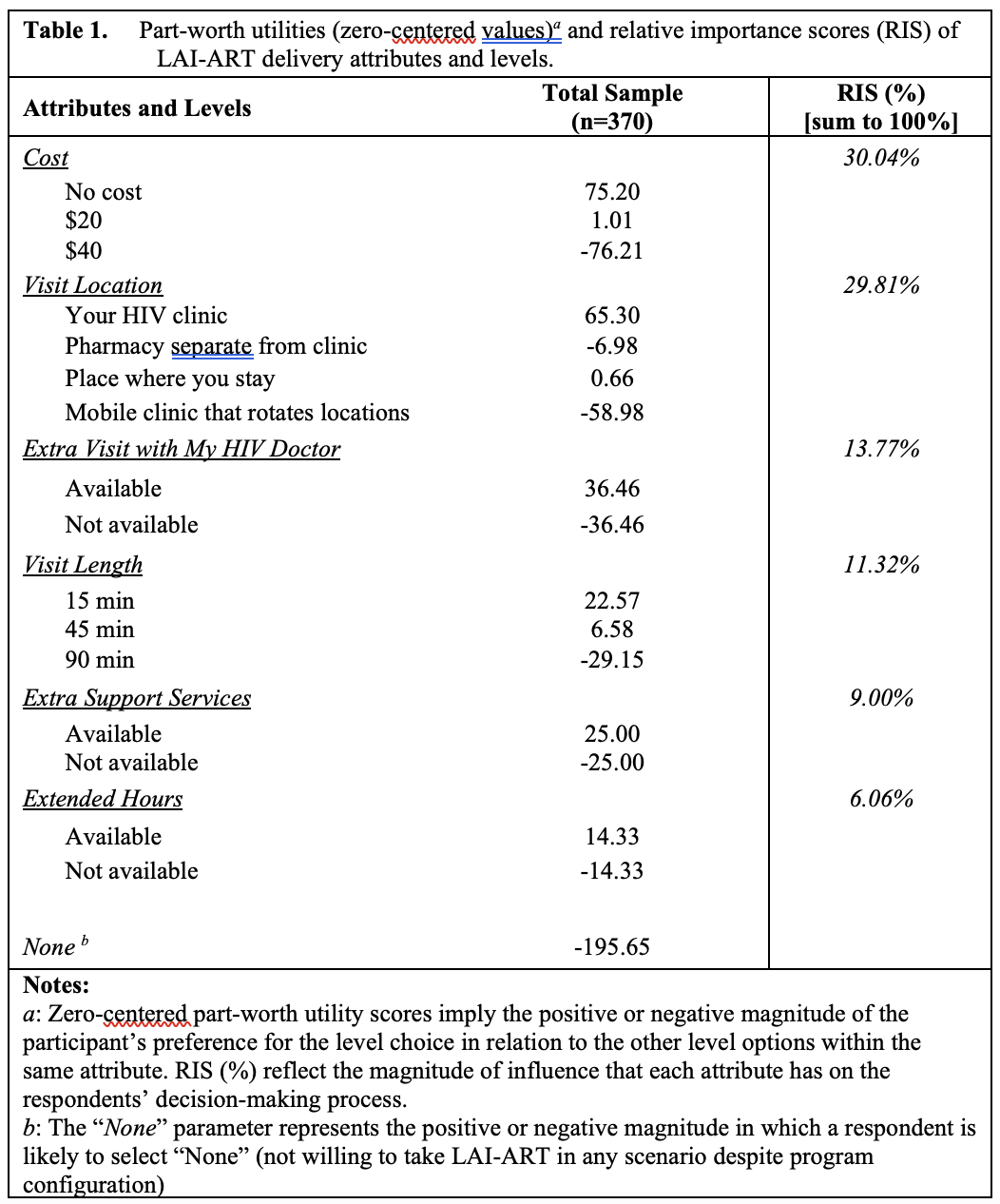
From December 2021-May 2022, 370 patients completed the DCE with median age 46, 34% cis-female/gender minority, 59% Black, 13% Latinx, 44% heterosexual, 34% homeless/unstably housed, 19% with substance use, and 27% less well-engaged. Overall, cost (RIS 30.04%) and injection visit location (RIS 29.81%) were the most influential program design attributes, with preferred features being no cost and receiving injections at their HIV clinic. A cost of $40 and the mobile clinic option were the least preferred. Preferences for population segments were similar, except a slightly increased secondary preference for ‘place where you stay’ visit location was observed among those with substance use, ‘Other’ race/ethnicity, and the Emory site.
Conclusions:
Assessing preferences of PLWH can inform a patient-centered approach to LAI-ART delivery. Among this predominantly racial/ethnic minority population, prioritizing that LAI-ART remains affordable and available at their HIV clinic could facilitate optimal uptake and delivery of this innovative treatment. However, sub-populations may further benefit from tailored approaches that provide injection visit location flexibility.
Table 1. Part-worth utilities (zero-centered values)a and relative importance scores (RIS) of LAI-ART delivery attributes and levels.