High coverage of HIV testing among outpatients in generalized epidemics is critical for sustained epidemic control; however, severe human resource and infrastructure constraints have made this impractical in LMICs. HIV self-testing (HIVST) distributed at outpatient departments is a promising solution, but little is known about how to best implement the strategy.
A cluster randomized implementation trial was conducted at 9 facilities in Malawi between February-April, 2020. Facilities were randomized 1:1:1: PITC (provider-initiated one-on-one testing); Passive HIVST (group Oraquick® demonstration and outpatient/guardian-initiated HIVST distribution); and Active HIVST (group Oraquick® demonstration, provider-initiated one-on-one HIVST distribution). All activities took place prior to routine consultations and were implemented by cadres with no more than a secondary school certificate. The primary outcome was self-reported same-day HIV-testing among eligible (never tested positive and never tested or last tested>12months ago) adults, using a difference-in-differences analysis (2-weeks pre and 3-weeks post intervention). Exit surveys were conducted with a systematically sampled subset of adult outpatients and guardians. Healthcare worker time was observed by study staff.
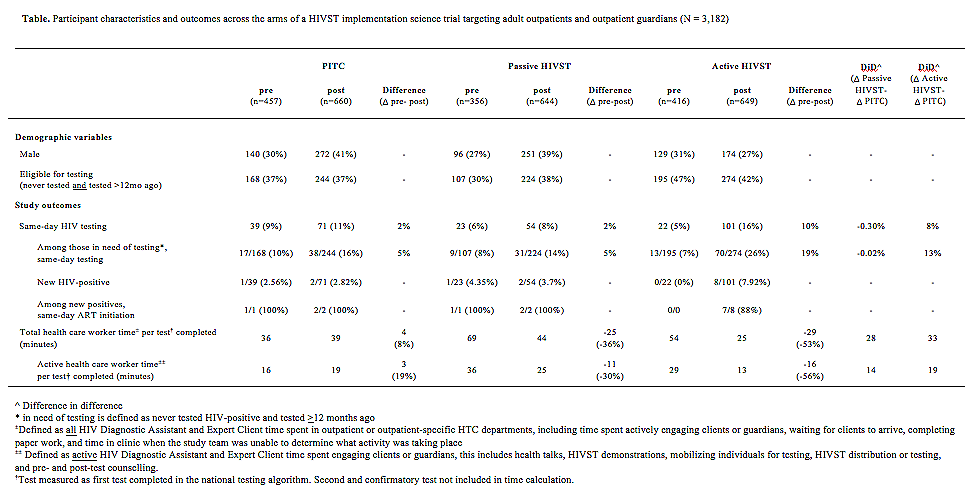
3,182 adults were enrolled (1851 outpatients, 1331 guardians): 33% were male and 38% were eligible for HIV testing (Table). HIV testing among eligible individuals was low across arms, with highest coverage in Active HIVST post-intervention (26%). There was a 13 percentage-point increase (95%CI: 4.2-22.8%) in testing between Active HIVST compared to PITC post-intervention, but no significant difference between Passive HIVST and PITC. Increased coverage was mainly among adult guardians. Active HIVST had the highest positivity (8/101, 8%, 95%CI: 2.3-13.2%), with 7/8 (88%, 95%CI: 47-99%) reporting same-day ART initiation. Total provider time required per test completed was estimated to increase 8% post-intervention in PITC, and decrease by 36% and 53% in Passive and Active HIVST, respectively.
Facility HIVST in outpatient departments implemented by lower-level cadres can increase testing coverage and both testing and health worker efficiency within routine settings.