Background:
As countries in Sub-Saharan Africa move toward rollout of point-of-care testing (POCT), risk for false positive testing and pathways to make accurate HIV diagnoses need to be understood.
Methods:
The Moso Study identified newborns at high risk of HIV acquisition at 35 delivery facilities in Botswana. High-risk status was defined primarily (but not exclusively) as limited maternal ART duration in pregnancy. HIV testing was performed using the Cepheid Xpert® HIV-1 qualitative POCT platform, with Roche CAP/CTM HIV-1 qualitative confirmation for those testing positive. Further testing with HIV-1 RNA quantification and droplet digital polymerase chain reaction (ddPCR) was conducted for discordant results. Subsequent 6-week HIV test results for infants with negative birth POCT were abstracted from national electronic laboratory/medical records.
Results:
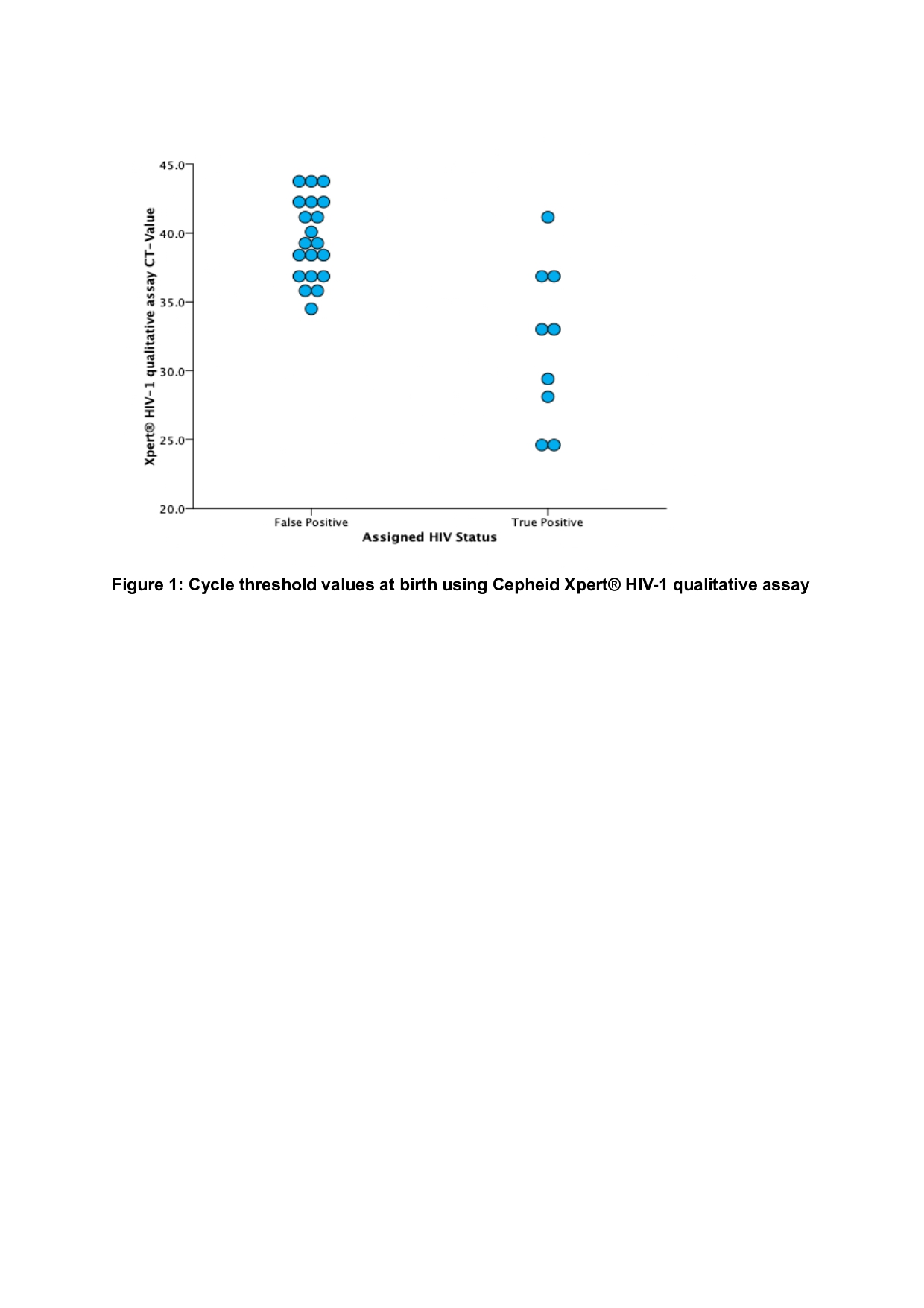
From July 2022–August 2023, using 6 Xpert® machines housed in close proximity to the 35 delivery sites, 1479 high-risk newborns were tested for HIV with POCT at a median of 21 hours of life (range 0, 158 hours). Thirty-one newborns (2%) had initial positive results, but only 11 (39%) were confirmed positive by Roche CAP/CTM testing, for an overall vertical transmission rate of 0.7% in high-risk neonates. The 20 (1.4%) false positives were further evaluated by HIV-1 RNA testing (all undetectable < 40 copies/mL); ddPCR testing was performed on 18 (90%) false positive samples with no target detected in any. Follow-up testing of false positives to date has remained negative. Of the 20 initial false positive samples, 18 (90%) were tested on just 1 of the 6 Xpert® machines; this machine was removed from service and is under evaluation, without an identifiable cause for the false positive results (operator error deemed unlikely). Excluding all 453 samples tested on this machine yields a false positivity rate of 0.2% (2/1026), or 15% (2/13) of all positive results. The median cycle threshold (CT) value for false positive results on the Xpert® platform was 39.2 (range 34.5, 43.9) compared with a median of 32.9 (range 24.2, 41.0) for true positives, indicating some overlap between groups (Figure 1).
Conclusions:
The Xpert® POCT platform offers affordable and easily implementable birth testing for HIV, but false positive testing may occur. High CT values provide an initial indication of a possible false positive result, but all positive testing must be confirmed by either HIV-1 RNA testing, HIV-1 DNA testing, or both.