Background:
We aimed to assess the potential impact of gut microbiota alterations and related pathways, on the presence and severity of stable coronary artery disease (CAD) in people living with HIV (PLWH).
Methods:
Gut microbiota profiles from participants of the Copenhagen Comorbidity in HIV infection (COCOMO) study were determined by 16S rRNA sequencing, and CAD severity was assessed by a high-resolution research coronary CT angiography. Obstructive CAD was defined as >50% stenosis and non-obstructive CAD as 1-49% stenosis. Sequencing was performed on the Illumina MiSeq platform. α-diversity, β-diversity and bacterial abundances were analyzed on a rarefied (subsampled) dataset, and differentially abundant bacterial genera were adjusted for False Discovery Rate (FDR) using the Benjamini-Hochberg method. Associations between CAD-related microbiota alterations and obstructive CAD were tested using regression models adjusted for age, sex, and smoking
Results:
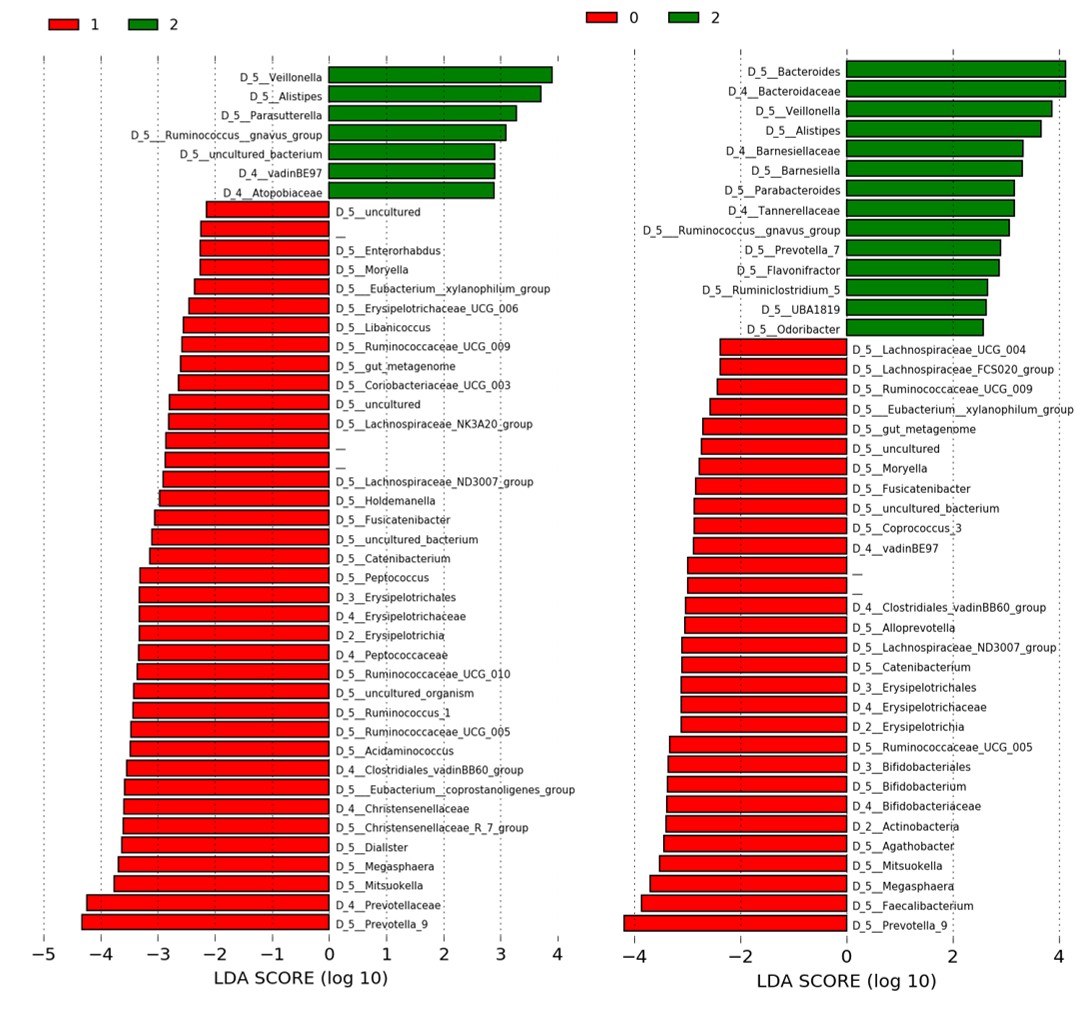
In a total of 254 participants (mean age 53y, 88% men) with microbiota samples and CT angiography, n=60 had obstructive CAD, n=80 had non-obstructive CAD, and n=114 had no CAD. Participants with obstructive CAD had gut microbiota profiles with significantly lower α-diversity and higher β-diversity compared to both non-obstructive CAD and no CAD. Participants with obstructive CAD also had distinct compositional microbiota profiles, including increased relative abundance of Ruminococcus Gnavus, known to produce pro-inflammatory polysaccharides and Veillonella, potentially linked to fibrosis, as well as reduced abundance of several bacterial genera, some with potential for butyrate production, important for gut barrier integrity. These bacterial genera (all QFDR< 0.05) were used to define a CAD-related microbiota index: Loge (Veillonella + Ruminococcus Gnavus + Alistipes)/(Prevotella_9+ Megashpaera + Moryella + Catenibacterium + Fusicatenibacter + Ruminococcacea_UCG_005 + Ruminococcacea_UCG_009 + Lachnospiracea_ND3007_group + Eubacterium_xylanophilum_group), which was associated with obstructive CAD independent of age, sex and smoking (adjusted p< 0.001). We observed no differences in gut microbiota composition between PLWH with non-obstructive CAD and no CAD.
Conclusions:
PLWH with obstructive CAD have distinct gut microbiota profiles compared to PLWH with non-obstructive CAD and no CAD. Future studies from this longitudinal cohort will determine whether these CAD-related microbiota profiles are predictive of future cardiovascular events in PLWH.
Microbiota alterations associated with obstructive CAD