Background:
The gut microbiota of PLWH who have achieved good immune recovery through ART is as diverse as that of healthy individuals, but the composition of the bacterial taxa is significantly different, which is indicated to be related to chronic inflammation. We evaluated the correlation between changes in the gut microbiota, clinical information, and inflammation biomarkers in PLWH between baseline and after 4 years of follow-up.
Methods:
Stool and blood samples, along with the laboratory parameters, were collected from 46 PLWH at baseline and after 4 years of follow-up. The microbiome was characterized by sequencing of the 16S rRNA V3-V4 regions on the Illumina MiSeq platform, and data were analyzed using QIIME2 software. Functional gene predictions of the bacterial microbiota were inferred from the 16S rRNA using PICRUSt2 pipeline. The concentrations of cytokine and LPS-binding protein (LBP) were quantified using a Bio-Plex System and ELISA, respectively.
Results:
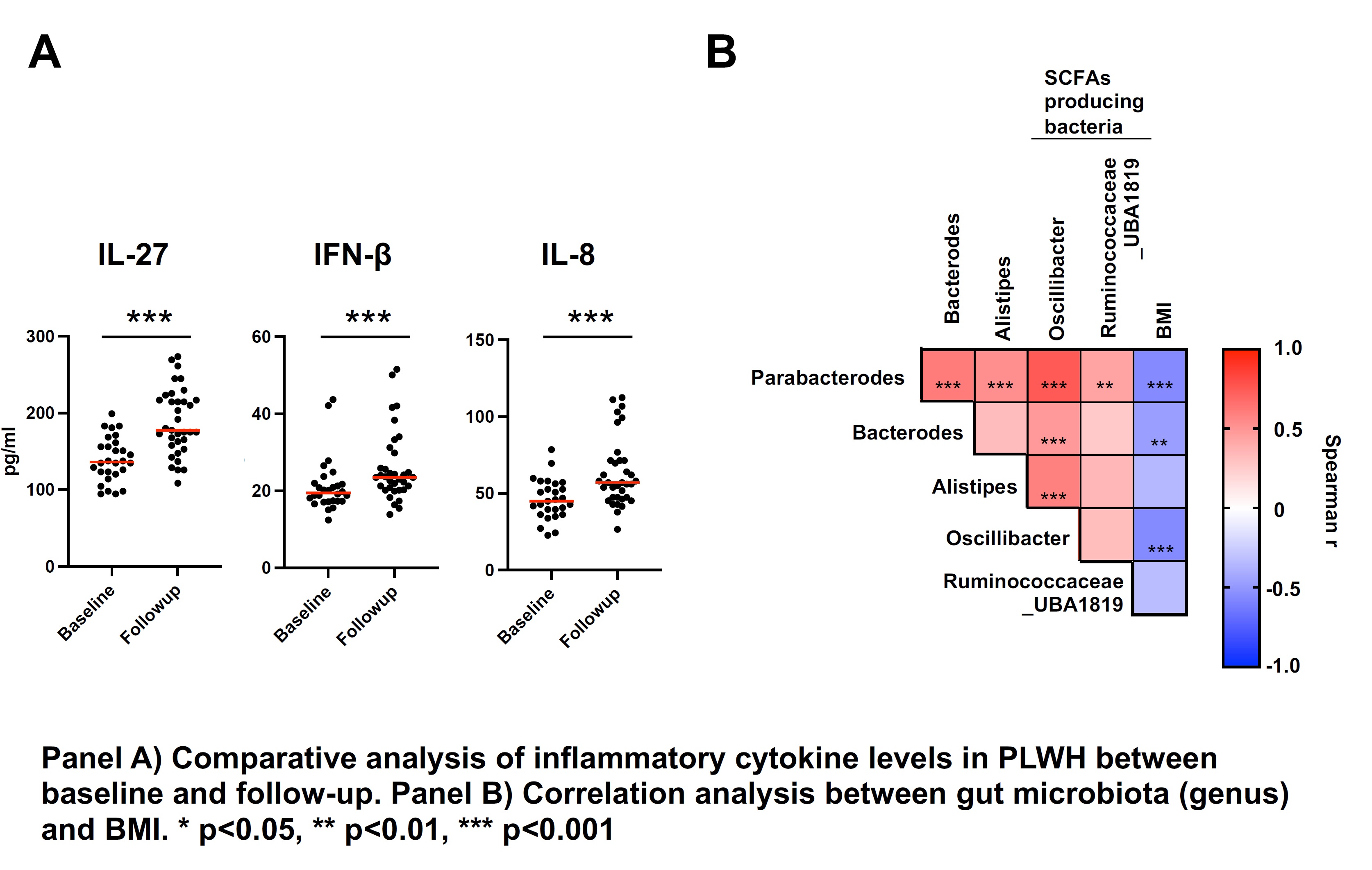
There were no significant changes in laboratory parameters between baseline and follow-up except for body mass index (BMI). However, the progression of gut dysbiosis was observed; Lachnospiraceae, involved in short-chain fatty acid (SCFA) production, decreased, while Enterobacteriaceae, potentially pathogenetic bacteria, increased. A decrease in vitamin B1 (thiamine) biosynthesis was predicted from 4-year alternations, suggesting an intestinal environment that is less conducive for SCFA-producing bacteria to proliferate. Higher levels in IL-27, IFN-β (an LPS/TLR4-inducible cytokine) and IL-8 at follow-up suggested the progression of intestinal permeability while HIV RNA remained low on ART. These cytokines were positively correlated with the bacterial translocation measured by plasma LBP. An increased BMI was significantly associated with IL-16 and CXCL13, both of which are involved in intestinal inflammation and bacterial migration. A low abundance of Parabacteroides which lead to the disturbances of secondary bile acid metabolism, was associated with a BMI of 25 and over, low α diversity, low abundance of SCFA-producing bacteria, as well as weight gain for 4 years.
Conclusions:
HIV-specific dysbiosis progressed despite effective ART. This dysbiosis correlated with weight gain and was characterized by Intestinal permeability that also persisted and was associated with systemic inflammation. This suggests that the intestinal environment in PLWH may potentially affect metabolic imbalance and inflammation.