Background:
Cisgender women with HIV (WWH) are defined by more than their HIV viral loads. Comprehensive women’s health, including sexual and reproductive health (SRH), is an important component of overall health and well-being. We used data from the CDC’s Medical Monitoring Project (MMP) to describe nationally representative estimates of SRH outcomes among WWH of reproductive age.
Methods:
During 6/2018–5/2021, MMP interviews were conducted and medical records were abstracted to ascertain data on SRH among WWH. Among WWH aged 18–44 years (N=855), we report weighted percentages and calculated prevalence differences (PDs) with predicted marginal means and accompanying 95% confidence intervals (CIs) to quantify differences between groups.
Results:
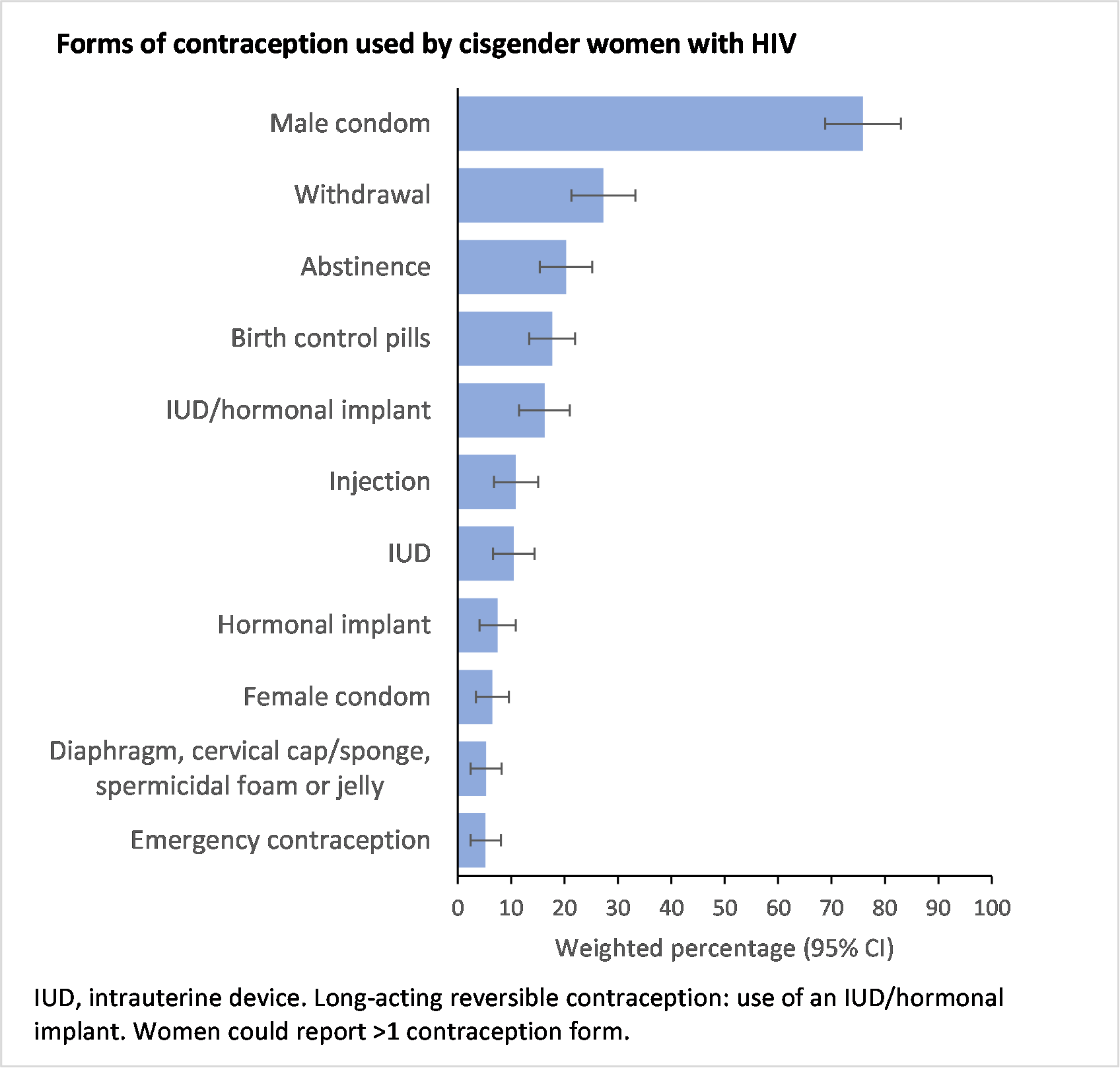
Overall, 86.4% of WWH reported receiving a cervical Pap smear in the past 3 years. Of sexually active WWH, 38.5% had documented sexually transmitted infection (STI) testing for syphilis, gonorrhea, and chlamydia in the past 12 months, per CDC guidelines. Of WWH who engaged in vaginal sex, 88.9% used ≥1 form of contraception in the past 12 months, including 16.3% who used long-acting reversible contraceptive methods (Figure). Over half (53.4%) had ≥1 pregnancy since their HIV diagnosis, of whom 81.5% had ≥1 unplanned pregnancy, 24.6% had ≥1 miscarriage or stillbirth, and 9.8% had ≥1 abortion. WWH living in households <100% of the federal poverty level (FPL) were less likely to receive Pap smears (PD: -9.13; 95% CI: -14.77– -3.50) and more likely to have unplanned pregnancies (PD: 16.57; 95% CI: 2.63–30.50) than those living in households ≥139% of the FPL. However, WWH attending Ryan White HIV/AIDS Program (RWHAP)-funded clinics were more likely to receive STI testing at their HIV care facility than those who did not attend RWHAP-funded facilities (PD: 20.08; 95% CI: 10.55–29.61). In MMP states that did not expand Medicaid, WWH with Medicaid coverage were less likely to have Pap smears (PD: -12.39; 95% CI: -20.49– -4.29) and more likely to have unplanned pregnancies (PD: 27.17; 95% CI: 11.15–43.19)* than those with private coverage. *Should be interpreted with caution due to small sample sizes.
Conclusions:
Many WWH have suboptimal SRH screening and pregnancy outcomes, particularly those living in poverty. Expansion of safety net programs that provide substantial coverage of SRH services, including Medicaid, RWHAP, and Title X, could help improve care access and outcomes among WWH.