Background:
The U.S. Preventive Service Task Force recommends smoking screening and cessation strategies as a part of routine care. However, people with HIV (PWH) are more likely to smoke and less likely to quit than people without HIV. We assessed factors associated with smoking cessation among cigarette smokers seen in care at outpatient clinics of the HIV Outpatient Study (HOPS).
Methods:
We analyzed HOPS participants’ data from clinic electronic medical records (EMR) and from an optional annual participant survey from January 1, 2007 to December 31, 2022. We included PWH with EMR or survey evidence of current cigarette use and no smoking cessation medication use at baseline (i.e., first HOPS visit) and those who began smoking cigarettes during follow-up. We identified smoking-related comorbidities based on lab results, clinical diagnoses, and treatments. Smoking quit attempts were determined via EMR and survey data during follow-up. We studied associations of first quit attempt with comorbidity diagnoses, smoking cessation medications prescriptions, sociodemographics, and clinical factors using the counting process within Cox proportional hazards analyses.
Results:
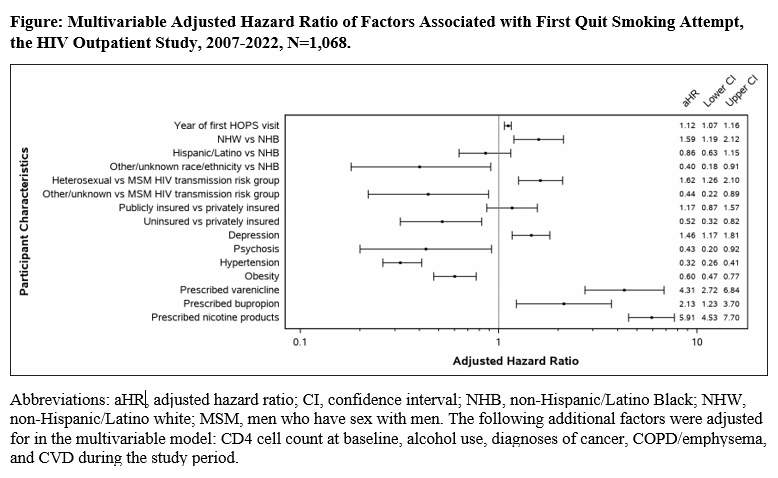
Among 1,068 eligible PWH, 77% were men, 32% White persons, 48% Black persons, 18% Hispanic/Latino persons, 47% aged 40 and older. At baseline, 172 (16%) had chronic obstructive pulmonary disease (COPD)/emphysema, cardiovascular disease (CVD), and/or cancers. During a median follow-up time of 4.4 years (interquartile range: 1.9-8.6), 301 (28%) PWH were prescribed smoking cessation medications (varenicline=87, bupropion=50, nicotine products=235), and 198 (19%) quit smoking. Of these 198, 33 (17%) resumed smoking after first quit. In multivariable analysis, factors positively (p<0.05) associated with smoking cessation included: later year of HOPS enrollment, non-Hispanic/Latino (NH) white race/ethnicity versus NH Black, heterosexual HIV transmission versus men who have sex with men risk group, having a depression diagnosis, being prescribed varenicline, bupropion or nicotine products, whereas factors inversely associated included: being uninsured versus having private insurance, and having diagnoses of psychosis, hypertension, or obesity (Figure).
Conclusions:
Fewer than one-third of HOPS participants who smoked cigarettes had a prescription for smoking cessation medication, and only one-in-five had a documented quit attempt, highlighting challenges for and need to strengthen prevention of smoking-related chronic diseases in PWH.