Background:
Adolescents living with HIV (ALHIV) have low antiretroviral therapy (ART) adherence and poor treatment outcomes. Poverty is a major threat to adherence, yet many interventions do not address poverty to improve adherence. In this cluster-randomized trial, we examined the impact of a multi-component asset-based economic empowerment intervention on ART adherence among ALHIV in Uganda.
Methods:
In this study, we enrolled 702 ALWHIV aged 12-16 from 39 clinics (intervention=20, control=19) in Uganda between January 2014 and December 2015. Thirty-nine clinics were randomized into the control (n=344) or intervention arm (n=358). The intervention consisted of a long-term child development account (CDA), four micro-enterprise workshops, and 12 mentorship and educational sessions. Adherence was measured using unannounced pill counts, where good adherence was defined as taking 85% of prescribed pills. We used mixed-effects logistic regression analysis to examine the effect of the intervention on ART adherence, while controlling for clustering at the clinic. Study is registered at ClinicalTrials.gov (#NCT01790373).
Results:
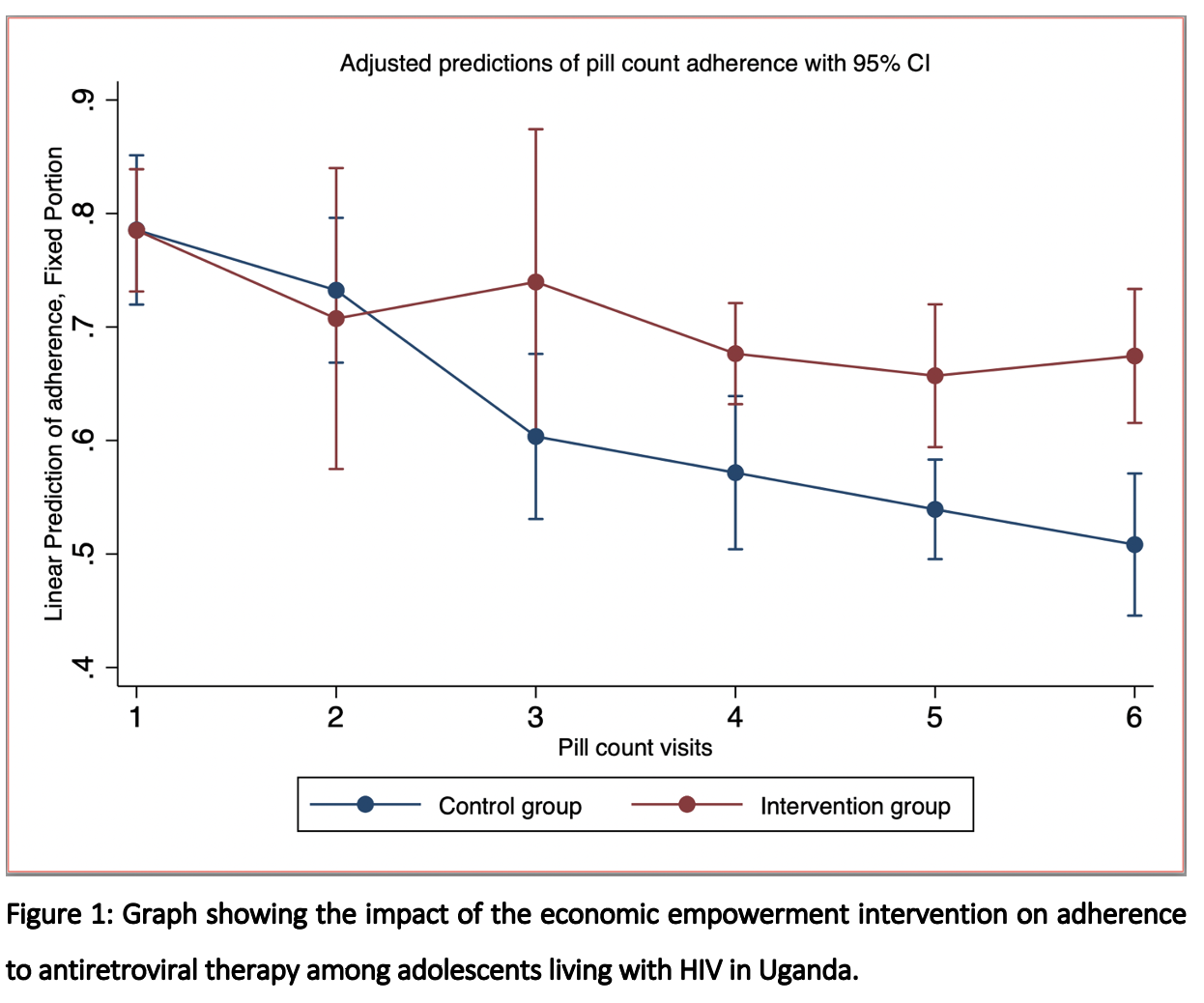
The mean age was 12.6 years, and 58% were females. Intervention effect: The intervention significantly improved ART adherence, OR=1.99 (95% CI: 1.09 – 2.96). Main effect of time: adherence gradually decline at every visit (except visit two); third visit OR=0.40 (95% CI: 0.26 – 0.64); fourth visit OR=0.35 (95% CI: 0.24 – 0.52); fifth visit OR=31 (95% CI: 0.22 – 0.43); and the sixth visit OR=0.27 (95% CI: 0.19 – 0.39). Intervention-time effect: we found significantly higher adherence in the intervention group at visit four OR=1.59 (95% CI: 1.00 – 2.54); visit five OR=1.67 (95% CI: 1.11 – 2.50); and visit six, OR=2.06 (95% CI: 1.41 – 3.00).
Conclusions:
Our findings support the theory that economic strengthening interventions improve patient outcomes and should be in incorporated in the care packages for ALWHIV in resource-limited settings if the 95-95-95 targets are to be realized.
Effect of economic empowerment intervention on ART adherence among adolescents living with HIV