Background:
ADMIN NOTE: Coauthors to be added People on HIV treatment with a viral load (VL) < 200 copies/ml cannot transmit HIV sexually: 'Undetectable = Untransmittible' (U=U). However, the utility of U=U as a prevention strategy has been questioned due to concerns about viral blips and viral rebound. We assessed durability of viral suppression in a national longitudinal cohort in South Africa.
Methods:
Data were obtained from the National Health Laboratory Service (NHLS) National HIV Cohort. The NHLS Cohort, created through deduplication of South Africa’s national laboratory database, includes all viral loads in the public sector HIV program. People living with HIV (PLHIV) aged 15-59 years were included in the analysis if they had at least one VL <200 copies/ml between March 2015 – September 2016. PLHIV entered the study on the date of their first VL<200 and were followed for 18 months. PLHIV were defined as 'monitored at 12 months' if they had any VL test 6-18 months after baseline. Durability of viral suppression was defined based on the value of the 12-month VL, reported in three categories: <200 copies/ml (zero transmission risk), 200-999 copies/ml (minimal transmission risk), and ≥1000 copies/ml (elevated transmission risk). Analyses were stratified by age, gender, province, and viral load history reflecting prior experience in HIV care.
Results:
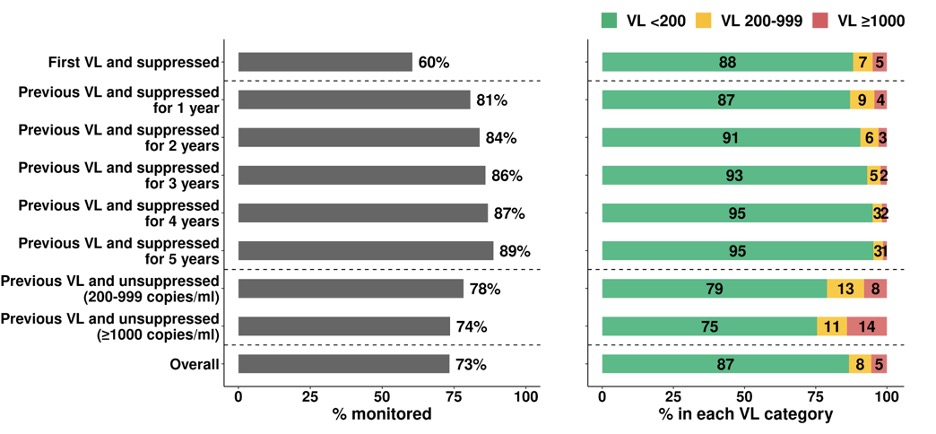
Of 2,383,871 PLHIV with VL<200 copies/ml at baseline, 73% were virally monitored at 12 months. Of those, 87% had a 12-month VL <200 copies/ml and 95% had a 12-month VL <1000 copies/ml. PLHIV whose VL at entry was their first ever VL had the lowest probability of being monitored at 12 months, at 60% (Fig 1). Those with a history (>2 years) of viral suppression had the highest rates of 12-month viral monitoring (>84%) and suppression (>97%) (Fig 1). Individuals with previous VLs between 200-999 or >1000 copies/ml faced the greatest challenges remaining suppressed (Fig 1). VL monitoring rates were lowest among PLHIV under 35 years, but among those monitored, durability of viral suppression was relatively consistent across age and gender. Monitoring rates were similar across provinces, with higher variability in durability of viral suppression.
Conclusions:
95% of PLHIV with VL<200 who returned for their 12-month VL had zero risk or minimal risk of transmission one year later. Our results highlight the importance of regular monitoring and the durability of viral suppression for PLHIV who remain in clinical care.