Background:
Depression is common among people with HIV (PWH) and increases the risk of non-communicable diseases such as diabetes mellitus (DM). Depressive symptoms are associated with poorer medication adherence and adverse HIV outcomes, but less is known about how depression affects DM outcomes. We evaluated the association between depressive symptoms and DM control among PWH and DM.
Methods:
We examined PWH and DM (defined by HbA1c ≥6.5% or receipt of DM specific medication, or DM related medication and DM diagnosis) cared for at 8 US clinical sites in the CFAR Network of Integrated Clinical Systems (CNICS) cohort from 2005-2023 and who had repeated measures of patient-reported depressive symptoms using the Patient Health Questionnaire (PHQ9),. We observed PWH from the date of first HbA1c with a PHQ9 score within 15 months prior and assessed diabetes outcomes using categorical (≤/>7.0%) and continuous HbA1c values. We examined the association between HbA1c and recent depressive symptoms (PHQ9 measured within the 15 months prior to or at the date of HbA1c) using multilevel longitudinal models whereby PWH could contribute ≥1 HbA1c value. Continuous PHQ9 score was included in models using natural splines. Analyses were adjusted for sex at birth, race/ethnicity, HIV risk factor, CNICS site, and time-updated age, time since DM diagnosis, CD4 count, HIV RNA, year of HbA1c measurement, BMI, substance use, high-risk alcohol use, and DM medication use.
Results:
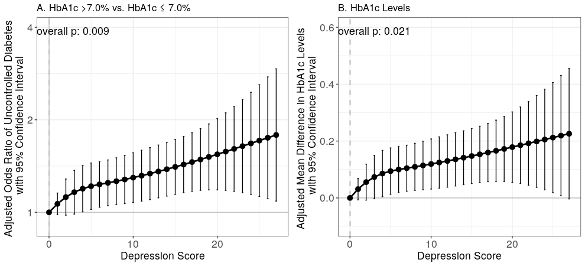
Among 2040 PWH with DM, baseline median age was 54 years (IQR:47-59), 75% were male, 50% Black, 44% white, 14% Hispanic, and 22% had a PHQ9 ≥10 (severe depressive symptoms). Median baseline HbA1c was 6.5 (IQR:5.9-7.7), median time living with DM was 1.25 years, and 57% were on diabetes medication at baseline. Median follow-up time was 2.9 years (IQR:0.9-5.9) during which PWH contributed a median of 5 HbA1c measurements (IQR:3-10). Median time between HbA1c and PHQ9 measurements was 105 days (IQR:10-213). In multivariable analysis, we found a dose-dependent relationship between the PHQ9 score and an increased odds of HbA1c >7.0% (Figure A, p=0.009). Similarly, a higher burden of depressive symptoms was associated with higher HbA1c measures when assessed as a continuous outcome (Figure B, p=0.021).
Conclusions:
Higher depression symptom burden was associated with poor DM control among PWH in this multisite, US cohort. Diagnosis and management of depression remains critical for long-term HIV and DM outcomes.