Persons living with HIV (PWLH) may have increased incidence of cardiovascular events and longer QTc intervals than uninfected persons. We aimed to investigate the incidence and risk factors of de novo major electrocardiogram (ECG) abnormalities and QTc prolongation in PLWH.
We included virologically suppressed PLWH without major ECG abnormalities, who attended the 2-year follow-up in the Copenhagen comorbidity in HIV infection (COCOMO) study. At baseline and follow-up, participants had similar assessments, including physical exams, ECG, and questionnaires on lifestyle, and smoking behaviour. We obtained data on HIV treatment and use of methadone through review of medical records. ECGs were categorized according to The Minnesota Code Manual of Electrocardiographic Findings. De novo major ECG abnormalities were defined as new major Minnesota Code Manual abnormalities. QT interval was corrected according to Bazett’s formula and prolonged QTc was defined as QTc > 460ms in females and QTc > 450ms in males.
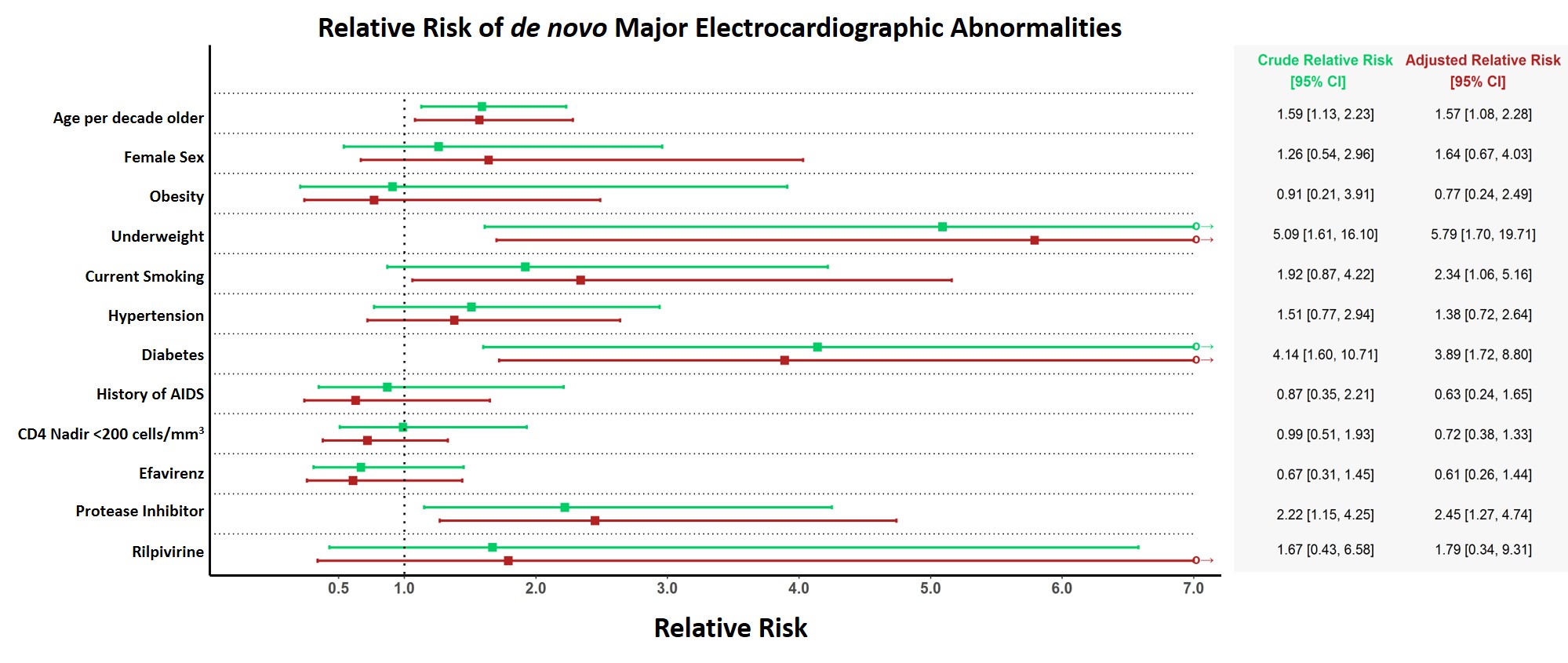
Of 667 PLWH (85% men) without major ECG abnormalities at baseline, 34 (5%) developed de novo major ECG abnormalities after a median of 2.3 years. At baseline, the mean age was 51, 26% were current smokers, 2% used methadone, and 29% and 31% used protease inhibitors or efavirenz, respectively. After adjustment, age (RR: 1.57 [1.08-2.28] per decade older), being underweight (RR: 5.79 [1.70-19.71]), current smoking (RR: 2.34 [1.06-5.16]), diabetes (RR:3.89 [1.72-8.80]) and protease inhibitor use (RR:2.45 [1.27-4.74) were associated with higher risk of de novo major ECG abnormalities. Of PLWH without prolonged QTc at baseline, 11 (1.6%) participants developed de novo prolonged QTc. Efavirenz use was associated with 4.4 [0.9, 7.9] ms increased lengthening of QTc between baseline and follow-up. Efavirenz use was not associated with a statistically significant higher risk of de novo prolonged QTc (adjusted RR: 3.01 [0.87-10.40], p=.082).
Five percent of well-treated PLWH acquired de novo major ECG abnormalities after 2.3 years of follow-up, and protease inhibitor use was associated with more than twice the risk of de novo major ECG abnormalities. Although efavirenz was associated with longer QTc intervals, the absolute difference was small, and efavirenz was not significantly associated with higher risk of prolonged QTc after adjustment.