Background:
Cryptococcal meningitis and tuberculous meningitis (TBM) remain the most common causes of HIV-associated meningitis, accounting for >20% of AIDS-related deaths globally. Acute mortality associated with these infectious meningitides remains devastatingly high (25-50%), even in the context of clinical trials. We hypothesised that cerebrospinal fluid (CSF) HIV viral escape may contribute to central nervous system (CNS) damage and be associated with increased mortality.
Methods:
We conducted a cohort study of HIV-positive Uganda adults with suspected meningitis in Kampala, Uganda. We performed baseline paired plasma/CSF HIV viral load (VL) testing (Xpert; Cepheid, Sunnyvale, CA, USA). We determined the prevalence of CSF HIV viral escape, defined as per the consensus definition of presence of quantifiable HIV in the CSF at a concentration above that in plasma, and investigated for associations with mortality using Cox regression. Participants were followed through to hospital discharge, or until week-18 if recruited into a subsequent randomised controlled trial.
Results:
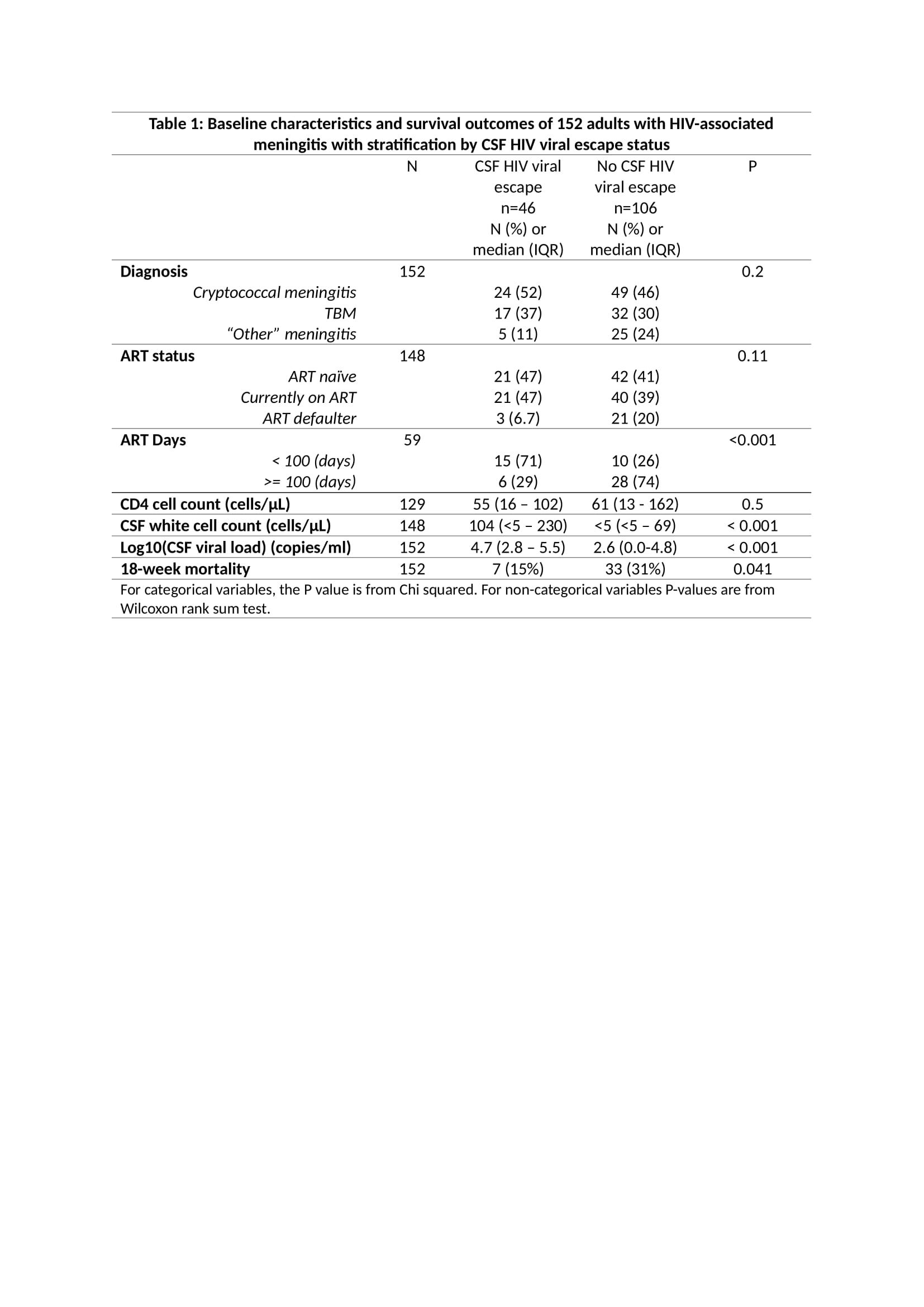
We recruited 152 adults, 47% were male, median CD4 was 59 (IQR 14-132) cells/mcL, 41% were receiving antiretroviral therapy (ART) at time of presentation. The majority (48%, 73/152) had cryptococcal meningitis, 32% (49/152) had definite/probable TBM, 20% (30/152) suspected ‘other’ meningitis. CSF HIV viral escape was present in 30% (46/152) overall; it was strongly associated (p<0.001) with higher CSF white cell count (102 vs. <5 cells/mcL); and shorter duration of ART (16 vs. 144 days). Amongst those on ART <100 days, CSF HIV viral escape prevalence was 60%. CSF HIV viral escape was associated with improved 18-week survival with an unadjusted Hazard Ratio 0.41 (95%CI, 0.18 – 0.92, p=0.031). CSF viraemia alone was not associated with survival (unadjusted Hazard Ratio 1.04, 95%CI 0.52 – 2.09, p=0.9).
Conclusions:
In our HIV-associated meningitis cohort, CSF HIV viral escape was common, especially amongst participants recently initiated on ART. As HIV viral replication suppresses more slowly in CSF than plasma, in such cases it is possible that with longer ART duration the CSF would also suppress. Given the observed associations with CSF pleocytosis and improved survival, in the context of HIV-associated meningitis, CSF HIV viral escape is likely a by-stander phenomenon and an indicator of effective host immune response with trafficking of monocytes and CD4 lymphocytes containing HIV RNA into the CNS.