Background:
Falls are associated with aging-related decline in health, occurring more frequently among people 65 years-old and older. People with HIV (PWH) experience aging-related complications earlier than the general population. While falls have previously been associated with aging-related complications among PWH, this work is limited by small sample sizes, focused on only healthcare-reported falls, and often includes falls prior to the current antiretroviral treatment (ART) era.
Methods:
We examined falls reported within the previous 12 months between 2020-2021 among PWH in the Center for AIDS Research Network of Integrated Clinical Systems (CNICS) cohort at 7 US sites. Data were collected via patient reported and clinical measures. Associations of clinical, demographic and behavioral factors with any and number of falls were examined using relative risk regression models.
Results:
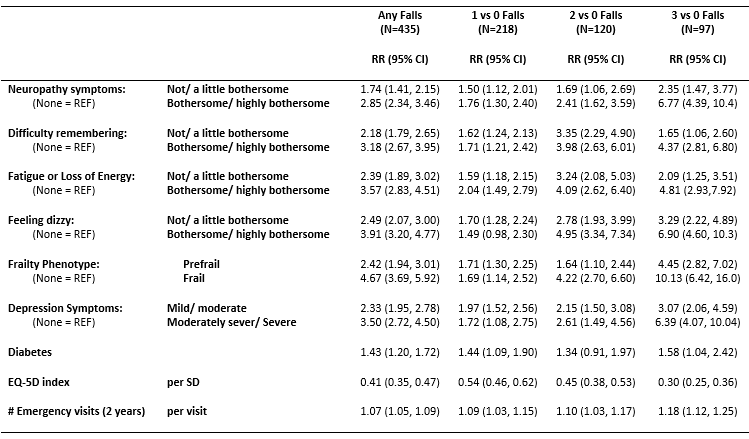
Among 2386 PWH with complete data (mean age was 51 years and ranged 18-89 years; 14% were female and 53% non-white), 18% (n=435) reported falling at least once in the past year, among whom 50% fell once, 28% twice, and 22% ≥ 3 or more, with 27% (n=118) seeking medical care due to a fall. Falls were reported significantly more among PWH ≥ 50 years-old, however 9% of those under 40 years-old reported falling with half reporting more than one fall. Falls were also more likely to be reported by PWH who were white and lived near the West coast of the US. When adjusted for age, sex, location and race/ethnicity, falls were associated with reporting symptoms of neuropathy, forgetfulness, fatigue, feeling dizzy, and depression. A prefrail or frail phenotype, diabetes, lower quality of life (QoL) scores and more emergency visits were also associated with falls. Risk ratios generally increased with more falls (Table). However, HIV viral load and current and nadir CD4 count were not consistently associated with falls.
Conclusions:
Almost 20% PWH in routine clinical care reported falling in the past year, including 100 PWH < 40 years-old. Neurological and mental health symptoms, frailty, diabetes, and lower QoL were strongly associated with both falls and number of falls. Our finding suggest that a high proportion of PWH, even younger people, experience falls, which may be indicative of aging-related issues. Monitoring of neurological, cognitive, and mental health symptoms across the age spectrum in routine clinic visits may be important among PWH to minimize complications with early onset aging.
Table: Factors associated with any and number of falls in the past 12 months adjusted for age, race/ethnicity (white vs all others), geographic location (west vs all others), and birth sex (Nf2386)