Background:
Variations in gut microbiome might modulate host immune activation and inflammation, potentially linked to increased cardiovascular risk. Our objective was to longitudinally characterize the distinctive features of gut microbiota associated with progression of atherosclerosis measured through carotid artery intima-media thickness (cIMT) in people living with HIV (PLWH).
Methods:
96-week, longitudinal study in virologically suppressed (HIV-1 RNA <50 copies/mL) PLWH with no previous cardiovascular disease. cIMT was measured at baseline, 48 and 96-weeks visits using B-mode ultrasound at 6 locations. cIMT progression was defined as an increase >10% and/or detection of new carotid plaques. To profile the gut microbiome, DNA was extracted from fecal samples and quantified with the Qubit dsDNA HS Assay Kit. Amplification and sequencing of 16S ribosomal RNA (V3-V4 variable regions) were carried out following the Illumina protocol. For bioinformatic analysis of amplicons, the QIIME package was used. Biomarker analysis was performed using the LEfSe software package.
Results:
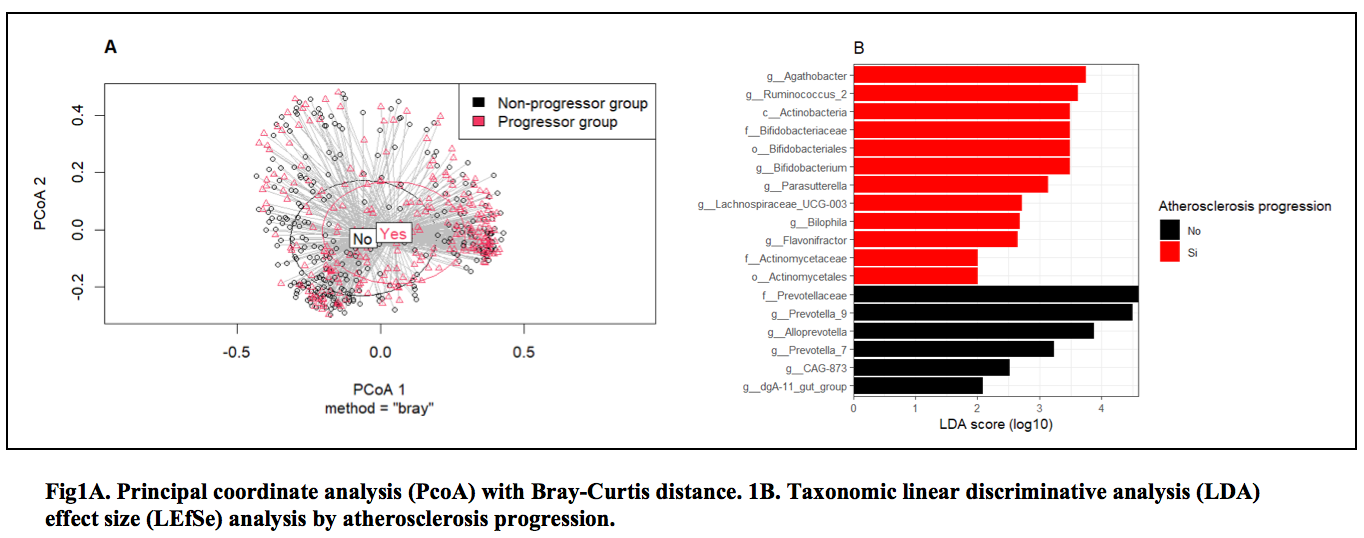
202, 190 and 169 patients had available fecal samples for microbiome analysis at the baseline, 48- and 96-week visits, respectively. At the 96w visit, 87 (43%) patients were categorized as progressors, with 54 (26.7%) of them showing a new carotid plaque. No significant differences were observed in α-diversity indices between groups at baseline. Over the 96w follow-up period, a decrease in α-diversity (Simpson’s and Shannon’s indices) was observed in the progressor group. Based on beta-diversity analysis at the species level, determined through principal coordinate analysis (PCoA) distances, the progressor and non-progressor groups exhibited distinct and divergent microbial profiles during each follow-up visit (p=0.001). When all sequences from the three visits were compared, the PCoA plots of Bray-Curtis distance revealed that the samples clustered in accordance with the progression of atherosclerosis (p=0.016; Permanova test) (Fig1A). LEfSe analysis revealed distinct associations between progression and specific bacterial taxa (Fig1B). Agathobacter, Ruminococcus_2 and Lachnospiraceae_UCG_003 genus were consistently observed in various consecutive visits as distinctive genus associated with progression, while Prevotella_7 and Allisonella genus were linked to non-progressor patients.
Conclusions:
Progression of atherosclerosis in PLWH is associated with distinctive changes in the gut microbiota.