Women living with HIV (WLH) are highly susceptible to high-risk human papillomavirus (HPV)-associated precancer and cancer in the lower anogenital tract. The dynamics of anal and cervical HPV infection and their relationship to anal cancer precursors are not well studied. We aimed to determine the prevalence of anal and/or cervical HPV infection among WLH as well as their association with anal cancer precursors, i.e. high-grade squamous intraepithelial lesions (HSILs).
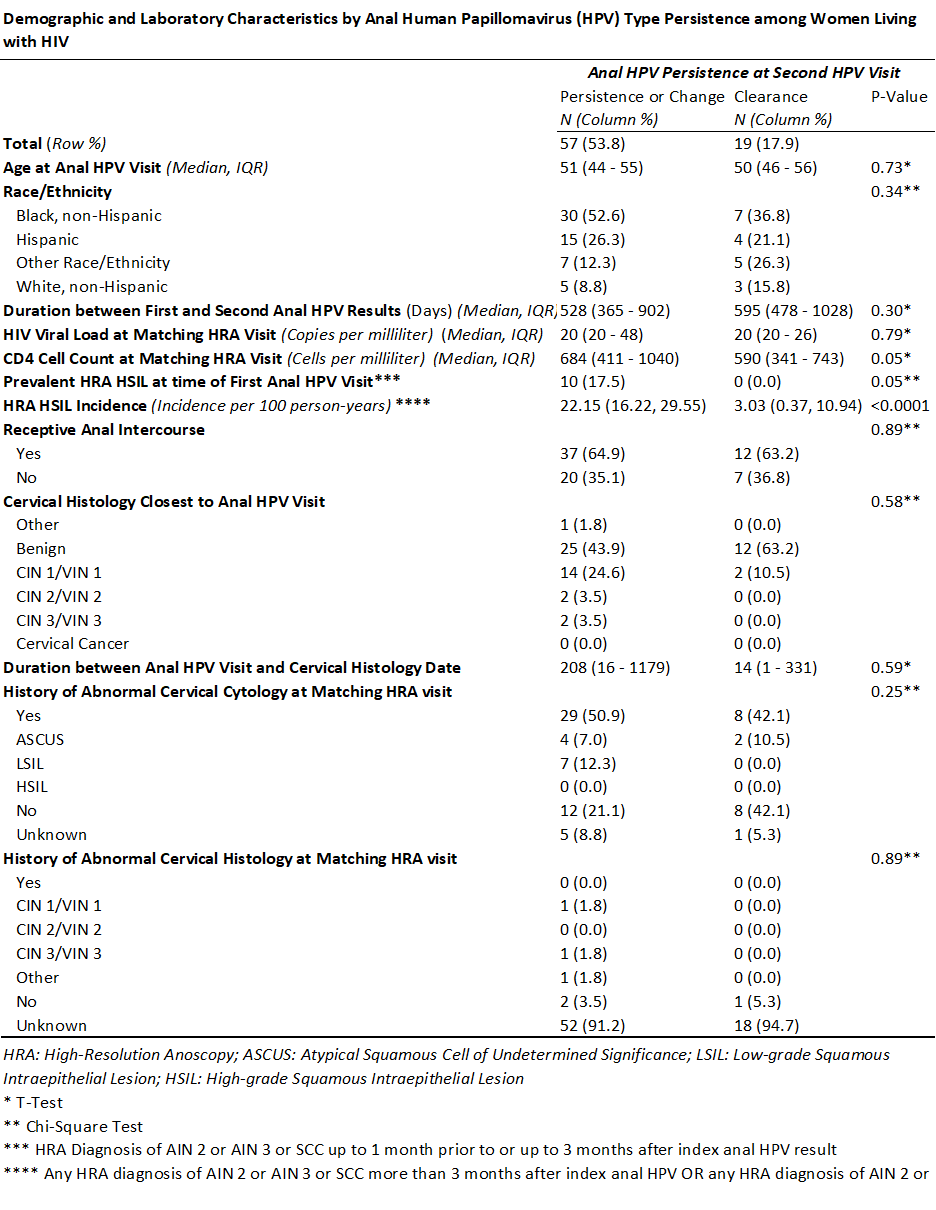
The current study included 144 WLH who underwent anal cancer screening at our program between 2012-19 and met the following criteria: (1) anal HPV DNA testing (HPV16, 18 and 12 other high-risk types) upon initial and follow-up visits; (2) cervical HPV DNA testing within six months of the initial visit; and (3) high-resolution anoscopy (HRA) examination and biopsy within 3 months of anal HPV testing. We analyzed anal and cervical HPV coinfection and concordance, anal HPV persistence/clearance, and the incidence of anal HSIL by anal/cervical HPV status.
At baseline, 45% of the cohort had anal high-risk HPV (hrHPV) infection alone, 3% had cervical hrHPV infection alone, while 28% had anal/cervical coinfection. Biopsy-proven HSIL was detected in 31%. Among subjects with coinfection, 56% had concordance of HPV types at both genital sites. Among WLH with anal HPV at baseline, HPV was persistent in 54% of subjects and cleared in 46% upon follow-up (median interval: 534 days). The rate of anal HPV persistence was similar between subjects with anal infection alone and those with anal/cervical coinfection. Anal HSIL was associated with persistent anal HPV infection, anal HPV type 16/18, but not with cervical HPV type 16/18 infection (incidence rate ratios 6.8 (p<0.01), 6.2 (p<0.001), and 1.4 (p = 0.44), respectively).
In WLH, anal HPV infection may be more common than cervical infection. Persistent anal HPV infection appears to be independent of cervical HPV status. Our findings challenge the theory that the cervix forms the main reservoir of HPV and further indicates that anal cancer screening is likely warranted for WLH regardless of cervical HPV status.