Background:
Contraceptive requirements are a barrier to participation in clinical trials for people capable of pregnancy. Offering access to emergency contraception (EC) could increase trial participation of persons who are not sexually active or not using contraception for other reasons. EC is part of medical management post sexual assault, an experience of many women living with HIV. ACTG trial A5375 examined the PK and safety of dose-adjusted levonorgestrel (LNG) EC combined with efavirenz-based ART or rifampicin-containing TB therapy. We assessed acceptability and practicality of EC.
Methods:
Participants did not require EC at entry and received a single dose of LNG on Day 0. Interviewer-administered questionnaires on Days 0, 2, 14 and 28 assessed attitudes and experiences with EC, recent contraceptive use, and contraceptive preference during clinical trials participation. Responses were summarized using descriptive statistics.
Results:
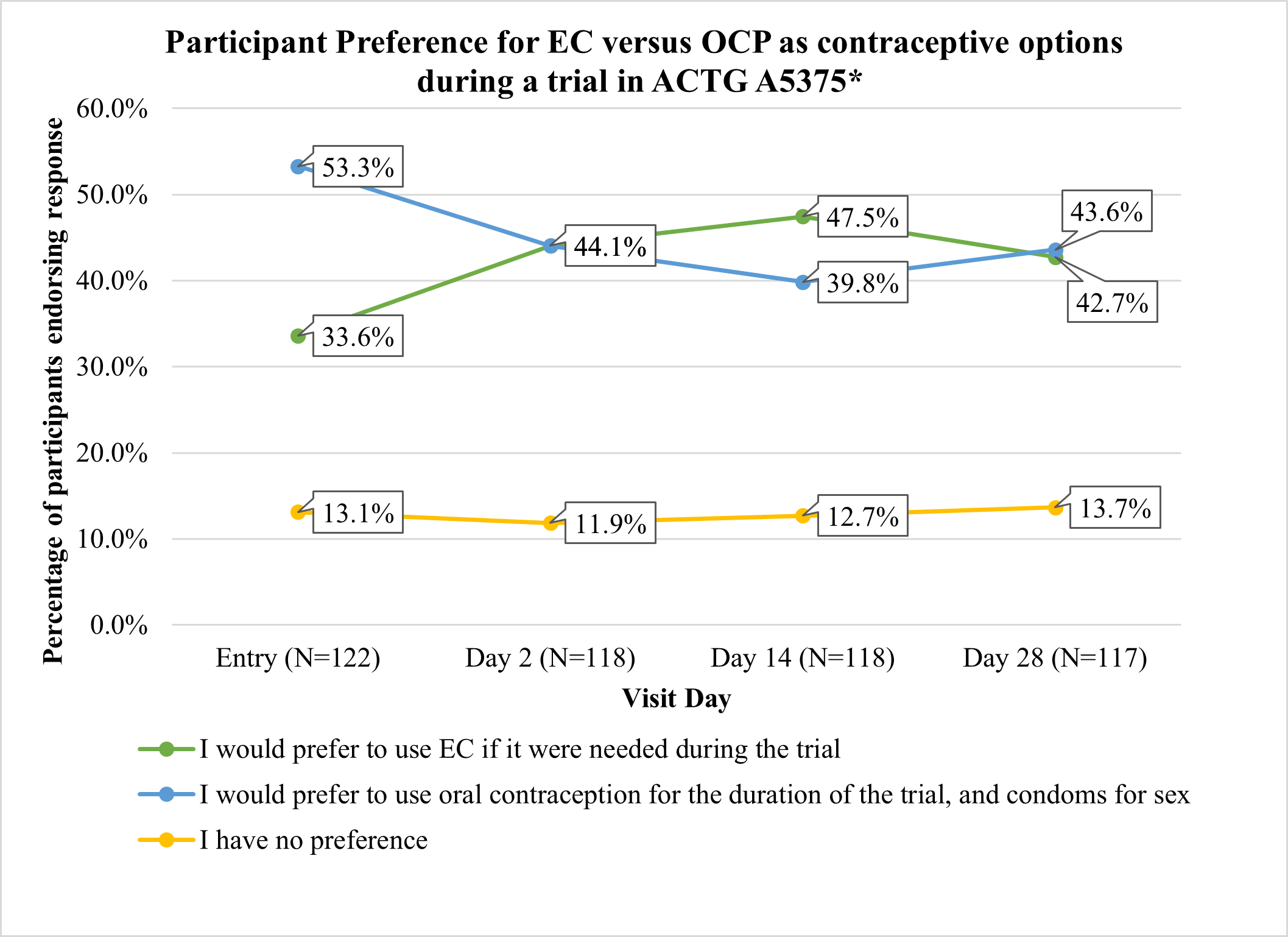
A5375 enrolled 122 cisgender women (median [IQR] 34 [27,41] years) in 7 countries between May 2019- November 2020. The majority (66.4%) were Black (27.0% Asian; 4.9% White, 0.8% multiple races); 9.0% were Latina. Participants reported contraceptives used within 120 days of entry; 22% (Nf27) reported abstinence and of the rest (Nf95), 85.2% reported condoms and/or other methods (23.1%). Most (79.5%) had never used LNG EC prior to entry. When asked about preference for daily oral contraceptive pills (OCP) or episodic EC as needed, 53.3% preferred OCP, 33.6% preferred EC as needed, and 13.1% had no preference at Entry. At Day 28, there was a +9.1% absolute change in the preference for EC [Figure 1]. At entry, participants reporting that the option of EC as a contraceptive choice would make them more likely to participate in a trial was high (63.9%), and increased to 70.6% at Day 28. In abstinent participants, this percentage remained stable from Day 0 to 28 (66.6%). More participants knew where to access EC for routine clinical use at follow up visits compared to the entry visit (84.2% vs 77.0%, respectively).
Conclusions:
EC was acceptable to participants and increased after receiving a single dose of LNG for EC during the trial. EC as a contraceptive option in clinical trials could address a barrier to women’s participation, particularly as a second option when two methods are required or for women not having sex that could lead to pregnancy. Additional implications exist for promoting survivor autonomy during the provision of comprehensive sexual assault services.
Figure 1: Participant-reported preferences for EC versus OCP as contraceptive options in ACTG A5375